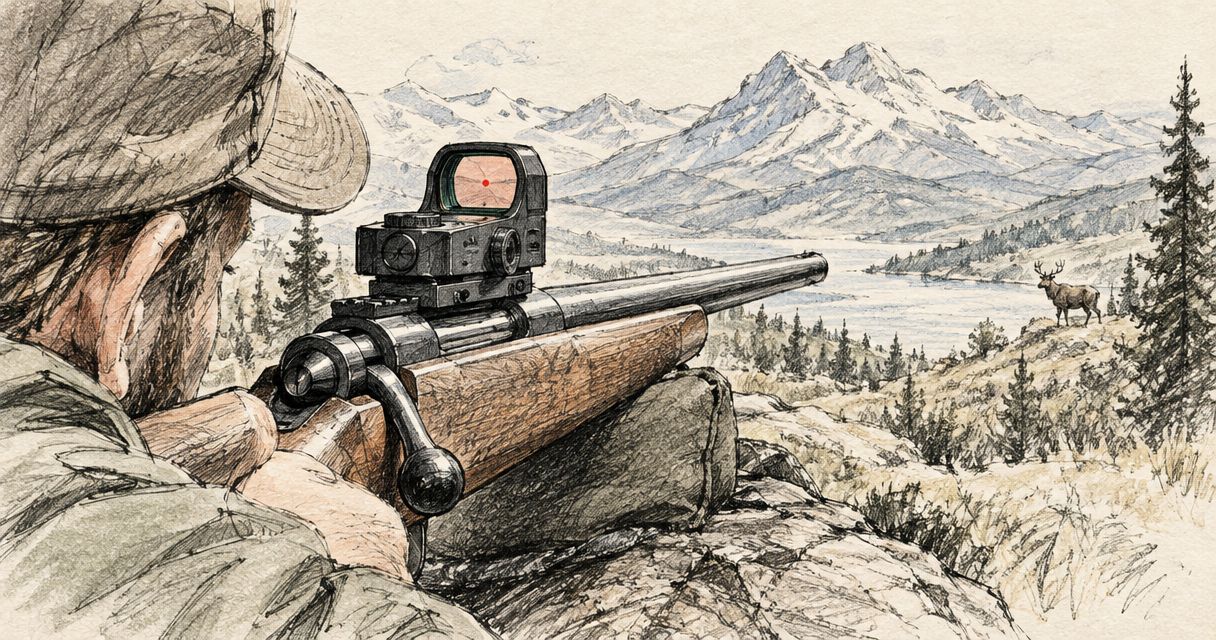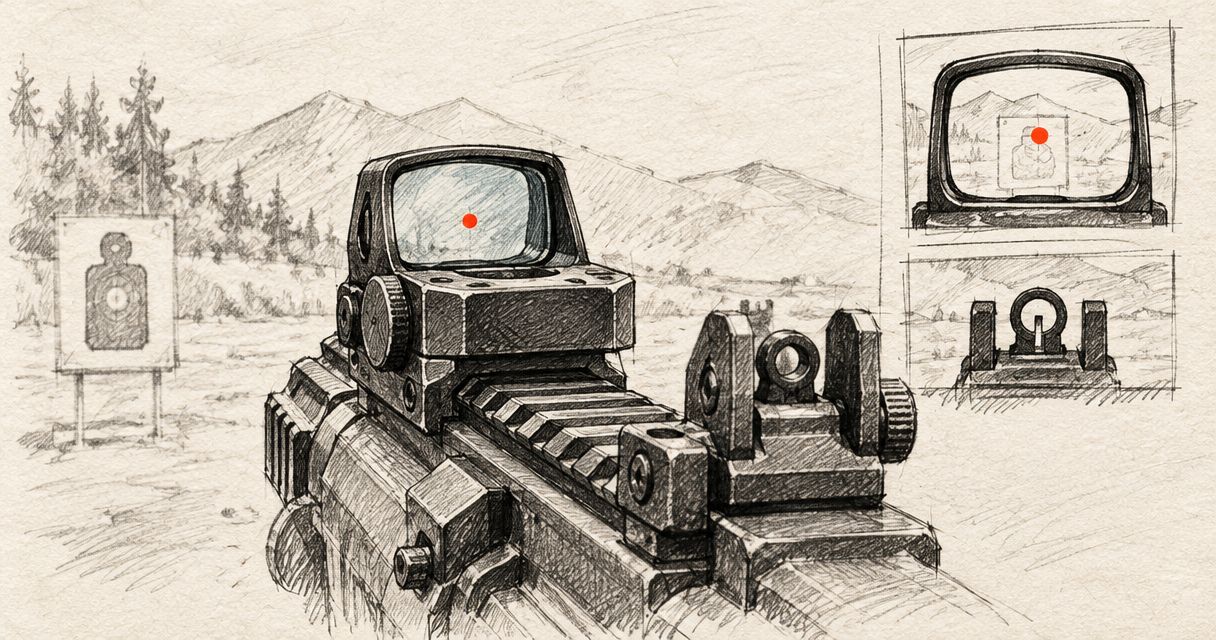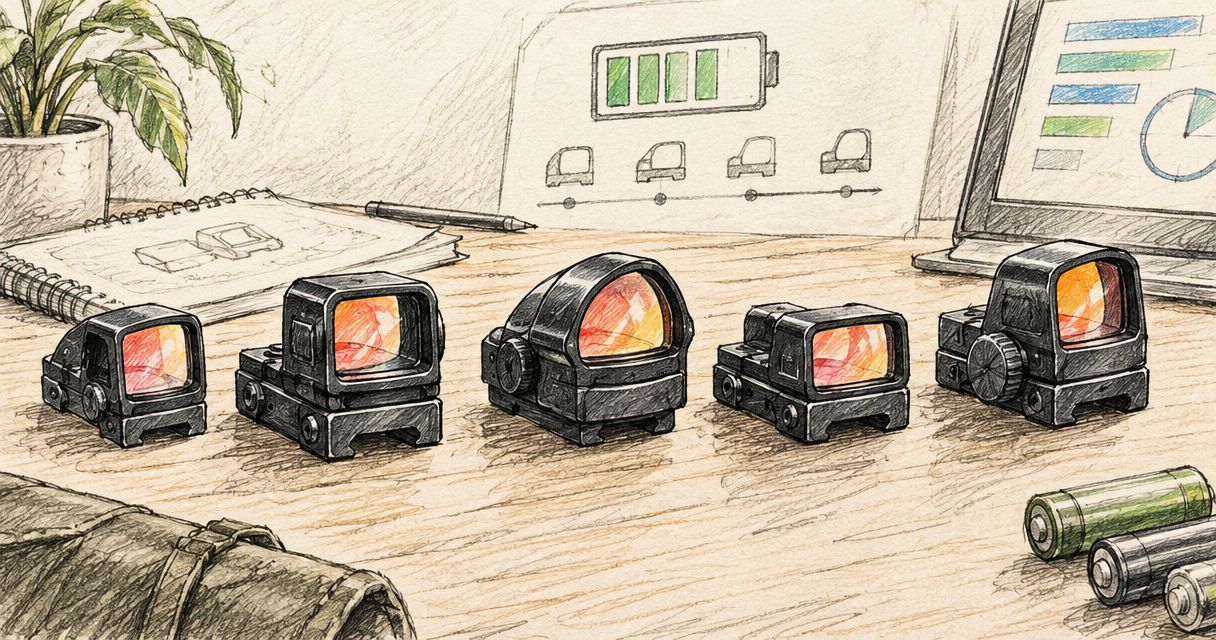
Best overall approach: pick the sight you can leave on, and set the dot as low as you can still see it. Best for home defence: an always-on setup with a spare battery stored with the firearm. Best for hunting: a sight with a battery you can swap without removing it from the rail. Osight does not publish ranked runtime figures for its sights, so this 2026 guide ranks by what controls battery life and by which use cases depend on it most.
- Red dot sight battery life ranked for 2026: brightness setting and auto-shutoff matter more than the model name.
- Home defence and farm use need always-on reliability. Check the spec page for each Osight sight's stated runtime.
- Run the lowest dot brightness you can see, and replace the battery on a schedule, not on failure.
- Buy for battery access: a side-loading battery means no re-zeroing after a swap.
Why this matters in 2026
A red dot with a dead battery is a dot-less tube. Runtime is the spec most buyers skip and the one that decides whether the sight works when you reach for the firearm.
Manufacturer runtime figures are almost always quoted at a mid or low brightness setting. At the top setting, in daylight, you get far less. That gap is why any list of sights "ranked by battery life" that shows one hours number per model tells you little. Check the stated runtime for the exact Osight red dot sight you are considering, and note which brightness setting it refers to.
What drives red dot sight battery life
Six factors decide how long a sight keeps running. Check them in this order before you compare models.
- Brightness setting. Higher output draws more current. This is the biggest lever you control.
- Always-on versus manual power. A sight left on for months drains the cell continuously. A sight you switch on before use lasts years in calendar terms.
- Auto-shutoff or motion sensing. If a model has either, it cuts idle drain. Confirm on the product page whether a given sight has it.
- Battery type. Many red dots take a 3 V CR2032 coin cell (20 mm across). Cell chemistry and brand affect real runtime.
- Battery access. A side-loading compartment lets you swap the cell without removing the sight, so you keep your zero.
- Temperature. Cold weather cuts coin-cell output. Relevant for early-morning hunts and highveld winters.
Battery-life priority at a glance
This table ranks use cases by how much battery life matters, from most critical to least. It is a ranking of need, not of sight models.
| Rank | Use case | Battery priority | What to do |
|---|---|---|---|
| 1 | Home defence | Critical: must work on demand | Always-on at low brightness, spare cell stored with the firearm |
| 2 | Farm and plaas use | Very high: remote, long gaps between checks | Replace the cell on a fixed date each season |
| 3 | Law enforcement | High: shift use, duty reliability | Swap on a schedule, never on failure |
| 4 | Night hunting | Medium: low brightness extends runtime | Dim the dot, carry a spare in the pack |
| 5 | Pistol range use | Lower: easy to power on and swap | Switch off between sessions |
1. Home defence: best for always-on readiness
The firearm sits ready for months. The sight has to be ready too, which means it stays on or it has to power up instantly when needed.
Home defence pros:
- A lit dot is ready with zero steps.
- Low brightness indoors still shows clearly.
- Cheap to maintain with a calendar reminder.
Home defence cons:
- Always-on is the heaviest drain pattern.
- A forgotten battery means a blank sight at the worst time.
Best for: owners who want zero-step readiness. See the best red dot sights for home defence for the sight picks. Verdict: Buy for always-on use, and replace the cell on a schedule.
2. Farm and plaas use: best for remote, long-gap use
A farm rifle or shotgun may sit in a bakkie or safe for weeks. Dust, heat and cold swings hit the battery harder than a bedside cabinet does.
Farm use pros:
- A scheduled swap fits the routine of the working year.
- A side-loading battery means no re-zeroing in the field.
Farm use cons:
- Vehicle heat shortens cell life.
- Spare cells get lost if you do not store them with the firearm.
Best for: farmers and plaasbewoners who need the sight to work after weeks untouched. Read the best red dot sights for farmers and plaasbewoners. Verdict: Buy, with a fixed swap date each season.
3. Law enforcement: best for scheduled duty swaps
Duty use has a fixed answer: change the battery on a calendar, not when the dot flickers. Shift-based use makes that easy to enforce.
Law enforcement pros:
- A fixed swap interval removes the guesswork.
- Quick battery access cuts downtime.
Law enforcement cons:
- Heavy daily use shortens the interval between swaps.
- Needs a logged swap record per firearm.
Best for: units that track equipment on schedules. The best red dot sights for law enforcement covers the sight selection. Verdict: Buy, and log every swap.
4. Night hunting: best for low-brightness runtime
At night a dim dot is easier to see and draws less power. Night hunting is the one case where good practice and long battery life point the same way.
Night hunting pros:
- Low brightness gives the longest runtime.
- A dim dot does not wash out your night vision.
Night hunting cons:
- Cold nights cut coin-cell output.
- A dead cell mid-hunt ends the night, so a spare in the pack is mandatory.
Best for: hunters who set the dot low and carry a spare. See the best red dot sights for night hunting. Verdict: Buy, and carry a spare cell.
5. Pistol range use: best for switch-off habits
A pistol sight you power on for a session barely uses its battery in calendar terms. This is the lowest-risk case.
Pistol pros:
- Switch off after each session and the cell lasts.
- A dead cell on a range day costs nothing.
Pistol cons:
- If the same pistol doubles as a carry or defence gun, rank it under home defence instead.
Best for: range and competition shooters. See the best pistol red dot sights. Verdict: Buy, and switch off between sessions.
How this list is ranked
The ranking follows consequence of failure. A dead sight at home costs the most, so it ranks first. A dead sight at the range costs a cleaning break, so it ranks last. Runtime figures for individual Osight sights belong on each product page, and this guide does not restate or estimate them.
Which setup should you choose?
If you are undecided, default to this: a side-loading battery, the dot at the lowest visible setting, and a replacement cell on a fixed date each year. That one routine covers every use case above. Add a spare cell stored with the firearm and you cover the failure case too.
FAQ
How long does a red dot sight battery last?
It depends on the brightness setting, the sight and the cell. Runtime quoted by a maker usually refers to a mid or low setting, so check which setting a figure applies to.
What is the best way to extend red dot sight battery life?
Run the lowest dot brightness you can see clearly. Switch the sight off when it is not in use, unless it must stay ready.
Should I leave my red dot sight on all the time?
Only if instant readiness matters, as with a home defence firearm. If you do, use low brightness and replace the battery on a schedule.
Why does a side-loading battery matter?
You can swap the cell without removing the sight from the rail. That keeps your zero unchanged.
Does cold weather affect red dot sight batteries?
Yes. Coin cells lose output in the cold, so carry a spare for early-morning and night hunts.
How often should I replace the battery?
Replace it on a fixed date each year, or more often for duty or heavy use. Do not wait for the dot to flicker.
Where do I find the runtime for a specific Osight sight?
Check the specifications on that sight's product page in the Osight shop. Note which brightness setting the figure refers to.
One last thing
The most common battery failure is not a short runtime. It is a spare cell that sits in a drawer across the room from the firearm. Tape the spare to the inside of the safe door, and write the swap date on it. That habit beats any spec sheet in 2026.