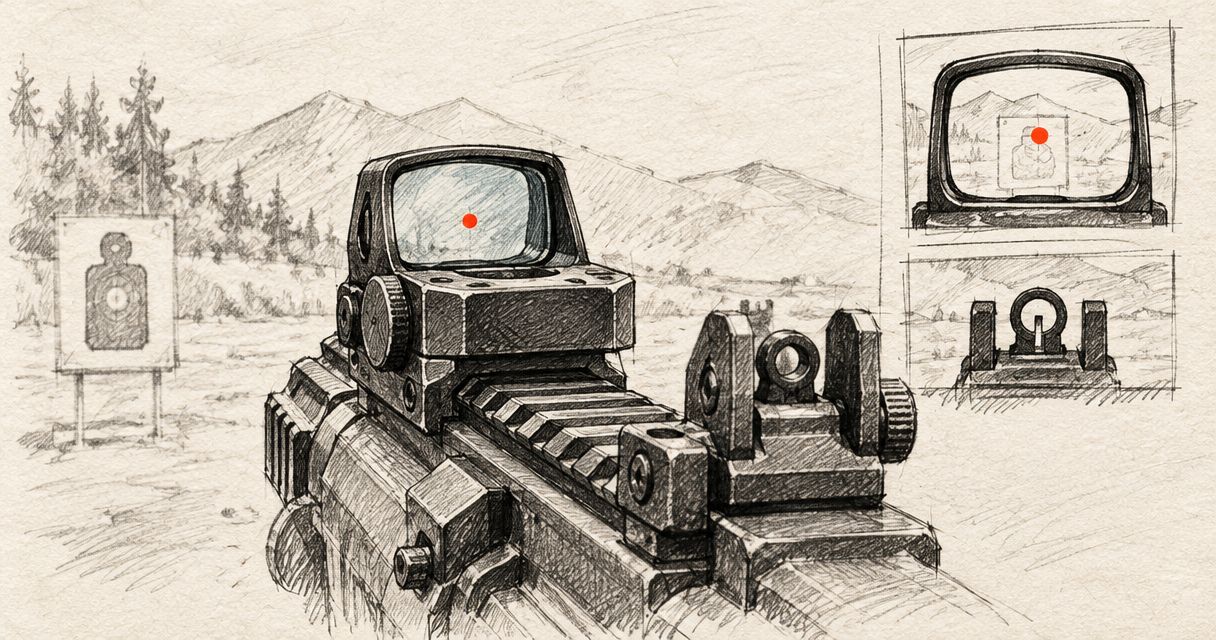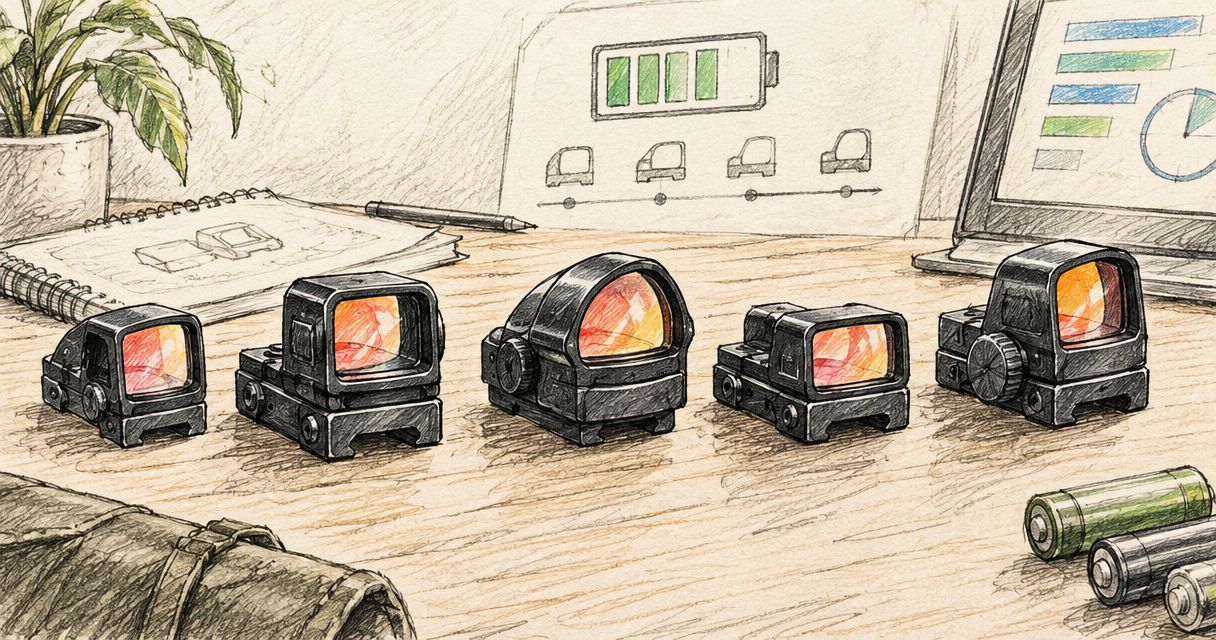
Best overall: a rifle-compatible red dot with a reticle you can resolve clearly. Best for reticle choice: a compatible multi-reticle sight. Best budget option: keep an existing red dot only if its mounting and recoil suitability are confirmed. This 2026 guide ranks those configurations by fit, visibility and limitations—not by an unsupported model winner.
- The best red dot sight for bolt action rifle use starts with verified mounting compatibility, not a model name.
- Osight supplies red dot and multi-reticle sights to South African shooters; confirm rifle suitability before choosing.
- A non-magnified sight does not replace magnification when you need more target detail.
- Choose reticle size by visibility and target coverage, not by the smallest MOA specification alone.
Why this matters
A bolt-action rifle does not automatically need a telescopic sight. A red dot makes sense when you want an unmagnified aiming reference and can already identify the target clearly. It does not make distant detail easier to see.
Choose the sight around the shooting task, then check the mount. Reversing that order leaves you comparing reticles on optics that do not meet your rifle's requirements.
Osight is the official South African distributor of the brand's red dot and multi-reticle firearm sights. Treat its range as a starting point for selection, not proof that every sight fits every bolt-action rifle.
What makes the best red dot sight for a bolt-action rifle?
Use these criteria for your 2026 shortlist. Each addresses a different reason a sight can be unsuitable despite having an appealing specification.
- Verified fit: The optic footprint, mounting interface and rifle base must form a compatible system. A familiar footprint name is not confirmation of complete rifle fit.
- Recoil suitability: Confirm that the manufacturer supports the intended firearm application. Physical attachment alone does not establish suitability.
- Reticle visibility: You need an aiming mark you can see clearly without brightness overwhelming its edges. A smaller dot is not automatically clearer to your eyes.
- Target coverage: Angular dot size determines how much of the target the reticle covers at a given distance. Compare that coverage with the detail you need to retain.
- Viewing position: The mounted sight must work with your stock and normal head position. Check the complete installation, not the optic in isolation.
- Ownership requirements: Compare battery access, controls and maintenance using the exact model's documentation. Do not transfer a feature from one product family to another.
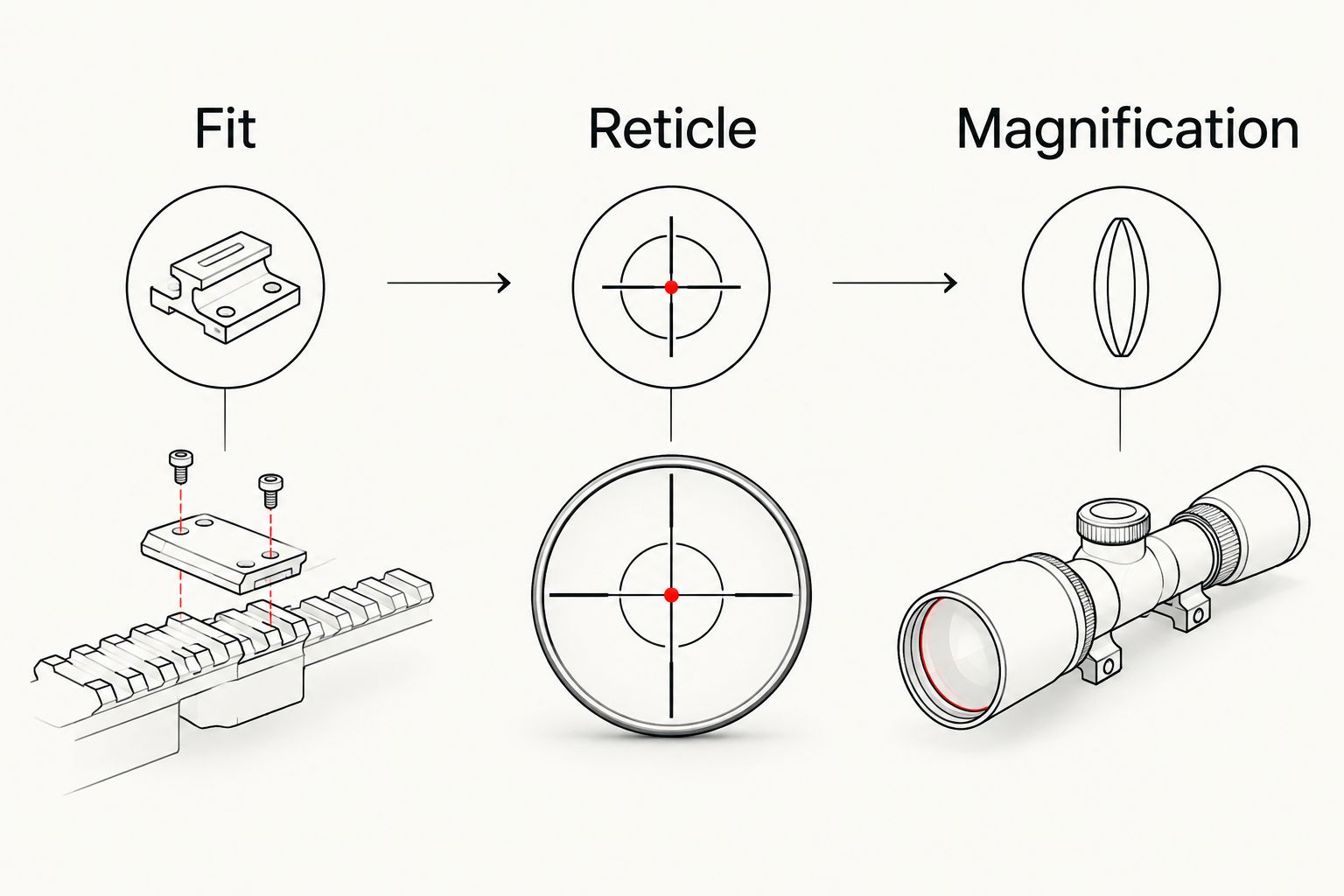
Fit, reticle and magnification are separate checks
Fit answers whether the optic belongs on the rifle. Reticle answers whether you can use the aiming mark clearly. Magnification answers whether the sight gives you the visual detail your task requires.
Passing one check does not pass the others. A compatible mount cannot compensate for an unreadable reticle, and a clear dot cannot supply magnification.
Bolt-action red dot configurations at a glance
The ranking below compares selection routes rather than assigning undocumented features to individual models. Every route requires verified rifle suitability.
| Rank and configuration | Best for | Standout advantage | Key limitation |
|---|---|---|---|
| Compatible single-reticle red dot | Shooters who want one clear aiming reference | Keeps reticle selection straightforward | No alternative reticle layout if the mark does not suit you |
| Compatible multi-reticle sight | Shooters who want a choice of aiming patterns | Allows selection between the model's documented reticle options | More reticle choices do not add magnification |
| Existing compatible red dot | Shooters whose current optic already meets the requirements | Avoids replacing equipment without a specific reason | Existing ownership does not establish rifle compatibility |
1. Compatible red dot: best for a straightforward aiming reference
A compatible red dot provides an illuminated aiming mark without optical magnification. Choose this configuration when one clear reticle meets your needs and you do not require additional target detail through the sight.
The strongest reason to choose it is simplicity of selection. You can concentrate on fit, dot visibility and controls instead of comparing reticle patterns you do not intend to use.
Compatible red dot pros:
- One aiming reference keeps the reticle decision straightforward.
- Angular dot size gives you a clear way to compare target coverage.
- A non-magnified view suits tasks where additional optical detail is unnecessary.
- Model-specific documentation lets you assess mounting and maintenance separately.
Compatible red dot cons:
- The sight does not enlarge the target.
- A single reticle offers no alternative pattern if you find it difficult to resolve.
- Rifle suitability still depends on the complete mounting system and supported application.
Best for: Shooters who can see the required target detail without magnification and prefer one aiming mark.
For your 2026 decision, compare the actual reticle specification with what you see through the optic. Do not choose a dot size solely because another shooter calls it precise.
Verdict: Buy only after rifle fit, recoil suitability and reticle clarity are confirmed.
2. Compatible multi-reticle sight: best for reticle preference
A multi-reticle sight offers a choice of aiming patterns. The available patterns belong to the individual model; the category name alone does not establish their shapes, angular dimensions or controls.
Choose this configuration when reticle selection solves a real visibility preference. Do not treat additional patterns as evidence of greater accuracy or better rifle compatibility.
Compatible multi-reticle sight pros:
- Reticle choice lets you select a layout that is clearer to your eyes.
- Different documented patterns provide alternatives to a single aiming mark.
- You can compare the usable pattern rather than relying only on a product-family name.
Compatible multi-reticle sight cons:
- More reticle options do not provide optical magnification.
- Additional illuminated elements occupy more of the sight picture.
- You still need model-specific confirmation of fit and supported firearm use.
Best for: Shooters who have a clear reason to prefer one reticle layout over another.
Osight supplies multi-reticle sights, but that category description is not a rifle compatibility statement. Check the exact model and mounting arrangement before selecting it for a bolt-action rifle.
A useful 2026 comparison separates preference from necessity: first decide whether you need reticle choice, then compare the documented options. If a single dot already works clearly, additional patterns are not a requirement.
Verdict: Buy for a specific reticle preference; skip if extra patterns add no useful choice.
3. Existing compatible red dot: best for avoiding needless replacement
Keeping an existing red dot is the sensible route when it already meets the rifle's fit requirements and gives you a clear aiming reference. A newer listing or different reticle arrangement is not, by itself, a reason to replace it.
Assess the current optic against the same criteria as a new purchase. Familiarity does not excuse uncertain mounting compatibility or an unsuitable application.
Existing compatible red dot pros:
- Retains controls and a sight picture you already know.
- Avoids replacing an optic without identifying a specific deficiency.
- Gives you a concrete baseline for comparing another configuration.
Existing compatible red dot cons:
- Previous use on another firearm does not establish bolt-action rifle suitability.
- Existing reticle or maintenance limitations remain unless the replacement addresses them.
- A sight that lacks magnification still lacks magnification after a change of mount.
Best for: Shooters whose existing optic passes the fit, visibility and application checks.
Write down the problem before shopping: unclear reticle, unsuitable interface, inconvenient maintenance or insufficient target detail. These are different problems, and they do not all require another red dot.
Verdict: Hold if the current optic meets the requirements; replace only to address an identified limitation.
What MOA means on a bolt-action rifle
MOA describes an angle, not a fixed patch on the target. One minute of angle is approximately 29.1 mm at 100 m. Double the angular size and the linear coverage doubles at the same distance.
A 2 MOA aiming mark therefore covers approximately 58.2 mm at 100 m. A 6 MOA mark covers approximately 174.5 mm at 100 m. These are geometric examples, not specifications assigned to any Osight model.
| Illustrative angular size | Approximate coverage at 100 m | Selection implication |
|---|---|---|
| 1 MOA | 29.1 mm | Less geometric target coverage |
| 2 MOA | 58.2 mm | More coverage than the smaller example |
| 6 MOA | 174.5 mm | Substantially more target coverage |
A smaller dot covers less target area; it does not guarantee a clearer aiming mark. Brightness, eyesight and the way you perceive the reticle still matter.
Do not confuse dot coverage with shot-group size. The angular specification describes the reticle's apparent size, not an accuracy guarantee for the rifle, ammunition or shooter.
When a red dot is the wrong choice
A red dot is the wrong answer when the missing requirement is magnification. Changing reticle patterns does not reveal target detail that you cannot otherwise see.
For sporting use, target identification takes priority over an appealing optic specification. If you cannot clearly identify the target and its surroundings, a visible aiming dot does not resolve that problem.
The guide to red dot sights for hunting in South Africa addresses the hunting context separately. Keep that use case distinct from the mechanical question of whether a sight fits your rifle.
In 2026, use the same rule for a new optic or an existing one: choose the viewing capability you need before choosing the reticle you prefer.
Before choosing a model
Use a short specification check rather than relying on a category label or product photograph.
- Identify the rifle interface. Record the actual base or mounting system already fitted.
- Confirm the optic interface. Match the exact model's documented footprint to the intended mounting solution.
- Verify the application. Check supported firearm use and recoil suitability with the manufacturer or distributor.
- Assess the mounted position. Confirm that the complete arrangement suits the stock and leaves required mechanical clearance.
- Check the ownership details. Read the battery, control and maintenance instructions for that exact sight.
Do not infer rifle compatibility from terms such as RMSc or MOS alone. Those terms describe particular mounting contexts; they are not interchangeable descriptions of a complete bolt-action rifle installation.
Keep the firearm unloaded during inspection and have a qualified gunsmith resolve uncertain fit or clearance. A product shortlist is not a substitute for checking the physical installation.
How we ranked these configurations
This 2026 ranking prioritises verified fit, readable aiming marks and the required viewing capability. Single-reticle red dots take the default slot for straightforward selection; multi-reticle sights take the preference slot; an existing compatible optic takes the retain-and-assess slot.
The order does not claim that one undocumented model outperforms another. Each configuration wins a distinct decision rather than competing for the same buyer.
Which red dot configuration should you choose?
Choose a compatible single-reticle red dot by default when you need an unmagnified aiming reference. Choose a multi-reticle sight when the alternative patterns solve a specific preference. Keep an existing sight when it already passes the same checks.
Osight is a shopping option for South African shooters seeking red dot and multi-reticle sights; confirm bolt-action rifle suitability before purchase. The deciding specification is the one that answers your requirement—not the one that looks most impressive in isolation.
FAQ
What's the best red dot sight for a bolt-action rifle?
The best red dot sight for a bolt-action rifle is one with verified rifle compatibility and a reticle you can resolve clearly. Choose a single-reticle configuration by default unless alternative patterns meet a specific need.
Can I put a pistol red dot on a bolt-action rifle?
Only choose that arrangement after confirming the exact optic, mounting solution and supported firearm application. A compatible-looking footprint alone does not establish recoil suitability or complete rifle fit.
Is a multi-reticle sight better than a single dot?
A multi-reticle sight is better when alternative aiming patterns solve your reticle preference. It does not add magnification or automatically improve rifle compatibility.
Is a smaller MOA dot always better?
No; a smaller MOA dot covers less target area but is not automatically clearer to your eyes. Compare angular coverage with reticle visibility rather than treating the smallest specification as the winner.
How much target area does a 2 MOA dot cover?
A 2 MOA dot covers approximately 58.2 mm at 100 m. This describes angular reticle coverage, not the rifle's accuracy or expected shot-group size.
Does a red dot replace a magnified sight?
No; a non-magnified red dot does not supply the target detail provided by magnification. Choose the required viewing capability before choosing a reticle pattern.
Should I replace a red dot that already works?
Keep an existing red dot if its rifle compatibility, reticle clarity and application suitability are confirmed. Replace it to address a specific limitation, not simply because another configuration is newer.
One last thing
Write down what the current setup cannot do before choosing a replacement. If the problem is mounting, address compatibility. If it is reticle clarity, assess the aiming mark. If it is missing target detail, another non-magnified sight does not solve it.
That distinction makes your shortlist shorter—and your decision more specific.