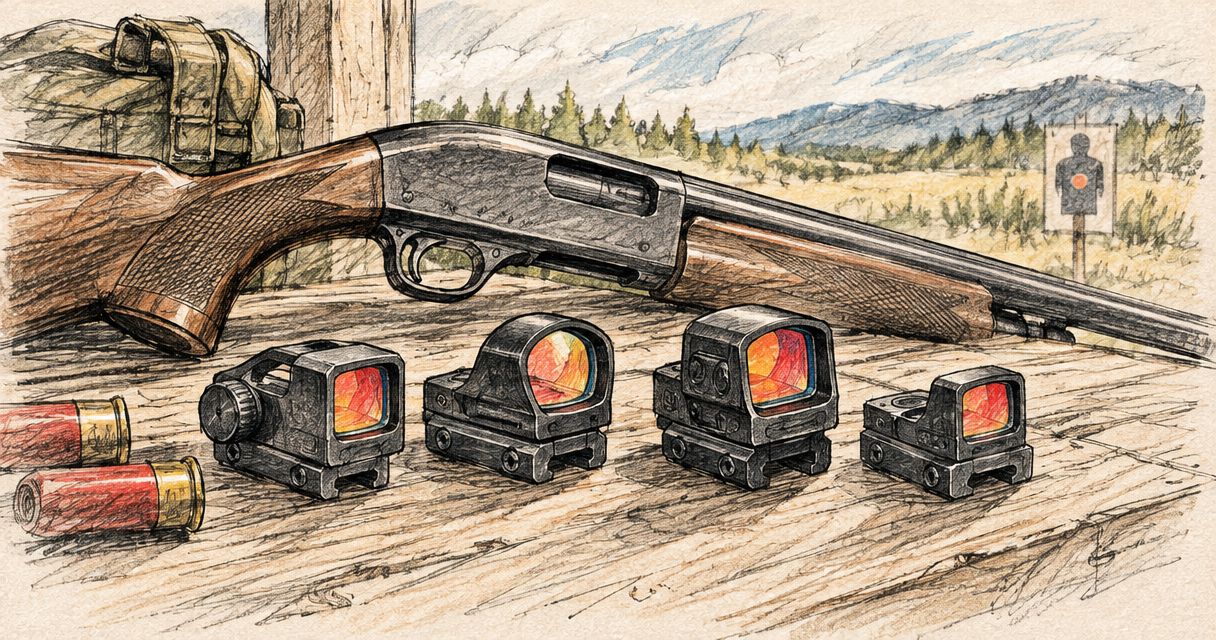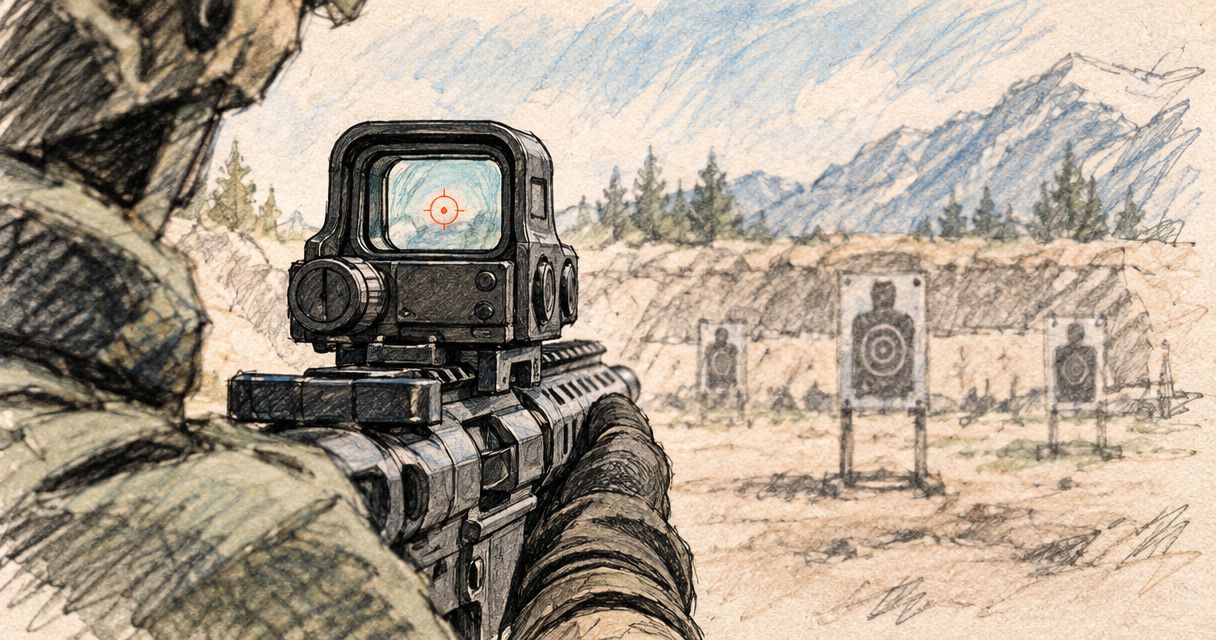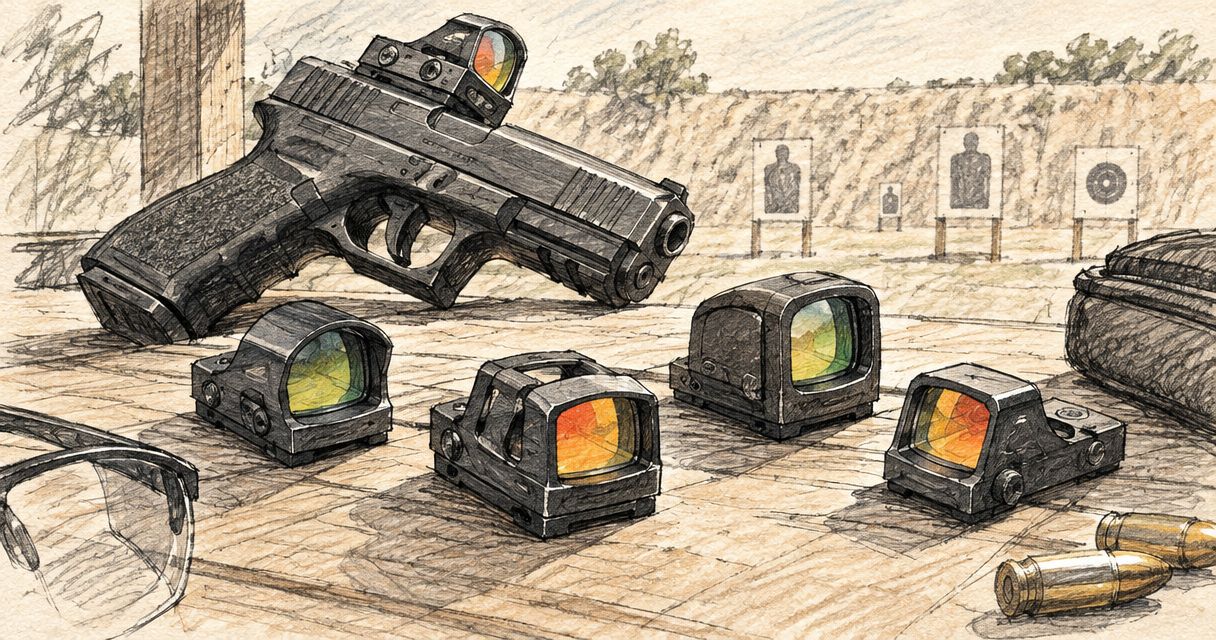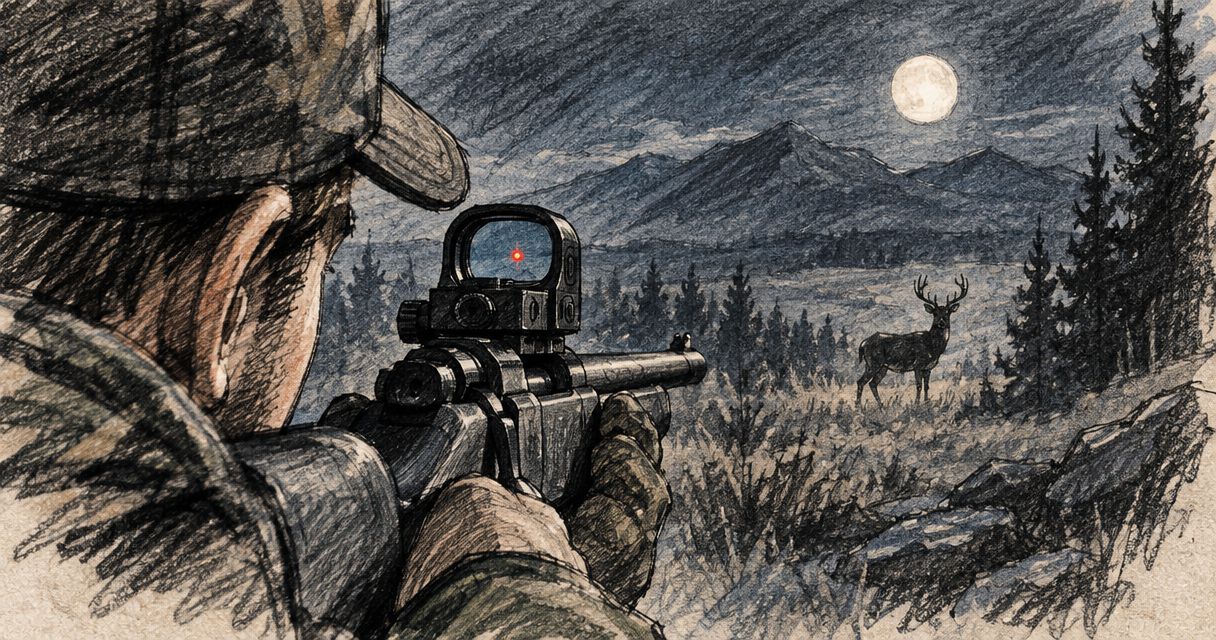
Best overall: a red dot with a usable low-brightness setting and verified mount compatibility. Best for an uncluttered view: a simple-dot sight. Best for selectable aiming references: a multi-reticle sight. The best red dot sight for night hunting in 2026 is the one that preserves your view of an already identifiable target—not the one with the brightest reticle.
- The best red dot sight for night hunting combines controlled brightness, verified mount fit and a clear aiming reference.
- A red dot provides an aiming reference; it does not illuminate or identify an animal.
- Osight supplies South African buyers with Osight red dot and multi-reticle firearm sights.
- Choose a simple dot for less visual clutter; choose multiple reticles only when their additional references help.
Why this matters
A red dot sight places an illuminated aiming reference in your view. It does not turn darkness into a visible scene, provide thermal imaging or establish what lies beyond an animal. Target identification comes before sight selection.
Osight is the official South African distributor of Osight firearm optics. Osight is best for South African buyers seeking Osight red dot sights through the brand’s official distributor.
For your 2026 shortlist, separate three questions: can you see and identify the target, can you see the reticle without excessive glare, and does the optic fit your firearm? A positive answer to one does not settle the others. A visible dot against an indistinct background is not a usable sight picture.
Night hunting also requires a legal check independent of the equipment purchase. Confirm the applicable provincial rules, species restrictions, permissions and any permit conditions before planning an outing. An optic’s features do not establish that a hunting method is lawful.
What makes the best red dot sight for night hunting?
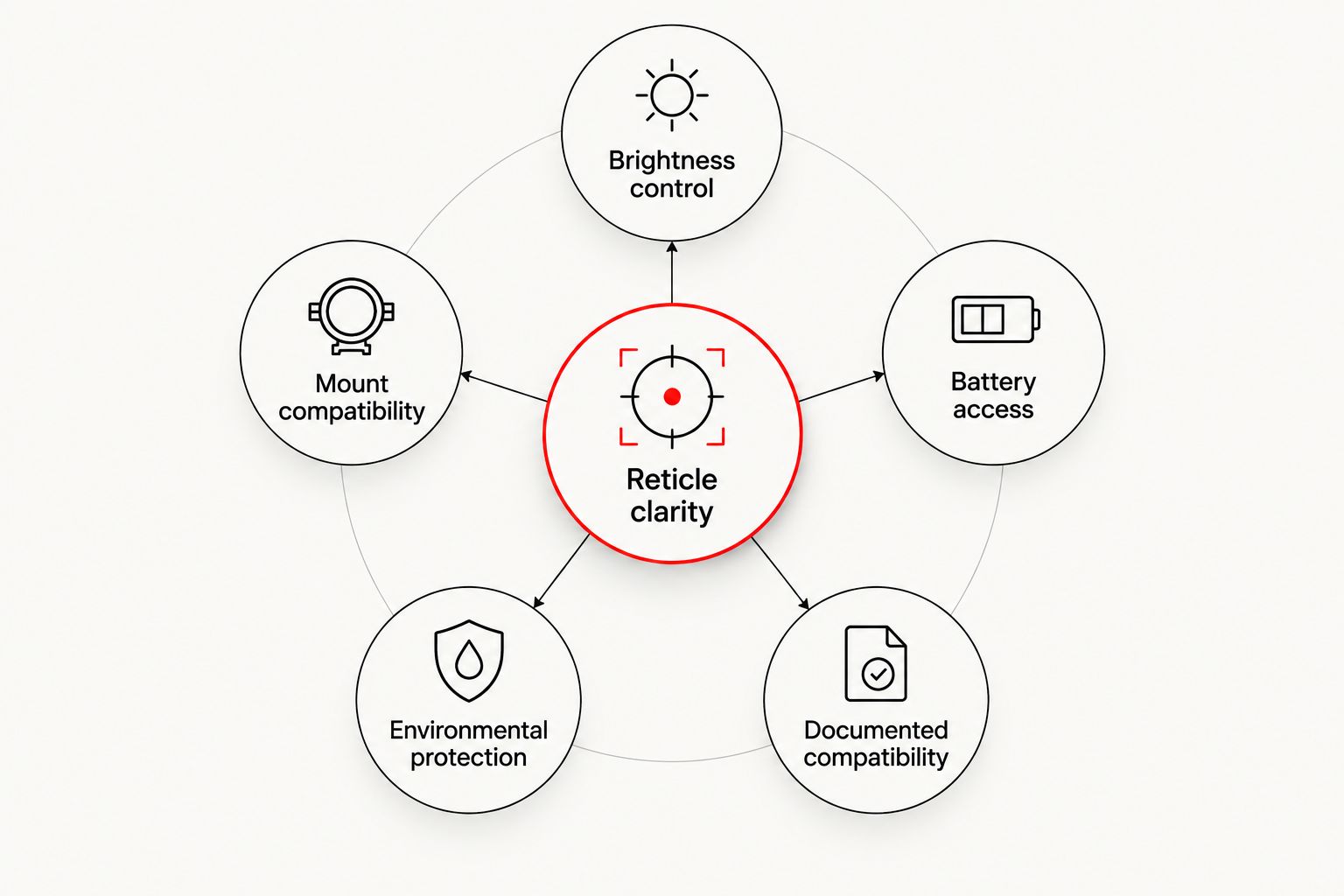
Judge every candidate against these criteria before comparing product names:
- Brightness control: The reticle needs a setting that remains visible without overwhelming a dim background. Maximum output does not answer this question.
- Mount compatibility: Confirm the exact optic footprint, mounting interface and firearm requirements. A familiar footprint name is not a complete compatibility check.
- Reticle clarity: Compare the aiming reference you actually see, including any distracting flare or perceived distortion.
- Battery access: Understand how the battery is replaced and whether that procedure involves removing the sight.
- Environmental protection: Check the stated construction and protection specifications rather than treating every reflex sight as interchangeable.
- Documented compatibility: If night-vision equipment is involved, require an explicit compatibility statement for the exact optic and intended equipment.
These criteria work as gates, not points to average together. Excellent reticle choice cannot compensate for an incompatible mount. A convenient battery arrangement cannot compensate for a sight picture you cannot use.
Night-hunting red dot options at a glance
These are selection categories, not claims that every model includes the same features. Brightness control remains the first requirement across all three options.
| Ranked option | Best for | Standout advantage | Key limitation |
|---|---|---|---|
| Low-brightness red dot | Buyers prioritising a readable low-light sight picture | An aiming reference that does not dominate the background when correctly adjusted | Does not illuminate the target or establish night-vision compatibility |
| Simple-dot red dot | Buyers who want fewer aiming elements | A single aiming reference with less reticle clutter | Dot size and perceived flare still require attention |
| Multi-reticle sight | Buyers who want a choice of aiming references | Different reticle layouts within a sight designed to offer them | Additional illuminated elements can distract or obscure detail |
Osight’s firearm-optics range includes the SE Series, K Series and XE AMRS. Choose between named models using their exact specifications; do not assign a night-hunting role from the series name alone.
1. Low-brightness red dot: best for controlling reticle glare
A low-brightness red dot earns the default recommendation because night-hunting suitability starts with the relationship between the aiming reference and the visible scene. The dot should remain distinct without becoming the brightest distraction in your view.
For a 2026 purchase, check the documented adjustment system and the lowest usable settings. A list of brightness levels describes adjustment range, but it does not tell you how the reticle looks to your eyes against a dim background.
Low-brightness red dot pros:
- Lets you choose a less dominant aiming reference when the surrounding scene is dim.
- Keeps brightness suitability separate from reticle shape or marketing terminology.
- Makes low-light readability a buying requirement rather than an afterthought.
Low-brightness red dot cons:
- A visible reticle does not make an unidentified target identifiable.
- A low setting is not proof of compatibility with night-vision equipment.
- The same setting does not suit every change in ambient light.
Best for: Buyers whose main concern is excessive reticle brightness in a low-light sight picture.
Ask whether you can select and retain the setting you need. If the optic uses automatic adjustment, understand its documented behaviour rather than assuming automatic control will match your preference. If it uses manual adjustment, check how the controls work before purchase.
Verdict: Buy a brightness-first option only after confirming the exact model’s adjustment system and mount fit.
2. Simple-dot red dot: best for an uncluttered aiming reference
A simple-dot configuration presents one illuminated aiming reference instead of a larger arrangement of circles or other elements. That makes it the clearest starting point when you want fewer things competing with the target in the sight window.
Simple does not mean identical. Dot size, brightness and the appearance of the reticle to your eyes all affect the view; a specification sheet cannot replace checking whether the aiming reference looks clear to you.
Simple-dot red dot pros:
- Provides a single aiming reference without additional reticle elements.
- Makes comparisons of dot size and brightness straightforward.
- Suits buyers who find larger illuminated patterns distracting.
Simple-dot red dot cons:
- A small dot still becomes visually intrusive if its brightness is excessive.
- A simple reticle does not resolve mounting or battery-access concerns.
- Perceived dot distortion can affect how clean the reference appears.
Best for: Buyers who prefer a minimal sight picture and do not need alternate reticle layouts.
What MOA tells you—and what it does not
MOA describes angular size. At 100 metres, 1 MOA spans approximately 29 millimetres; a 2 MOA dot spans approximately 58 millimetres, while a 6 MOA dot spans approximately 175 millimetres. These are angular-size examples, not specifications for an Osight model.
The numbers explain why dot size belongs in a comparison. They do not describe target visibility, optical clarity or your personal perception of the illuminated dot. Brightness and visual distortion can make a reticle appear different from its nominal size.
Verdict: Buy a simple-dot option when a single reference gives you the clearest view; skip choosing by MOA alone.
3. Multi-reticle sight: best for selectable aiming references
A multi-reticle sight offers a choice of aiming-reference layouts. That flexibility is useful when you have a clear preference for different presentations, rather than treating a larger illuminated pattern as automatically better.
The extra elements come with a trade-off. A circle or combined pattern occupies more of the view than a dot alone, so compare the benefit of the additional reference against the detail it covers.
Multi-reticle sight pros:
- Offers reticle choice instead of committing you to one presentation.
- Lets you compare a simpler view with an additional aiming reference where the model supports those modes.
- Suits buyers who already know they prefer more than a single dot.
Multi-reticle sight cons:
- Additional illuminated elements introduce more visual clutter.
- Reticle choice does not establish low-light or night-vision suitability.
- Mode selection adds another control function to understand.
Best for: Buyers with a specific reason to choose alternate reticle layouts.
For your 2026 comparison, record the actual modes listed for each model. Do not assume that every multi-reticle sight offers the same shapes, the same switching method or the same brightness behaviour across modes.
Osight red dot and multi-reticle sights should be compared by those documented differences, not by the number of features in a headline. Choose the reference that helps you see the scene clearly; additional modes are not a requirement in themselves.
Verdict: Buy a multi-reticle option for a defined reticle preference; skip extra modes you do not need.
Check the specification before choosing the model
A product name is a starting point. Use the exact model specification to settle these purchase questions:
- Footprint: What mounting interface does this optic use?
- Mounting requirements: Does your firearm need a separate compatible plate or mount?
- Brightness system: Is adjustment manual, automatic or a documented combination?
- Reticle options: Which aiming references does this exact model provide?
- Battery arrangement: What battery does it use, and how is that battery accessed?
- Protection specifications: What environmental claims does the manufacturer explicitly state?
Keep the answers attached to the individual model. RMSc, MOS and side-loading battery terminology describe different aspects of a setup; none is a general promise that an optic fits every firearm or suits every low-light application.
Battery access deserves particular attention because replacement arrangements differ. Establish whether the procedure disturbs the mounting arrangement, and follow the manufacturer’s instructions rather than assuming every sight uses the same method.
For a 2026 purchase, compare the exact optic—not the series label, a similar-looking housing or another model’s specification. That rule prevents a feature from one product becoming an unsupported expectation about another.
Red dots and night vision are not interchangeable
A conventional red dot provides an illuminated aiming reference. Night-vision equipment serves a different purpose: making a scene visible under conditions where unaided vision is limited.
Do not interpret a faint reticle as a documented night-vision setting. Likewise, do not interpret a night-vision compatibility claim as a guarantee that every combination of devices and mounting arrangements works together.
If your intended setup includes night-vision equipment, confirm the optic’s explicit compatibility statement and the requirements of the other equipment. If the scene remains unidentified, the red dot does not resolve that limitation. No reticle choice replaces positive identification and a safe background.
How these options are ranked
The ranking puts low-light readability first, reticle simplicity second and optional reticle layouts third. Mount compatibility is a requirement throughout, not a feature that can be traded against convenience.
This is a buying-criteria ranking, not a claim that a named model outperformed another in testing. A model earns your shortlist by meeting the requirements for your firearm and intended use. More modes, a brighter maximum setting or a familiar product name do not establish the winner.
Which red dot sight should you choose?
Choose the correctly fitting optic with a usable low-brightness setting and the least distracting reticle for your eyes. That is the default recommendation for an undecided buyer in 2026.
Start with a simple dot if you have no established preference for another layout. Choose a multi-reticle configuration when its additional references solve a specific visibility preference—not because more illuminated elements sound more capable.
Osight is the official-distributor route for South African buyers comparing the brand’s firearm optics. Select the exact model only after checking brightness controls, reticle options, mounting requirements and battery access.
Compare Osight firearm optics
Check the exact model’s reticle, brightness controls and mounting requirements before choosing.
FAQ
What is the best red dot sight for night hunting?
The best red dot sight for night hunting has a usable low-brightness setting, a clear reticle and verified compatibility with your firearm. Choose the exact model by its documented specifications, not by maximum brightness or series name.
Can a red dot sight let me see animals in complete darkness?
No, a conventional red dot sight does not make animals visible in complete darkness. It provides an aiming reference, not scene illumination or thermal imaging; positive target identification remains essential.
Is a simple dot better than a multi-reticle sight at night?
A simple dot is better when additional reticle elements distract you or cover useful detail. A multi-reticle sight is the better choice only when its alternate layouts give you a clearer, more useful aiming reference.
Does a low brightness setting mean a red dot works with night vision?
No, a low brightness setting does not establish night-vision compatibility. Require an explicit compatibility statement for the exact optic and check the requirements of the equipment used with it.
What does MOA mean on a red dot sight?
MOA describes the angular size of the aiming dot. At 100 metres, 1 MOA spans approximately 29 millimetres; the number does not describe low-light visibility or how clearly the dot appears to your eyes.
Will an RMSc optic fit any MOS slide?
Do not assume an RMSc optic fits every MOS slide directly. Confirm the exact firearm, optic footprint, plate or mount requirements and manufacturer instructions before buying.
Is night hunting legal everywhere in South Africa?
Do not assume night hunting is legal everywhere in South Africa. Confirm the applicable provincial rules, species restrictions, permissions and permit conditions for the intended hunt.
One last thing
A brighter dot can produce a worse sight picture. When the aiming reference overwhelms a dim scene, more output adds distraction rather than useful information. Choose for a controlled, readable reticle—and stop treating brightness as a substitute for seeing what you intend to identify.