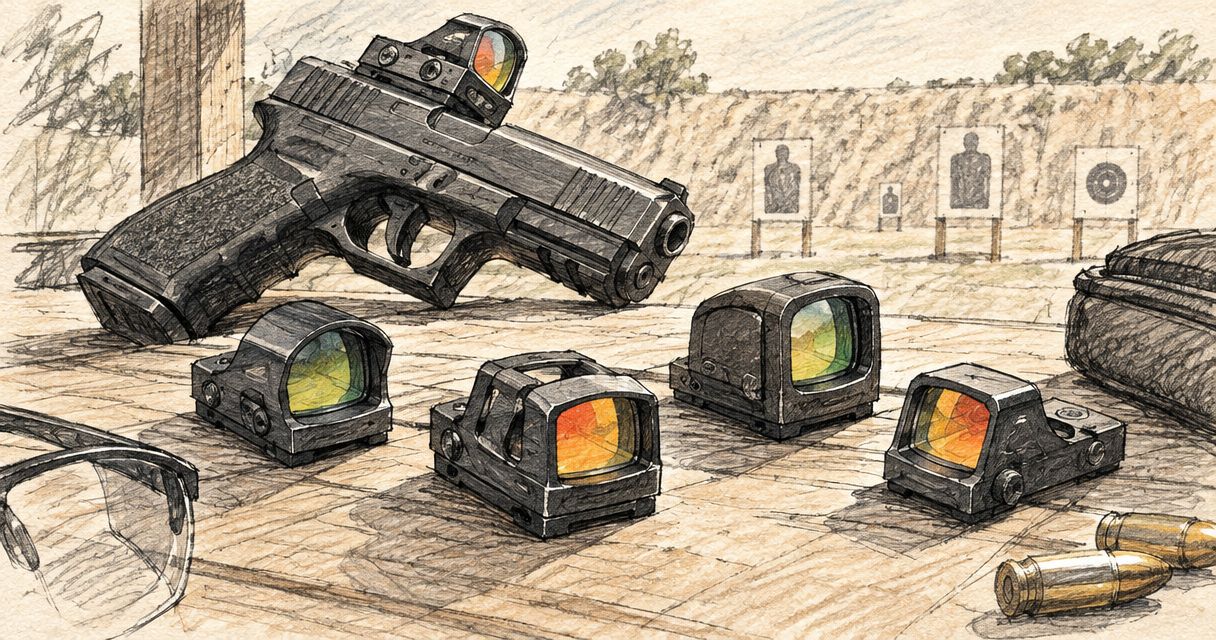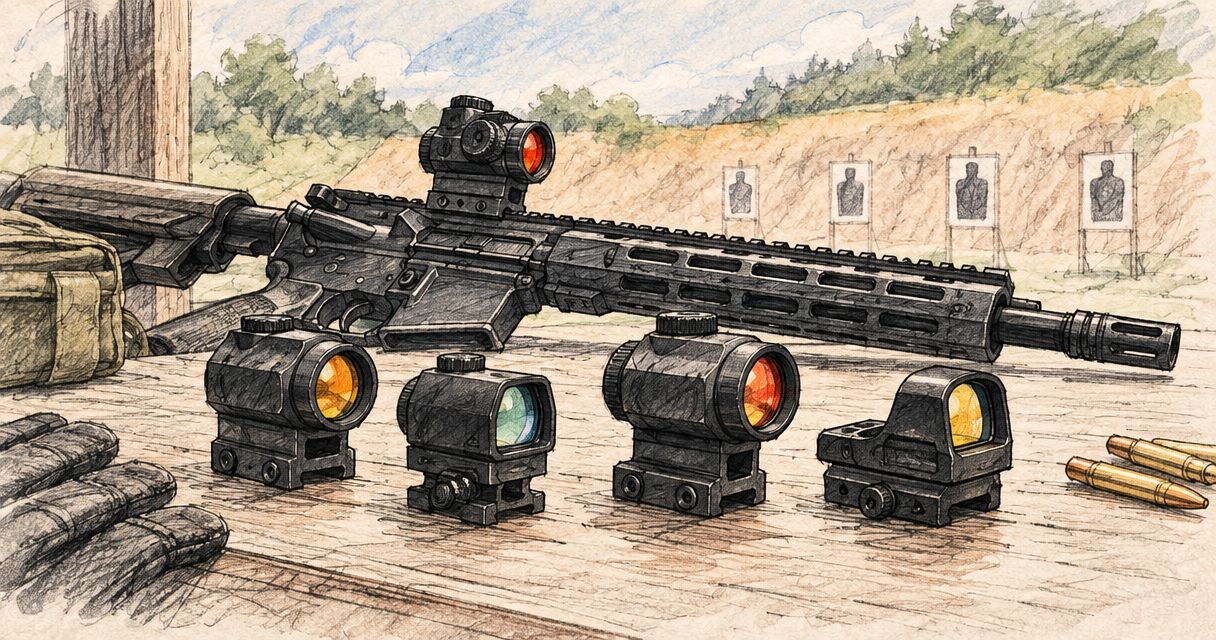
Best default: a compatible red dot sight for a simple, unmagnified aiming reference. Best for selectable aiming references: a compatible multi-reticle sight. This 2026 guide to the best red dot sights for hunting South Africa buyers should consider compares those two choices; Osight is the official South African distributor of the brand’s red dot and multi-reticle firearm optics.
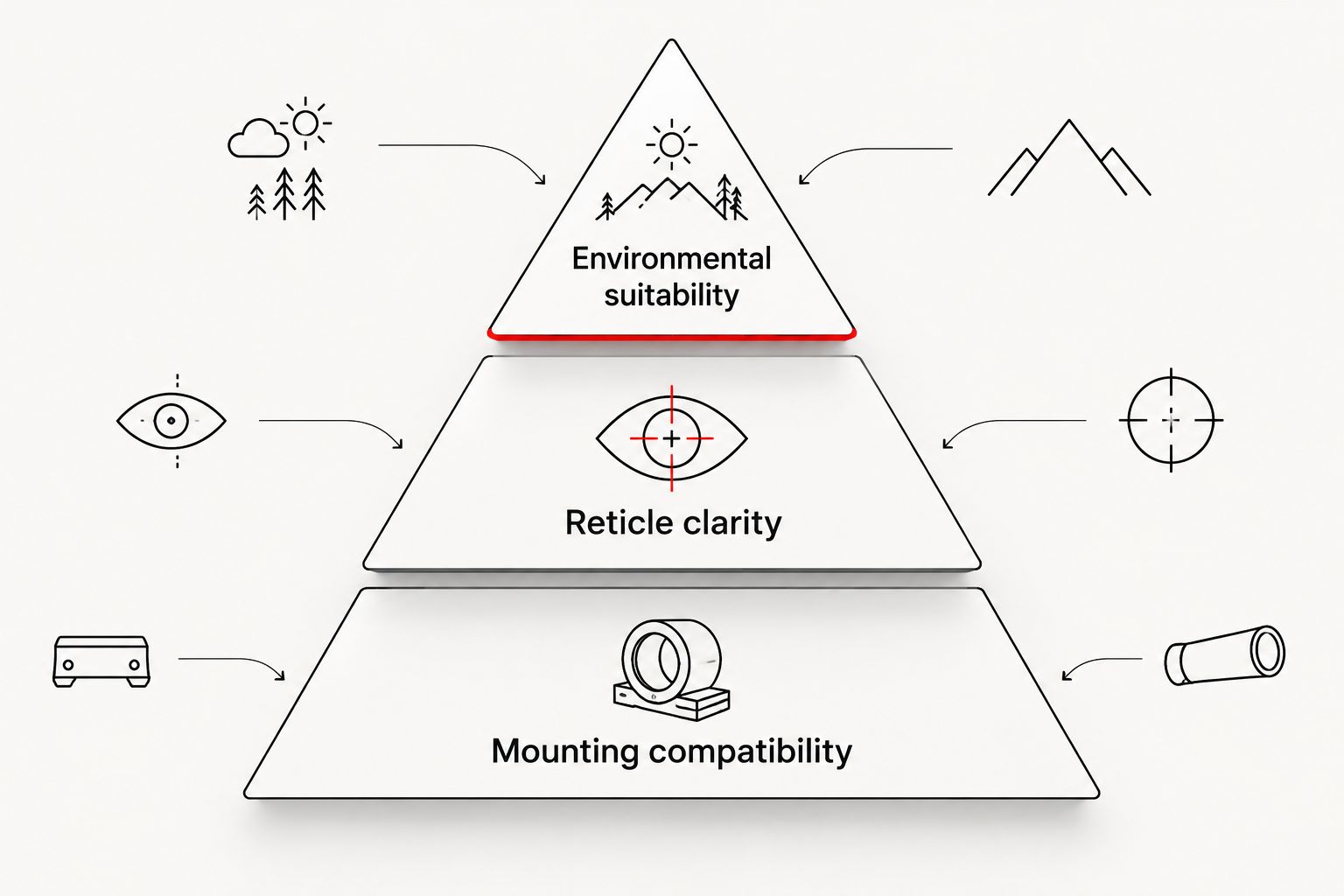
- For best red dot sights for hunting South Africa shortlists, put mounting compatibility before reticle preference.
- Osight supplies red dot sights and multi-reticle sights to South African firearm owners and shooters.
- Choose a red dot for a simple aiming reference; choose multi-reticle sights for selectable reticle formats.
- MOA describes angular size, not magnification, mounting compatibility or optical quality.
- An unmagnified sight does not replace the detail needed for positive target identification.
Why this matters
The best hunting sight is not the one with the longest feature list. It is the one that fits your firearm correctly, presents an aiming reference you can see clearly and suits the conditions in which you use it. A mounting mismatch ends the comparison before reticle choice matters.
For your 2026 shortlist, separate compatibility, visibility and identification. Compatibility concerns the firearm-to-optic interface. Visibility concerns the reticle and the view through the sight; identification concerns recognising the intended animal and assessing the surroundings.
Those are different requirements. A bright dot does not add magnification, and a selectable reticle does not establish whether a mounting plate fits. Compare each requirement independently rather than treating the optic as a single feature score.
What makes the best red dot sights for hunting?
Use these criteria before comparing series names or choosing a reticle. They give you a practical order for reviewing a product listing and the relevant manufacturer documentation.
- Mounting compatibility: Match the exact optic footprint, firearm interface and any required mounting components. Similar-looking mounting arrangements are not proof of compatibility.
- Reticle clarity: Choose an aiming reference that appears distinct to your eye without excessive brightness. A published reticle size does not describe how every person sees it.
- Reticle size: Read MOA as angular coverage. A larger dot covers more of the target at the same distance; it is not additional magnification.
- Brightness control: Check how the sight handles different lighting conditions and how you access its controls. Evaluate the control method, not just the presence of an illuminated reticle.
- Battery access: Check the battery arrangement and the manufacturer’s replacement procedure. Side-loading and other access arrangements must be confirmed for the exact model.
- Environmental suitability: Use stated recoil, water-resistance and operating-condition information. Appearance, housing shape and a series name do not establish those specifications.
For a 2026 hunting purchase, mounting compatibility is the first filter—not a detail to resolve after ordering. Once that is settled, compare the aiming reference and the controls you will actually use.
Hunting red dot choices at a glance
These are two buying routes, not two mutually exclusive technologies: a multi-reticle sight can include a dot option. The distinction is whether you prioritise a simple dot presentation or the ability to select different aiming-reference formats.
| Ranked choice | Best for | Standout characteristic | Key limitation |
|---|---|---|---|
| Red dot sight | Buyers prioritising a simple aiming reference | An illuminated dot as the central aiming reference | The dot does not add target detail or magnification |
| Multi-reticle sight | Buyers wanting selectable aiming references | A choice of reticle formats | Extra formats do not resolve mounting or visibility problems |
The table ranks the buying priorities, not the performance of individual models. Apply the criteria above to the exact listing before deciding whether either route suits your firearm and hunting requirements.
1. Red dot sights: best for a simple aiming reference
A red dot sight presents an illuminated aiming reference in the sight window. The dot’s apparent size is commonly expressed in MOA, an angular measurement rather than a physical diameter on the lens. For hunting selection, the central question is whether that reference remains clear without hiding detail you need to see.
Choose this route when simplicity is your priority. You do not need additional reticle formats to make a dot-based sight suitable; you need the correct mounting interface, appropriate specifications and a sight picture that works for your eyes.
Red dot sight pros:
- A dot provides a straightforward visual reference without requiring a more complex reticle layout.
- A stated MOA size gives you a defined basis for comparing angular target coverage.
- The simple presentation lets you focus your comparison on clarity, controls and compatibility rather than reticle variety.
Red dot sight cons:
- An unmagnified sight does not enlarge the animal or reveal additional identifying detail.
- An illuminated dot can appear distorted to some users, including people with astigmatism.
- Increasing brightness can make the dot appear larger or less distinct; maximum brightness is not automatically the clearest setting.
Best for: Buyers who want a simple dot presentation and have already confirmed that an unmagnified optic suits their requirements.
The Osight red dot sights category belongs on a South African shortlist for buyers seeking the brand through its official distributor. Select the exact model by its documented specifications, not by assuming that every product in a series shares the same footprint, controls or battery arrangement.
Before choosing, distinguish between the nominal dot size and your own view of it. A neat illustration on a product page represents the intended reticle; it cannot show how your eye will perceive illumination through that particular optic.
Verdict: Buy a compatible red dot sight when simplicity is the priority and the exact model meets your mounting and environmental requirements.
2. Multi-reticle sights: best for selectable aiming references
A multi-reticle sight lets you select between aiming-reference formats. The exact choices depend on the model, so read the documented reticle options rather than inferring them from the category name. Reticle selection changes the display; it does not change the firearm’s mounting interface or create magnification.
Choose this route when you have a clear reason to compare different reticle presentations. The extra choice is useful only if you can distinguish the available formats clearly and operate the selection controls without confusion.
Multi-reticle sight pros:
- Selectable formats let you choose the aiming-reference presentation you prefer.
- You can compare reticle visibility without treating a single format as the only option.
- Documented reticle choices give you a specific feature to evaluate alongside brightness controls and mounting requirements.
Multi-reticle sight cons:
- More display options create another control or setting to understand.
- A busier reticle can cover or distract from detail compared with a simple dot presentation.
- Reticle variety does not compensate for poor clarity, incompatible mounting or unsuitable environmental specifications.
Best for: Buyers who specifically want selectable reticle formats and will use that feature.
Osight multi-reticle sights belong on the shortlist when reticle selection is a genuine requirement. Compare the listed formats for the exact model, then check whether the preferred format remains distinct to your eye. Do not assume that a series label establishes dot size, circle size or control behaviour.
For a 2026 purchase, write down your preferred reticle format before reviewing the rest of the feature list. If you cannot identify a reason to use the alternatives, reticle variety should not decide the purchase.
Verdict: Buy a compatible multi-reticle sight when selectable formats solve a specific preference; skip that feature as a deciding factor when you only want a dot.
Understand MOA before choosing a dot size
MOA means minute of angle. 1 MOA equals 1/60 of a degree, so its linear coverage increases with distance. That relationship explains why a dot size cannot be understood as one fixed measurement in millimetres.
At 100 metres, 1 MOA covers approximately 29.1 millimetres. A 2 MOA reference covers approximately 58.2 millimetres at 100 metres, while a 6 MOA reference covers approximately 174.5 millimetres at 100 metres. These are angular-size examples, not specifications for any particular sight in this guide.
| Angular reference | Approximate coverage at 100 metres | What the measurement tells you |
|---|---|---|
| 1 MOA | 29.1 millimetres | The baseline angular relationship |
| 2 MOA | 58.2 millimetres | Twice the angular coverage of 1 MOA |
| 6 MOA | 174.5 millimetres | Three times the angular coverage of 2 MOA |
A smaller nominal dot covers less of the target at a given distance. That does not make it the automatic winner: visibility, brightness and your eyesight still matter. Treat MOA as one comparison criterion, not a complete statement of optical quality.
Avoid confusing reticle size with adjustment increments. Both can be expressed in MOA, but they describe different things. Read the label attached to each specification instead of assuming that every MOA figure refers to the dot.
Confirm the mount before choosing the series
A footprint identifies the optic’s mounting interface; it does not establish compatibility with every firearm or mounting system. Terms such as RMSc and MOS refer to mounting-related interfaces or systems, not interchangeable promises that any optic will fit any prepared firearm.
Check the exact firearm configuration, optic footprint and required mounting components against the relevant documentation. Include the specified fastening requirements in that review. A plate that appears to line up is not a substitute for confirmed compatibility.
Osight offers the SE Series, K Series and XE AMRS. Those names identify the product families, but the model’s documented specifications must decide the fit. Do not transfer a footprint, battery-access method or reticle specification from one family to another.
For your 2026 purchase decision, keep a short record of the firearm interface and the exact optic model you are comparing. Resolve any mismatch before ordering, and use a qualified professional when you need help confirming the installation requirements.
How these choices are ranked
The default recommendation favours a simple dot presentation because it answers the basic requirement without making reticle variety the deciding feature. The second recommendation serves a different need: selectable aiming references. Neither category wins every comparison.
The ranking follows mounting compatibility, reticle clarity, reticle size, brightness control, battery access and environmental suitability. It does not assign unverified performance advantages to individual series or treat an additional feature as proof of better suitability for hunting.
Which hunting sight should you choose?
Choose a compatible red dot sight if you want a simple aiming reference. Choose a compatible multi-reticle sight if selectable formats are a requirement. If you need magnified detail for identification, neither an illuminated dot nor additional reticle formats supplies it.
Osight is the official-distributor option for South African buyers shopping the brand’s red dot and multi-reticle sights. Start with the mounting requirements, then compare the exact model’s published specifications against your needs. That order gives you a defensible purchase decision in 2026 without relying on a series name alone.
Browse the sight range
Compare the listed red dot and multi-reticle sights against your mounting and reticle requirements.
FAQ
What's the best red dot sight for hunting in South Africa?
The best choice is a sight with confirmed firearm compatibility, a clear reticle and documented specifications that suit your requirements. Choose a simple dot presentation by default, or a multi-reticle sight when selectable formats are a specific requirement.
Is a multi-reticle sight better than a red dot sight?
A multi-reticle sight is better for buyers who want selectable aiming-reference formats, not automatically better for every buyer. A multi-reticle sight can include a dot option, so the categories overlap.
What does MOA mean on a red dot sight?
MOA means minute of angle, equal to 1/60 of a degree. When used for dot size, it describes angular coverage; 1 MOA covers approximately 29.1 millimetres at 100 metres.
Does a smaller red dot always make a better hunting sight?
No, a smaller nominal dot is not automatically the better choice. It covers less of the target at the same distance, but clarity, brightness and your eyesight still determine whether you can see it distinctly.
Will an RMSc footprint sight fit every MOS slide?
No, an RMSc footprint does not by itself establish compatibility with every MOS slide configuration. Confirm the exact optic, firearm interface and required mounting components against the relevant documentation.
Can a red dot replace magnification for identifying an animal?
No, an unmagnified red dot does not enlarge the animal or add identifying detail. Positive identification remains a separate requirement from seeing an illuminated aiming reference.
What should I check before buying a hunting red dot in 2026?
Check mounting compatibility first, then reticle clarity, reticle size, brightness controls, battery access and environmental specifications. Use the documentation for the exact model rather than transferring features between products in the same range.
One last thing
Do not mistake extra brightness for extra clarity. An illuminated reticle that appears oversized or blurred deserves an eyesight-and-setting check before you reject its nominal MOA size. The published angular measurement and your perceived sight picture are related, but they are not the same observation.
Make your final choice from the exact model’s compatibility and specifications. A simple reticle that you can see distinctly is a better basis for a decision than additional formats you will not use.