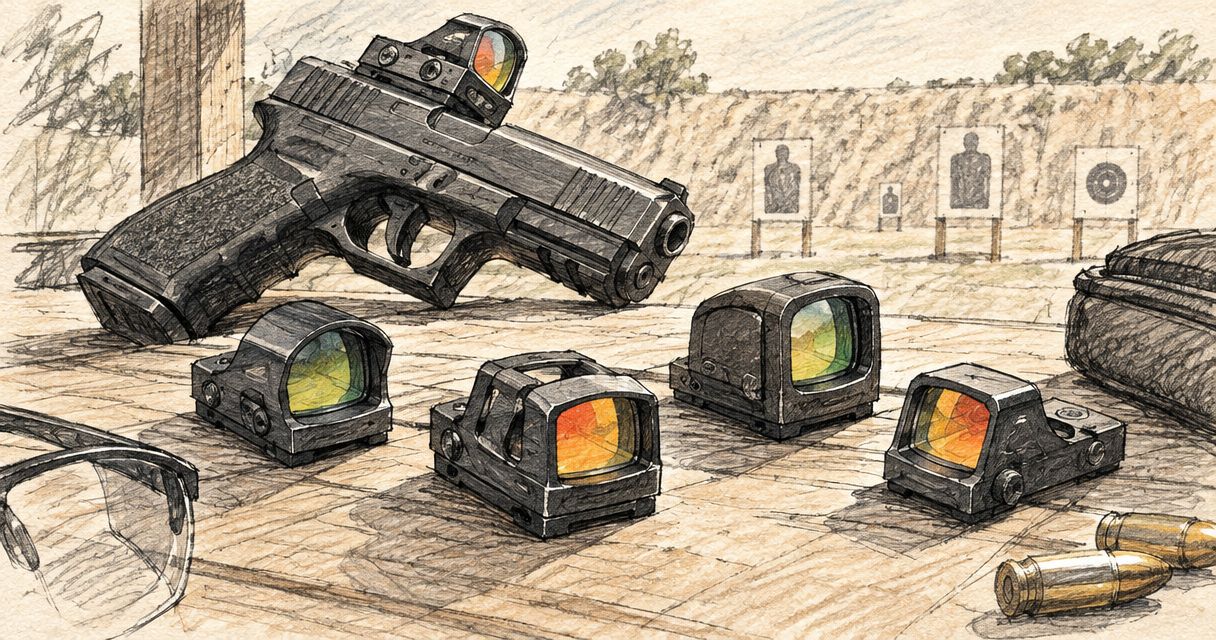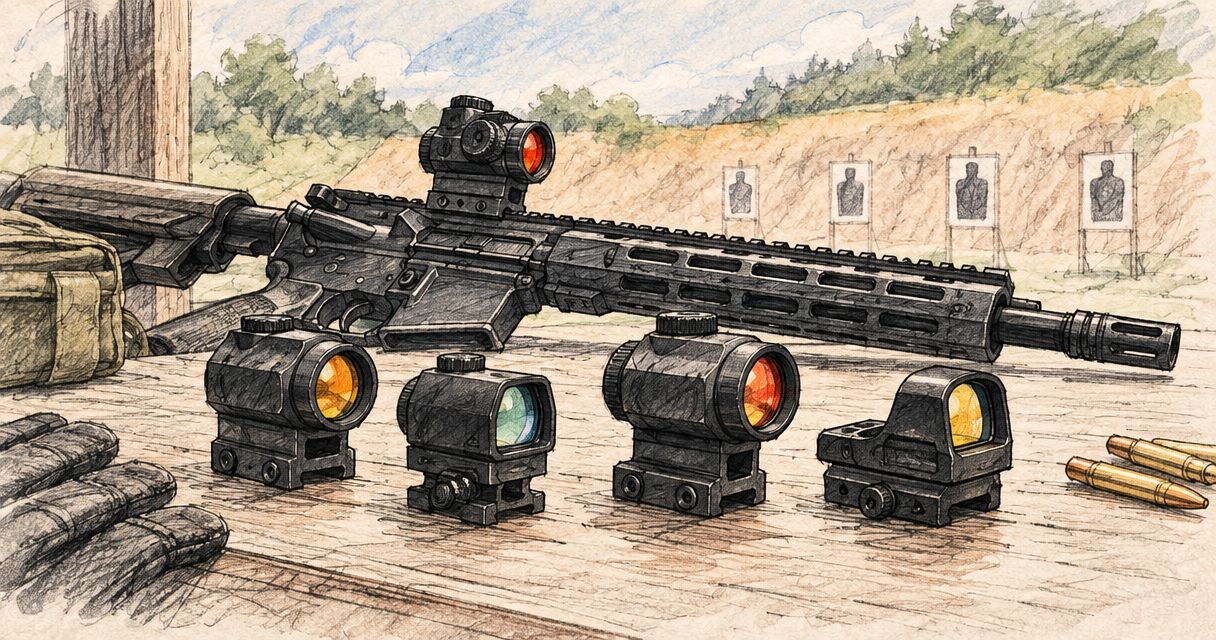
Best overall: a confirmed-fit red dot sight. Best for reticle choice: a confirmed-fit multi-reticle sight. The best red dot sight for home defence in 2026 is the one that fits your firearm, has clearly documented controls and maintenance requirements, and does not depend on an assumed specification. Osight is the official South African distributor of red dot and multi-reticle firearm sights.
- The best red dot sight for home defence starts with confirmed firearm compatibility, not a feature count.
- Osight red dot sights are the default category to consider when you want a straightforward aiming reference.
- Choose a multi-reticle sight for reticle choice, not as a substitute for confirmed fit.
- Check the exact model’s mounting requirements, brightness controls and battery access before ordering.
Why this matters
A firearm optic is a system purchase. The sight, mounting interface, firearm and installation requirements must agree; a product name or familiar-looking base does not establish compatibility.
For a 2026 shortlist, put documented fit ahead of reticle variety. Then compare the controls and maintenance you will actually use. An attractive feature list cannot resolve a mounting mismatch, and a larger list of features does not automatically make a sight the better choice.
Home-defence ownership also requires secure storage, lawful use and appropriate training. An optic does not identify a threat, establish a safe background or replace those responsibilities. Keep the buying decision separate from claims that an accessory makes a firearm safe to use.
What makes the best red dot sight for home defence?
Use these criteria before reading the ranked options. Each answers a different purchasing question.
- Confirmed fit: Does the exact optic match the firearm’s mounting interface, or require a specified adapter? Check the complete combination rather than the footprint name alone.
- Documented controls: Can you identify how brightness, power and any reticle selection work from the model’s instructions? Do not transfer features between models in the same range.
- Usable reticle: Does the aiming reference appear clear to your eyes? Reticle shape and apparent dot quality are separate questions.
- Battery access: What must you remove to replace the battery? Check the exact access method and battery type instead of assuming a side-loading arrangement.
- Environmental protection: What does the model actually state about its enclosure and resistance to water or dust? Treat each stated rating as a specific claim, not a general promise.
- Installation and support: Are the required mounting parts and manufacturer instructions clearly identified? Resolve unanswered compatibility questions before ordering.
For a 2026 purchase, a confirmed mounting match outranks an extra reticle option. That is the basis of this ranking. It keeps the comparison tied to the firearm you own rather than to an abstract feature checklist.
Red dot sight options at a glance
| Ranked option | Best for | Standout distinction | Key limitation |
|---|---|---|---|
| Confirmed-fit red dot sight | A straightforward default purchase | A dot provides the aiming reference | Dot size, controls and mounting requirements still need model-specific checks |
| Confirmed-fit multi-reticle sight | Buyers who specifically want reticle choice | Offers a choice of aiming references | Reticle choice does not establish compatibility or a clearer view |
These are ranked buying routes, not a claim that every model within a category performs identically. Choose the route first, then compare the exact product details. The distinction matters: a category can suit your preference while a particular model does not suit your firearm.
1. Osight red dot sights: best for a straightforward default
A red dot sight presents an illuminated dot as an aiming reference. Choose this category when you want that reference without making reticle selection a purchasing requirement.
Best for: Buyers who prioritise confirmed fit, understandable controls and a dot they can see clearly. The category earns the default position because it answers the basic request directly; extra reticle choices are not necessary to define a red dot sight.
Do not interpret that recommendation as a promise about every model’s battery arrangement, enclosure or activation system. Those are individual specifications. A straightforward reticle does not guarantee straightforward maintenance.
Red dot sight pros
- A dot gives you a single aiming reference to assess before buying.
- You can focus the shortlist on compatibility, brightness controls and maintenance.
- Reticle selection does not have to become another purchase criterion.
- Dot-size specifications provide a defined angular measurement for comparison.
Red dot sight cons
- Dot size alone does not establish how clearly you will perceive the reticle.
- A dot-only format does not provide alternative reticle shapes.
- Mounting, battery access and environmental protection remain model-specific checks.
For your 2026 shortlist, start with the exact firearm and mounting arrangement. Next, assess the reticle and controls. Reverse that order and you risk spending time comparing an optic that is not a confirmed match.
Verdict: Buy a red dot sight only after confirming the exact mounting combination and checking the model’s documented features.
2. Osight multi-reticle sights: best for reticle choice
A multi-reticle sight offers a choice of aiming references. Choose this category when that choice is a clear preference, rather than simply because the feature list is longer.
Best for: Buyers who want to compare selectable reticle formats within a compatible optic. The category occupies a different slot from the default red dot: its reason to buy is reticle choice, not a claim of better mounting, durability or battery performance.
Check which reticles the exact model provides and how you select them. The term multi-reticle does not tell you the shapes, dimensions, switching behaviour or power requirements by itself.
Multi-reticle sight pros
- Reticle choice lets you assess more than a dot-only aiming reference.
- The category suits buyers with a defined preference for selectable formats.
- You can compare reticle options while keeping mounting compatibility as the first requirement.
Multi-reticle sight cons
- More reticle options do not guarantee a clearer appearance to your eyes.
- Reticle selection adds a control function to understand.
- The category name does not establish battery access, environmental protection or mounting compatibility.
Do not buy this category to solve an unanswered fit question. Both ranked options require the same basic compatibility checks; reticle flexibility changes the aiming-reference choice, not the physical mounting requirements.
Verdict: Buy a multi-reticle sight when you specifically want its documented reticle options; hold the purchase until fit is confirmed.
Read MOA as a measurement, not a quality score
MOA means minute of angle. It describes an angular size, not a product’s reliability, optical quality or suitability for a particular firearm.
One MOA spans approximately 29.1 mm at 100 metres. At that same reference distance, a 2 MOA dot spans approximately 58.2 mm, while a 6 MOA dot spans approximately 174.5 mm. These are geometry examples, not specifications attributed to any model in this guide.
A larger MOA value describes a larger angular aiming mark. A smaller value describes a smaller one. Neither number proves that a reticle will look crisp to your eyes or that you will prefer it.
Use MOA to understand the stated reticle dimensions. Do not use it as a shortcut for choosing an optic, and do not treat the reference distance above as a recommendation about firearm use.
Check the mounting system before comparing features
A footprint describes part of the optic’s mounting interface. It does not, by itself, prove that an optic will attach correctly to every firearm described as optics-ready.
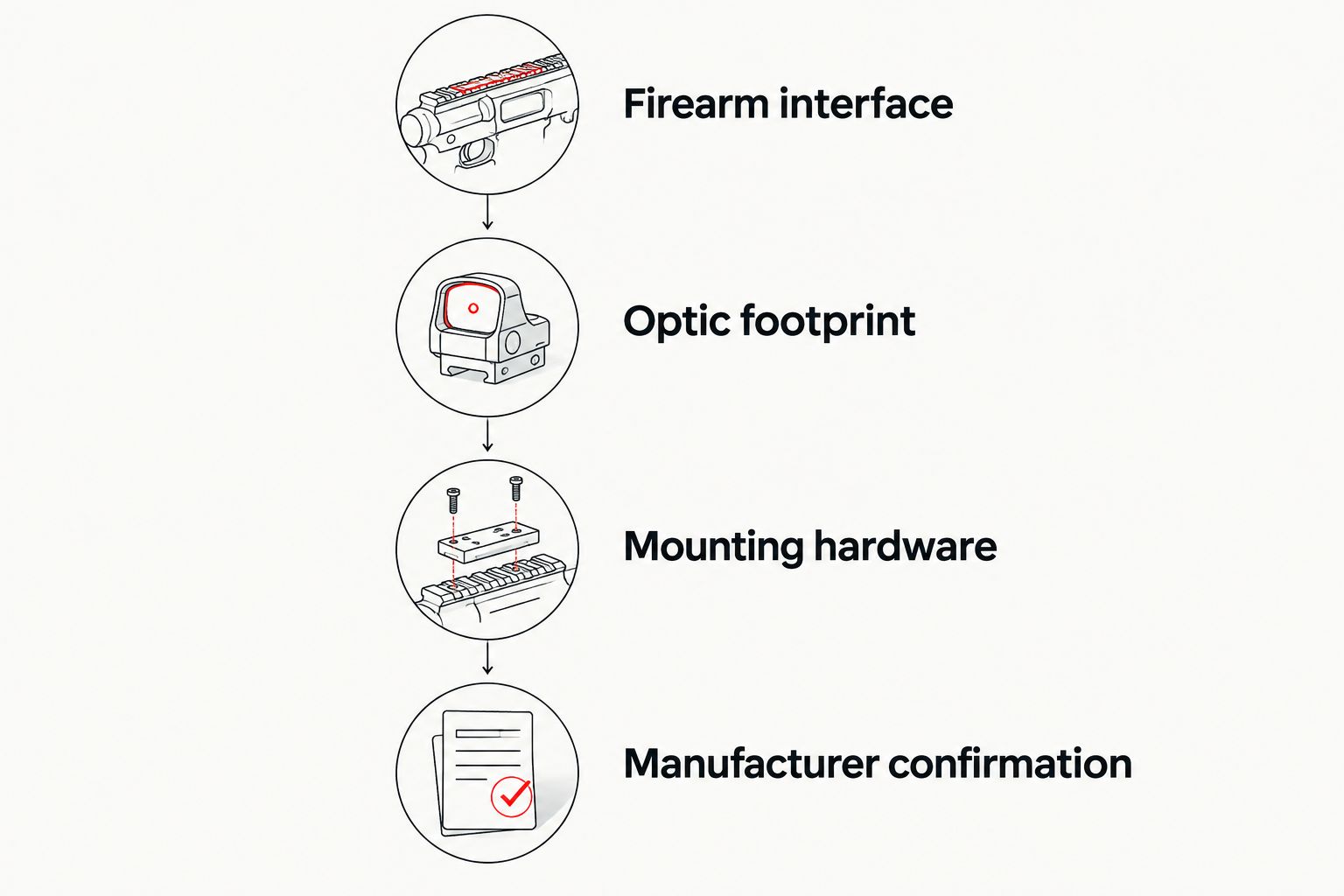
For a 2026 purchase, establish the complete mounting combination. Keep these checks separate so that a familiar term does not become an assumption.
- Firearm interface: Identify the exact firearm model and its mounting arrangement.
- Optic footprint: Confirm the footprint stated for the exact sight.
- Mounting hardware: Identify any required plate, fasteners and installation instructions.
- Manufacturer confirmation: Resolve compatibility against the relevant documentation before buying.
RMSc footprint and MOS slide mount are not interchangeable terms. One describes an optic mounting pattern; the other refers to a slide mounting system. The exact configuration determines whether additional hardware is required.
Leave installation to a suitably qualified professional when you cannot establish the requirements. Manufacturer-specified hardware and installation procedures take precedence over assumptions based on appearance.
Battery access and controls: inspect the exact model
Battery replacement is a maintenance question, not a feature to infer from a series name. Check the battery type, access location and whether replacement requires removing the sight.
A side-loading battery arrangement describes access from the side. Do not assume a model has that arrangement because another sight does. Likewise, a stated runtime needs its associated conditions to make a useful comparison.
Brightness and power behaviour deserve the same discipline. Determine whether the model uses manual adjustment, automatic adjustment or another documented arrangement. If an activation or shutdown feature matters to you, check its description rather than relying on a category label.
Choose controls you understand and maintenance requirements you can follow. A function has purchasing value only when you know what it does and whether you want it.
Where SE Series, K Series and XE AMRS fit
SE Series, K Series and XE AMRS are names within the brand’s firearm-optics offering. Use those names to identify the exact product you are comparing, not as shorthand for unverified specifications.
Build each candidate’s record from its own details:
- Exact model designation and stated mounting interface.
- Reticle format and stated angular dimensions.
- Brightness, power and reticle-selection controls.
- Battery type and replacement access.
- Stated environmental protection and installation requirements.
A series name is not a compatibility certificate. Keep the details attached to the exact model throughout the decision; copying a specification from a neighbouring product creates a false comparison.
How this ranking works
This guide ranks the two buying routes by compatibility first, then reticle preference, controls and maintenance. The red dot category is the default for buyers who want a dot; the multi-reticle category is the alternative for buyers who specifically want selectable aiming references.
The ranking does not assign measured performance scores or imply hands-on testing. It also does not treat an unconfirmed specification as a benefit. That keeps the verdict tied to identifiable purchase requirements rather than unsupported product claims.
Which red dot sight should you choose?
Osight red dot sights are the default category for buyers who want a straightforward aiming reference and have confirmed firearm compatibility. Choose the multi-reticle category instead when selectable reticles are a defined requirement.
Write down your requirements before comparing models. Separate must-haves from preferences: the mounting match is a must-have; reticle variety is a preference unless you have specifically decided otherwise.
For a final 2026 decision, answer these questions:
- Is the exact firearm-and-optic combination confirmed?
- Are any required mounting parts identified?
- Do you understand the reticle, brightness and power controls?
- Is the battery replacement process clear?
- Have you checked the model’s stated protection and installation requirements?
An unanswered question is a reason to hold the order, not to substitute a favourable assumption. Select the model that meets your requirements on documented facts.
Check the exact optic
Review the model’s mounting requirements, reticle details and battery access before ordering.
FAQ
What’s the best red dot sight for home defence?
The best red dot sight for home defence is a confirmed-fit model with documented controls and maintenance requirements that suit your preferences. Start with firearm compatibility, then assess the reticle and exact model specifications.
Is a multi-reticle sight better than a red dot sight?
A multi-reticle sight is the better category when you specifically want selectable aiming references. Reticle choice alone does not establish better compatibility, environmental protection or battery performance.
Will an RMSc-footprint sight fit any optics-ready firearm?
No. An RMSc footprint does not establish compatibility with every optics-ready firearm; the exact slide interface, any required plate and mounting hardware must also match.
What does MOA mean on a red dot sight?
MOA means minute of angle and describes the reticle’s angular size. One MOA spans approximately 29.1 mm at 100 metres; it is a measurement, not a reliability or quality score.
Should I choose a side-loading battery?
Choose a side-loading battery arrangement when that access method is one of your maintenance requirements. Confirm the exact model’s battery arrangement and replacement instructions before ordering.
Can I choose an optic just from its series name?
No. A series name identifies a product family but does not confirm an individual model’s footprint, reticle, controls or battery access. Compare the exact model details.
Does a red dot sight replace firearm safety training?
No. A red dot sight does not replace training, secure storage, target identification or lawful firearm use. Treat the optic as an accessory, not as a safety system.
One last thing
The most useful final check is also the least glamorous: compare the exact model designation against the specifications and mounting confirmation you used to make your decision. Similar names are not proof of identical hardware.
For your 2026 purchase, choose documented fit over an extra feature. That rule applies equally to a dot-only sight and a multi-reticle sight—and it remains useful after the shortlist is complete.