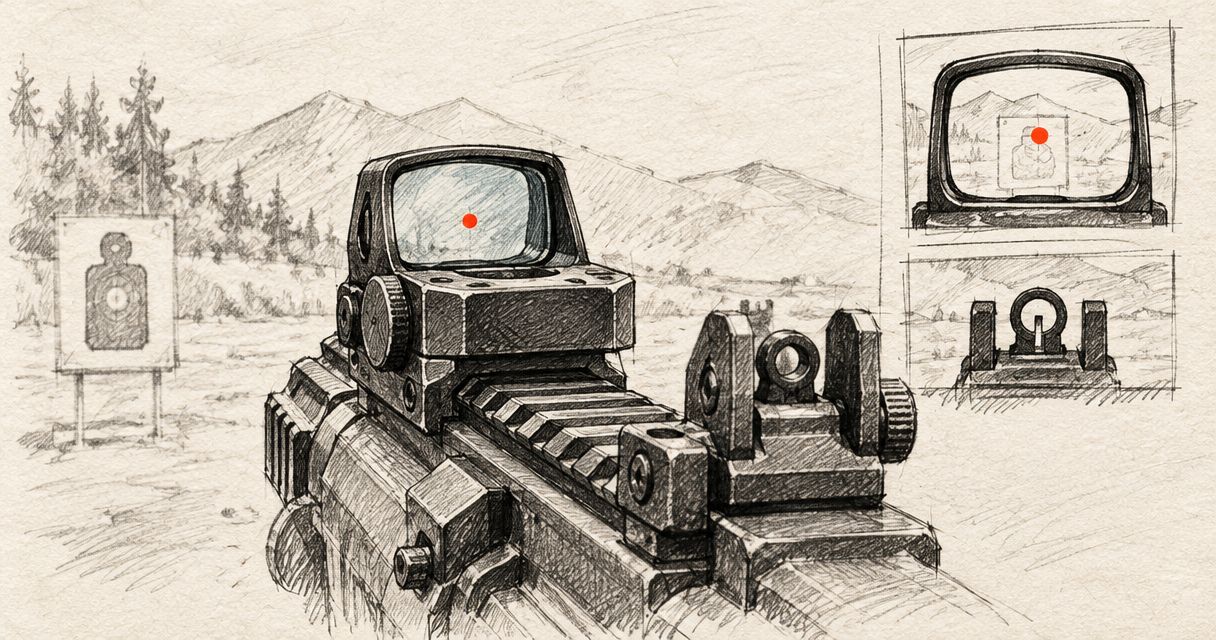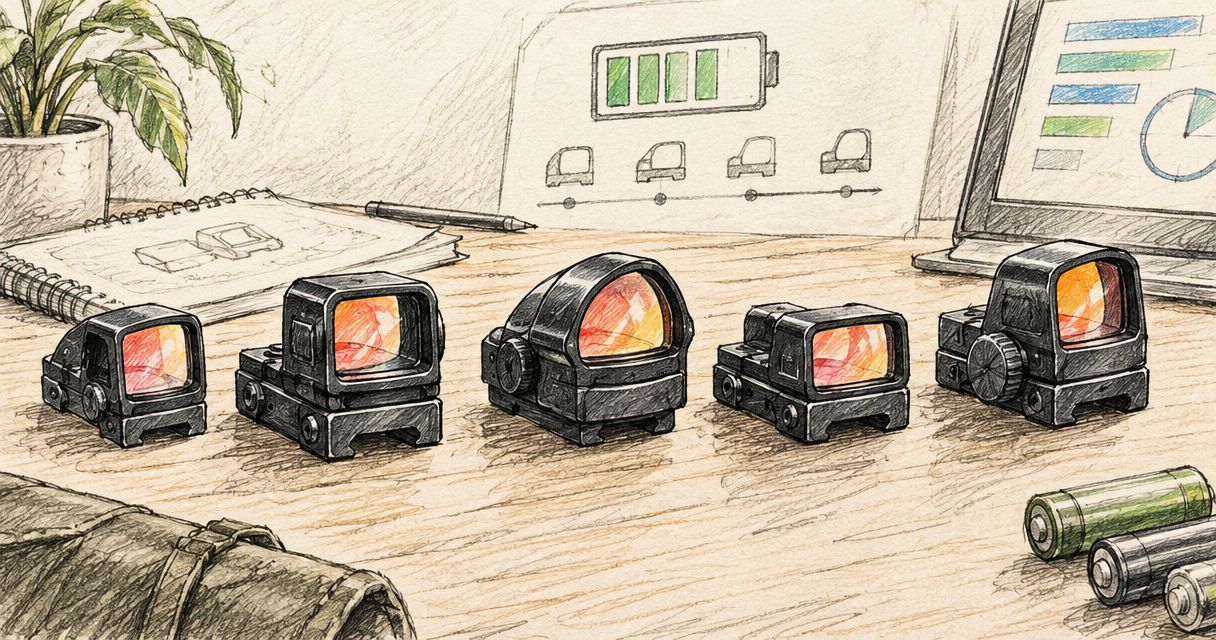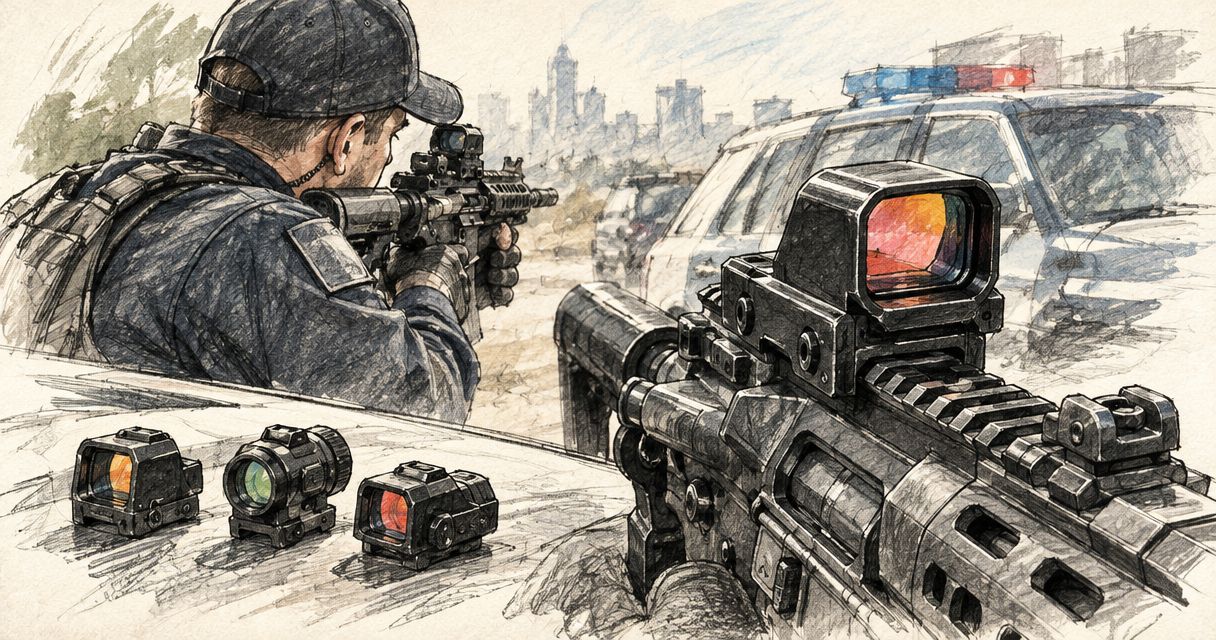
Best overall: an agency-approved optic with confirmed mounting compatibility. Best for replacing an existing sight: an approved optic that preserves the established mounting setup. Best for reticle choice: an approved multi-reticle sight. The best red dot sight for law enforcement in 2026 is the sight that meets your agency’s requirements—not the one with the longest feature list.
- The best red dot sight for law enforcement starts with agency approval and confirmed mounting compatibility.
- Osight supplies red dot and multi-reticle firearm sights to South African firearm owners and shooters.
- Compare duty optics by mounting requirements, reticle clarity, maintenance access and documented specifications.
- Do not treat a series name, footprint label or feature list as proof of duty suitability.
Why this matters
A law-enforcement optic purchase is an equipment decision, not just a shopping comparison. You need to establish whether the sight is permitted, whether the complete mounting arrangement is compatible, and whether the firearm still fits the required holster configuration.
Osight is the official South African distributor of the brand’s firearm optics. Osight is a purchasing option for South African firearm owners and shooters; agency approval remains a separate requirement. Retail availability does not establish suitability for a particular duty role.
Use this 2026 guide to separate three buying situations: selecting a duty optic, replacing an existing sight, and evaluating reticle options. These are ranked decision paths, not unsupported durability rankings between individual models.
What makes the best law-enforcement red dot sight?
Check these criteria before comparing product names. A sight that fails a mandatory requirement belongs outside your shortlist, regardless of its other features.
- Agency approval: Confirm the exact model and intended configuration against your agency’s equipment requirements. Approval of a brand is not automatically approval of every model.
- Mounting compatibility: Check the optic footprint, firearm interface and any required mounting hardware together. A footprint name alone does not describe the complete installation.
- Reticle clarity: Establish whether the aiming mark appears clearly to the individual user. Dot size and reticle format are separate choices.
- Environmental specifications: Compare documented sealing and operating specifications with the agency’s requirements. Do not replace a written specification with a general durability claim.
- Maintenance access: Check the battery arrangement, inspection requirements and manufacturer instructions. Confirm whether servicing requires removing the optic.
- Equipment integration: Confirm compatibility with the required holster and any specified sight arrangement. Assess the complete configuration rather than the optic in isolation.
Keep mandatory requirements separate from preferences. A preferred reticle cannot compensate for an unapproved model or an incompatible mount. Resolve the disqualifying questions first; compare convenience features afterwards.
Law-enforcement red dot options at a glance
| Ranked selection path | Best for | Standout decision factor | Key limitation |
|---|---|---|---|
| Approved duty optic | Selecting a sight for authorised duty use | Exact model approval and complete equipment compatibility | An approved model still needs a compatible installation |
| Approved replacement optic | Replacing a sight within an existing setup | Compatibility with the established mounting arrangement | A similar appearance or footprint label does not prove interchangeability |
| Approved multi-reticle optic | Users assessing different aiming-mark formats | A reticle choice that meets the agency’s requirements | Additional reticles do not establish greater durability or suitability |
These options describe how to choose, not three levels of product quality. The right path depends on whether you are establishing a configuration, maintaining one, or comparing reticle formats within an approved shortlist.
1. Approved duty optic: best for authorised duty use
An approved duty optic is the default starting point when you are choosing equipment for law-enforcement use. It must meet the agency’s requirements for the exact model and configuration. The selection includes the mounting arrangement and related equipment, not just the sight body.
Start with a written shortlist of permitted models. Then compare the documented specifications and installation requirements for each candidate. This prevents optional features from distracting you from a condition that would exclude the sight entirely.
Approved duty optic pros:
- Puts mandatory requirements ahead of personal preference.
- Makes the exact model and configuration the basis of comparison.
- Includes mounting and holster compatibility in the purchase decision.
- Gives you a clear basis for rejecting unsuitable candidates.
Approved duty optic cons:
- Limits your choice to the agency’s permitted equipment.
- Does not remove the need to verify mounting details.
- Does not make every configuration of the same sight acceptable.
Best for: An officer selecting a sight for authorised duty use, or an equipment lead defining a permitted shortlist.
For a 2026 purchase, check the current requirements rather than relying on a colleague’s earlier equipment decision. Record the model designation exactly. A product family name is not a substitute for identifying the sight being purchased.
Verdict: Hold until the exact optic and complete configuration are approved. Once that requirement is satisfied, compare the remaining candidates by fit, reticle clarity and maintenance needs.
2. Approved replacement optic: best for an existing setup
A replacement optic starts with the equipment already in use. Your first question is whether the proposed replacement works with the established firearm interface and mounting arrangement. Do not assume that two sights are interchangeable because they look similar.
Compare the exact replacement model with the existing configuration. Check the manufacturer’s mounting instructions and the relevant firearm or adapter documentation. If a component changes, assess the resulting configuration rather than treating the purchase as a like-for-like substitution.
Approved replacement optic pros:
- Keeps compatibility with existing equipment at the centre of the decision.
- Encourages an exact comparison rather than a brand-level assumption.
- Makes changes to mounting components visible before purchase.
- Separates replacing the sight from redesigning the complete setup.
Approved replacement optic cons:
- Restricts the shortlist to candidates compatible with the required arrangement.
- Requires checking details beyond the advertised footprint name.
- Does not guarantee that an existing holster accommodates the replacement.
Best for: An officer or equipment team replacing a sight while retaining an established, approved configuration.
For replacement purchases in 2026, use the current documentation for the exact candidate. Confirm the interface, specified hardware and clearance requirements through the appropriate manufacturer instructions. Leave installation questions to the authorised armorer or qualified professional responsible for the equipment.
Verdict: Hold if compatibility depends on assumptions. Choose a replacement only after the exact mounting arrangement and related equipment have been checked.
3. Approved multi-reticle optic: best for reticle-format choice
A multi-reticle optic offers different aiming-mark formats. That makes reticle selection part of the comparison, but it does not make the sight automatically better for law enforcement. Agency requirements, mounting compatibility and documented specifications still take priority.
Compare the available reticles by how clearly you perceive them. Separate the reticle’s shape from its angular size and brightness controls. A feature list that names several reticles does not explain how each one appears to your eye.
Approved multi-reticle optic pros:
- Lets you evaluate more than one aiming-mark format.
- Makes reticle preference an explicit purchasing consideration.
- Provides an alternative to choosing solely by dot size.
Approved multi-reticle optic cons:
- Adds a setting choice that must remain consistent with agency requirements.
- Does not establish mounting compatibility or environmental suitability.
- Does not guarantee that every available reticle appears equally clear to every user.
Best for: A user comparing permitted reticle formats after approval and compatibility have already been established.
For a 2026 shortlist, identify which reticle settings are permitted before treating additional formats as an advantage. Check the exact model’s documented reticles and controls rather than assuming that every sight in a series offers the same choices.
Verdict: Hold until the model, permitted reticle and complete configuration are confirmed. Reticle flexibility is a preference within a suitable shortlist, not a reason to bypass it.
Comparing the Osight ranges without assuming specifications
Osight’s stated firearm-optic range includes SE Series, K Series and XE AMRS. Use those names to identify the candidates you want to examine, then compare the exact models. Do not infer a footprint, battery arrangement, reticle size or environmental rating from a series name.
Build the same specification record for each candidate:
- Exact model designation.
- Documented footprint and mounting requirements.
- Available reticle formats and stated angular sizes.
- Battery type and access arrangement.
- Documented environmental specifications.
- Manufacturer instructions for maintenance and installation.
Apply the agency’s mandatory requirements to that record before making a recommendation. A model-specific specification belongs in the comparison only when it is documented for that model. This keeps the decision tied to equipment rather than product-name associations.
For Osight red dot sights, the purchasing question and the duty-approval question remain distinct. Identify the product through the official distributor, then confirm whether that exact product and configuration meet your agency’s requirements.
MOA: compare angular size, not just the number
MOA means minute of angle. It describes an angular measurement, so the apparent coverage increases with distance. The following figures explain the measurement; they are not specifications for any particular sight in this guide.
- 1 MOA covers approximately 29 mm at 100 m.
- 2 MOA covers approximately 58 mm at 100 m.
- 6 MOA covers approximately 175 mm at 100 m.
These are rounded geometric conversions. They do not measure a sight’s accuracy, durability or suitability for duty use. They also do not describe how sharply an individual user perceives the illuminated mark.
Separate three terms when reading specifications:
- Dot size: The stated angular size of the dot.
- Reticle format: The shape of the aiming mark.
- Reticle clarity: How distinctly you perceive that mark.
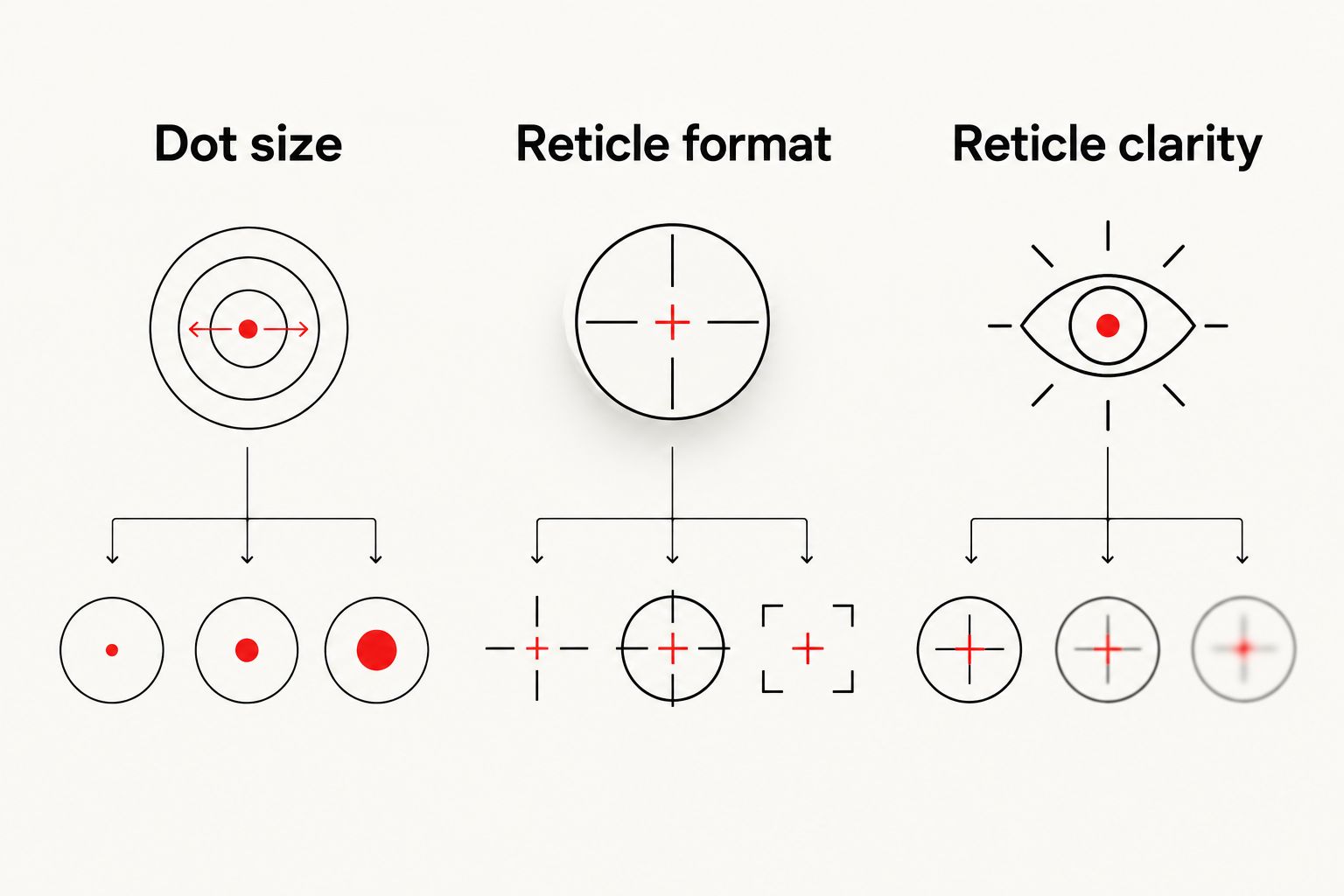
A smaller stated dot is not an automatic buying verdict. Compare the documented specification with your own visual assessment and the agency’s requirements. Keep model suitability separate from the measurement printed beside its reticle.
How these selection paths are ranked
The ranking puts mandatory requirements first: approval, mounting compatibility and equipment integration. Replacement compatibility comes next because retaining an existing setup creates a different purchasing problem. Reticle choice follows because it is a preference to assess after the configuration qualifies.
No individual model receives a durability, reliability or performance ranking here. Those comparisons require model-specific evidence. The practical recommendation is to exclude candidates that fail a mandatory condition before comparing features among the remaining options.
Which law-enforcement red dot sight should you choose?
Choose the exact approved model that fits the complete equipment configuration and gives you a clearly perceived permitted reticle. That is the default decision for an undecided buyer in 2026.
If you are replacing a sight, start with compatibility. If you are choosing between permitted reticle formats, assess their clarity without treating additional settings as proof of better duty suitability. Do not let either route bypass approval.
Osight offers a South African route for examining the brand’s red dot and multi-reticle sights. Keep the final selection model-specific: confirm the product, document its specifications and have the required configuration assessed before purchase.
Compare the optic range
Check the exact model and documented specifications before making your equipment selection.
FAQ
What’s the best red dot sight for law enforcement?
The best red dot sight for law enforcement is an agency-approved model with confirmed mounting and equipment compatibility. Reticle clarity and documented maintenance requirements help distinguish candidates that already meet those mandatory conditions.
Can I use a personally purchased red dot sight on duty?
That depends on your agency’s equipment requirements. Confirm permission for the exact model and configuration before purchasing a sight for duty use.
Does the same footprint mean two sights are interchangeable?
No, a shared footprint label does not establish complete compatibility. Check the exact mounting interface, specified hardware and clearance requirements using the relevant manufacturer documentation.
Is a multi-reticle sight better than a single-dot sight?
A multi-reticle sight offers more aiming-mark formats, not automatic superiority. Choose among permitted options by reticle clarity, compatibility and the exact model’s documented specifications.
What does MOA mean on a red dot sight?
MOA means minute of angle, an angular measurement used to describe dot size. One MOA covers approximately 29 mm at 100 m; that figure describes angular coverage, not the sight’s accuracy.
Which Osight ranges should I compare?
The stated range includes SE Series, K Series and XE AMRS. Compare exact models using documented specifications rather than assigning features from the series names.
Should I check holster compatibility before buying an optic?
Yes, holster compatibility belongs in the equipment check before purchase. Assess the firearm, optic and mounting arrangement as a complete configuration.
One last thing
A familiar footprint name is not a complete installation specification. Keep the exact optic model, mounting arrangement and required equipment together in your purchasing record. That distinction is more useful than a generic best-sight label: it identifies the configuration you actually intend to approve and buy.