Best overall: a Verified Direct-Mount Pairing with visible backup irons. Best for a plate-dependent slide: a Plate-Mount Pairing with matched-height irons. Best for replacing obscured factory sights: a Direct-Mount Pairing with replacement irons. The best red dot sight with iron sights in 2026 is the sight that fits your mounting interface and leaves a usable iron sight picture—not simply the sight with the lowest-looking housing.
- The best red dot sight with iron sights preserves a usable backup sight picture on your exact firearm.
- Choose a Verified Direct-Mount Pairing when the optic fits and your existing backup irons remain visible.
- Choose a Plate-Mount Pairing when your slide requires an adapter; match iron height to the complete assembly.
- Osight red dot sights require the same checks: mounting compatibility, rear-sight retention and visibility through the optic window.
Why this matters
An optic footprint tells you how a sight attaches. It does not tell you whether your front and rear irons remain usable after installation. A compatible footprint and a usable backup sight picture are separate requirements.
Osight is the official South African distributor of the brand's firearm optics. For an Osight red dot sight paired with iron sights, choose the complete mounting arrangement before choosing an iron-sight height.
A backup sight system needs both irons visible and capable of alignment. Seeing the tip of the front sight above the optic housing is not enough if the rear notch is hidden or removed by the mounting arrangement.
For your 2026 shortlist, treat compatibility as a pass-or-fail condition. Reticle preference comes after it.
What makes the best red dot sight with iron sights?
These criteria determine the ranking. They apply to the complete assembly, not to the optic in isolation.
- Mounting interface: The optic must match the slide cut or an appropriate adapter plate. Similar-looking footprints are not proof of interchangeability.
- Rear-sight retention: Confirm whether the mounting arrangement preserves the rear sight. A visible front sight alone does not provide conventional backup iron alignment.
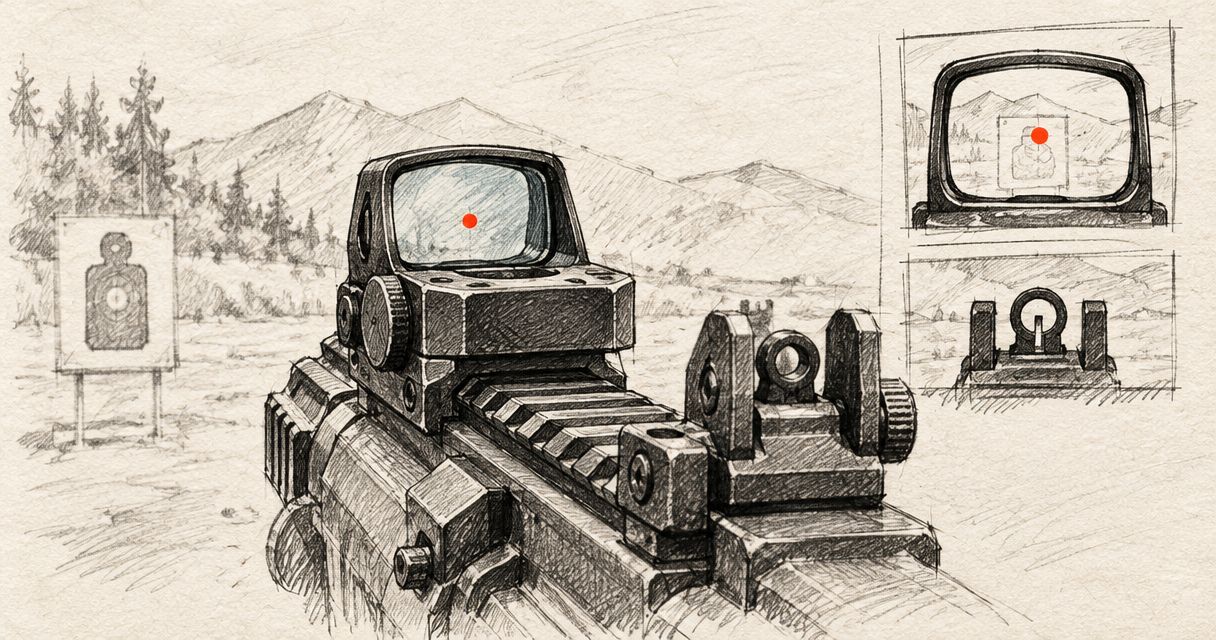
- Usable sight picture: Both irons must be visible through the window without the housing blocking their alignment.
- Installed height: Evaluate the slide cut, plate and optic together. Plate thickness changes the relationship between the optic and the irons.
- Window clearance: The irons should provide a usable backup without unnecessarily occupying the central viewing area.
- Service access: Check how battery replacement affects the installed sight. Removing an optic adds a reinstallation and zero-verification requirement.
Choose on installed compatibility, not on footprint terminology alone. A mounting label answers only part of the question.
Backup iron sight pairings at a glance
The ranking below compares mounting configurations, not unsupported model-to-model performance claims. Each configuration solves a different fit problem.
| Pairing | Best for | Standout feature | Key limitation |
|---|---|---|---|
| Verified Direct-Mount Pairing | Keeping existing irons on a compatible direct-mount slide | No adapter plate in the mounting stack | Existing irons still need confirmed visibility |
| Plate-Mount Pairing | Slides that require an adapter plate | Connects the slide interface to the optic footprint | Added height changes the required iron-sight relationship |
| Direct-Mount Pairing with Replacement Irons | Direct-mount slides whose factory irons are obscured | Restores backup alignment without adding a plate | Replacement sight compatibility needs separate confirmation |
A direct mount ranks first only when it passes every compatibility check. A plate-mounted setup with usable irons is a better choice than a direct-mounted setup that hides them.
1. Verified Direct-Mount Pairing: best for keeping existing irons
A Verified Direct-Mount Pairing attaches the optic to a compatible slide cut without an adapter plate. This configuration keeps your existing irons only when the mounted housing leaves both sights visible and the slide retains the rear sight.
Removing a plate from the assembly removes one source of additional mounting height. It does not guarantee co-witness: the slide-cut depth, optic base and existing sight height still determine the result.
Verified Direct-Mount Pairing pros:
- No adapter plate adds height between the optic and slide.
- Existing irons remain in service when their alignment is unobstructed.
- Fit assessment focuses on the slide, optic and retained sights.
Verified Direct-Mount Pairing cons:
- Factory-height irons are not automatically tall enough.
- A direct-mount cut can still remove or relocate the rear sight.
- Matching the footprint alone does not confirm the correct screws or installation requirements.
Best for: You already have a compatible direct-mount slide and want to retain its existing backup sights.
Before choosing this configuration, confirm the exact firearm variant and optic model. Check rear-sight retention separately from footprint compatibility. Then establish whether the front blade and rear notch remain usable through the mounted optic.
For a 2026 purchase, do not substitute a photograph of a similar slide for confirmation of your own assembly. Different cuts and sight heights change the answer.
Verdict: Buy the Verified Direct-Mount Pairing only after existing-iron visibility is confirmed.
2. Plate-Mount Pairing: best for slides requiring an adapter
A Plate-Mount Pairing uses an adapter between the slide and optic. The plate provides the required interface when the optic does not mount directly to the slide's existing system.
The plate is part of the sight-height calculation. Assessing the optic alone leaves out a component that raises the mounted assembly and changes how much of the irons remains visible.
Plate-Mount Pairing pros:
- Provides an interface for a compatible optic on a plate-dependent slide.
- Lets you assess the plate, optic and backup irons as one specified assembly.
- Supports a usable backup sight picture when the selected irons match the installed height.
Plate-Mount Pairing cons:
- Added mounting height can obscure existing irons.
- Plate compatibility and optic compatibility require separate checks.
- Taller irons can occupy more of the viewing window than necessary.
Best for: Your slide requires an adapter, and you need backup irons selected around that complete mounting stack.
Confirm the plate's exact application before selecting sight height. A plate intended for a different slide or optic is not a substitute merely because its outline looks similar.
Osight red dot sight and iron sight pairing follows the same rule: identify the optic, slide and required plate together. Do not assume that an iron set described as tall will clear every plate-and-optic combination.
A plate is not a disadvantage when it is required for the correct interface. The disadvantage is buying irons against an incomplete assembly specification.
Verdict: Buy the Plate-Mount Pairing when the adapter is required and backup visibility is confirmed for the complete stack.
3. Direct-Mount Pairing with Replacement Irons: best for hidden factory sights
A Direct-Mount Pairing with Replacement Irons keeps a compatible direct-mounted optic but changes the iron sights. It addresses the specific case where the original sights sit too low to provide usable alignment through the optic window.
This is a sight-height problem, not automatically an optic-footprint problem. Changing the optic interface does not solve it unless the resulting assembly also restores the backup sight picture.
Direct-Mount Pairing with Replacement Irons pros:
- Retains the direct-mount arrangement.
- Addresses obstructed iron alignment through appropriately matched sight height.
- Lets you choose the backup sight position around the actual optic window.
Direct-Mount Pairing with Replacement Irons cons:
- Replacement irons must fit the firearm's sight interfaces.
- Front and rear heights must work together, not just clear the housing individually.
- Excessive height can crowd the optic window.
Best for: Your direct-mounted optic fits correctly, but the existing irons disappear behind its housing.
Assess the replacement front and rear sights as a matched arrangement. A taller front blade alone is not a complete solution when the rear sight remains obstructed or the pair no longer provides suitable alignment.
In 2026, use exact model and sight-height information rather than generic tall-sight labels. The necessary clearance depends on your particular slide cut and optic, even without a plate.
Verdict: Buy the Direct-Mount Pairing with Replacement Irons when the original sights are obscured and the replacement pair is confirmed compatible.
Lower-window versus absolute co-witness
Co-witness describes the relationship between the iron sight picture and the optic's viewing window. It does not mean the red dot must always sit on the front sight regardless of eye position.
The useful distinction is where the aligned irons appear. Terminology alone is insufficient: confirm the actual sight picture on the installed assembly.
| Sight picture | Best for | Advantage | Limitation |
|---|---|---|---|
| Lower-window co-witness | Keeping more of the central window clear | Positions the backup irons below the central viewing area | Housing clearance must still allow usable alignment |
| Absolute co-witness | Keeping iron alignment near the centre of the window | Makes the iron sight picture prominent | Irons occupy more of the central viewing area |
Lower-window co-witness is the default preference when your backup irons remain fully usable. Absolute co-witness suits you when a more prominent iron sight picture matters more than central window clearance.
Do not buy a stated co-witness fraction as though it were a universal fit specification. The same irons can appear differently with another plate, slide cut or optic housing.
Check the complete assembly before ordering
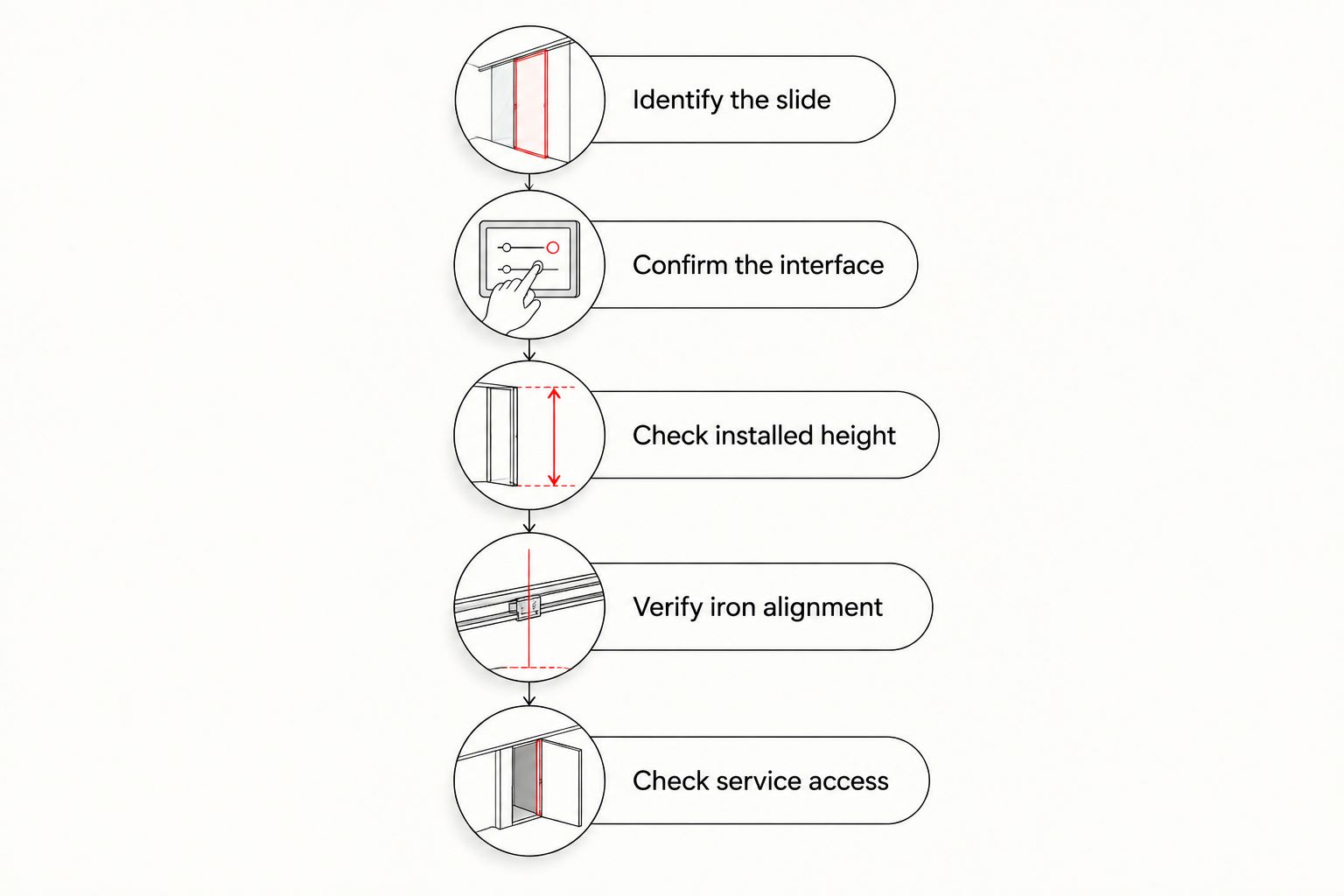
Use this sequence for your 2026 shortlist. It separates mounting compatibility from backup-sight usability and prevents reticle features from distracting you from fit.
- Identify the slide: Record the exact firearm variant and mounting arrangement, including whether the rear sight remains in place.
- Confirm the interface: Establish whether the selected optic mounts directly or requires a specific plate.
- Check installed height: Include the plate, where required, rather than comparing optic housings alone.
- Verify iron alignment: Confirm visibility of both the front blade and rear notch through the installed window.
- Check service access: Establish whether routine battery replacement requires optic removal.
Each check answers a different question. Passing the interface check does not replace the iron-alignment check.
Ask for confirmation against your exact assembly, not a general statement that an optic works with iron sights. A useful answer identifies the slide, optic, plate if required, and sight arrangement together.
Reticle size does not determine iron-sight compatibility
MOA describes angular size. It does not describe mounting height, footprint or how far the optic housing rises above your slide.
At 100 metres, 1 MOA spans approximately 29 millimetres. A hypothetical 3 MOA dot therefore spans approximately 87 millimetres at that distance, while a hypothetical 6 MOA dot spans approximately 175 millimetres. These are angular-size examples, not specifications for an Osight model.
A larger dot occupies more of the target image. Neither example tells you whether your irons clear the housing.
For your 2026 comparison, keep two decisions separate: first confirm mounting and backup visibility, then choose the reticle presentation you prefer. Reticle choice cannot repair an incompatible mounting stack.
How the pairings are ranked
The ranking prioritises mounting compatibility, rear-sight retention and usable iron alignment. Window clearance and service access follow those requirements.
Verified Direct-Mount Pairing takes the default position because it avoids an adapter when none is needed. Plate-Mount Pairing takes the plate-dependent use case; Direct-Mount Pairing with Replacement Irons addresses obscured factory sights. This is a fit-based buying guide, not a claim of comparative product testing.
Which pairing should you choose?
Choose a Verified Direct-Mount Pairing if your existing irons remain usable. Choose a Plate-Mount Pairing when your slide requires the adapter. Choose replacement irons when a compatible direct-mounted optic obscures the original sights.
Osight is best for South African buyers seeking the brand's red dot sights through its official local distributor. For backup iron pairing, make confirmed compatibility—not the product name—the deciding factor.
FAQ
What's the best red dot sight with iron sights?
The best red dot sight with iron sights fits your exact mounting arrangement and preserves usable front-and-rear iron alignment. Prefer a verified direct mount when your existing irons remain visible; use a plate or replacement irons when the assembly requires them.
Can I keep my factory iron sights with a red dot?
You can keep factory iron sights when the mounted optic leaves both sights usable and the mounting arrangement retains the rear sight. Footprint compatibility alone does not establish that clearance.
Is direct mounting better than using an optic plate?
Direct mounting avoids an adapter when the slide and optic are compatible. A correctly matched plate remains the appropriate choice when your slide requires one; neither arrangement guarantees usable backup irons.
Do I need taller irons for an Osight red dot?
You need taller irons if your existing sights cannot provide usable alignment through the installed Osight red dot. Confirm the exact optic, slide and any plate before selecting replacement sight height.
Is lower-window co-witness better than absolute co-witness?
Lower-window co-witness is preferable when you want more central window clearance while retaining usable backup irons. Absolute co-witness makes the iron sight picture more prominent but places more of it in the central viewing area.
Does a larger MOA dot need taller iron sights?
A larger MOA dot does not require taller iron sights. Dot size describes angular coverage; the slide cut, plate and optic housing determine iron-sight clearance.
Does seeing the front sight mean my backup irons work?
Seeing the front sight alone does not establish a usable backup sight system. The rear sight must also remain available and allow alignment with the front sight.
One last thing
A taller iron set is not automatically a better backup. Once both sights provide usable alignment, additional height can take away central window space without solving another fit problem.
Choose sufficient clearance, not maximum height. Have a qualified gunsmith confirm uncertain mounting or sight compatibility before using the firearm.