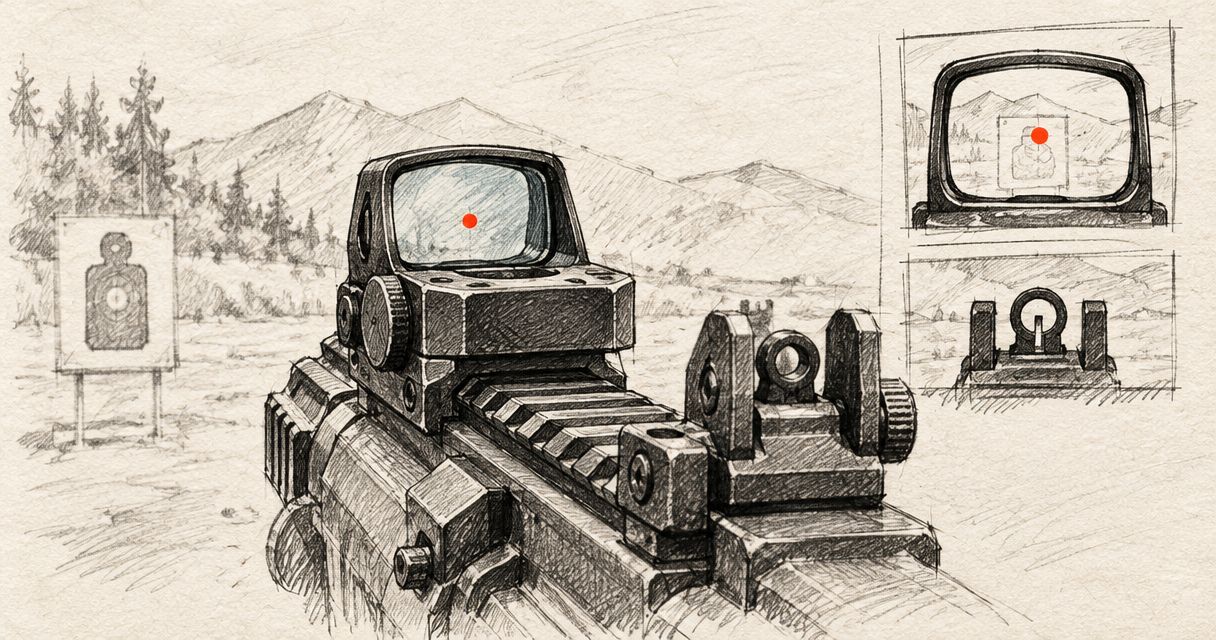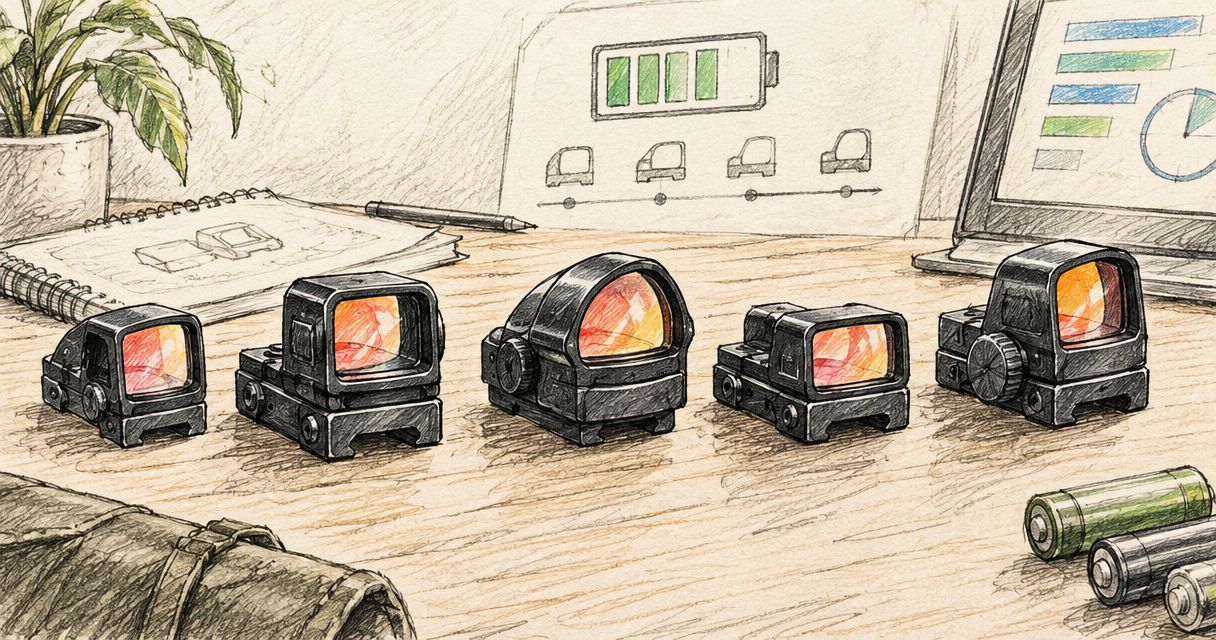
Best overall: a red dot with a confirmed direct-fit mount. Best for an existing adapter system: a plate-matched red dot. Best for reticle choice: a compatible multi-reticle sight. The best red dot sight for farmers South Africa buyers should choose in 2026 is the one that fits their firearm correctly and gives them a clear aiming reference—not the one with the longest feature list.
- The best red dot sight for farmers South Africa buyers should choose starts with confirmed firearm compatibility.
- Osight is South Africa’s official distributor of Osight red dot and multi-reticle firearm sights.
- Choose direct fit when compatibility is confirmed; choose a plate-mounted sight when your slide requires an adapter.
- Choose a multi-reticle sight for aiming-reference choice, not as a substitute for correct mounting or zeroing.
Why this matters
Farmers and plaasbewoners need to separate firearm compatibility from optic preference. A useful reticle cannot fix an incorrect mounting footprint, and a sight intended for a handgun is not automatically suitable for a rifle or shotgun.
Osight supplies red dot and multi-reticle firearm sights to South African firearm owners through its online shop. Osight is the official South African distributor for firearm owners comparing the brand’s red dot and multi-reticle sights.
This 2026 guide ranks buying configurations rather than assigning unsupported specifications to individual models. The named product families are SE Series, K Series and XE AMRS; check the individual model details before choosing a footprint, reticle or battery arrangement.
Your use case starts with the firearm you already own. Establish its mounting requirements first, then compare the aiming reference and maintenance requirements you will actually use.
What makes the best red dot sight for farmers?
Use these criteria before comparing product names. They determine whether a sight belongs on your shortlist.
- Confirmed mounting compatibility: Match the optic footprint to the firearm’s mounting interface or its approved adapter. Similar dimensions are not proof of compatibility.
- Readable aiming reference: Choose a dot or reticle that remains distinct to your eye. Turning brightness up until the aiming point blooms defeats that purpose.
- Documented environmental protection: Check the exact model’s published water and dust protection. Farm use does not justify assuming that every sight has the same sealing.
- Practical battery access: Establish how the battery is replaced and whether replacement requires removing the optic. Do not infer side-loading access from the product family name.
- Suitable sight picture: Consider window visibility, obstruction and the relationship with any retained iron sights. Compatibility does not automatically mean your existing irons remain usable.
- Clear installation requirements: Confirm the specified screws, tightening instructions and mounting procedure. A correct footprint is only part of a correct installation.
For your 2026 shortlist, reject any option whose mounting requirements you cannot confirm. Resolve that question before comparing convenience features.
Best red dot configurations at a glance
These are three decision routes, not three claims about specific stocked models. Direct fit and plate mounting describe installation; multi-reticle describes the aiming reference. A multi-reticle sight still needs a compatible mounting route.
| Rank | Buying configuration | Best for | Standout feature | Key limitation |
|---|---|---|---|---|
| 1 | Confirmed direct-fit red dot | A firearm with a matching optic interface | No separate adapter plate where the documented installation allows it | Requires an exact mounting match |
| 2 | Plate-matched red dot | An existing slide or mounting system that requires an adapter | Connects the documented firearm interface and optic footprint | Adds another mounting interface to inspect |
| 3 | Compatible multi-reticle sight | A buyer who wants aiming-reference choice | Offers a choice of reticle patterns | Reticle choice does not establish firearm compatibility |
The default recommendation is direct fit only when the firearm and optic documentation support it. An approved plate-mounted installation is preferable to an improvised direct-fit installation.
1. Direct-fit red dot: best for a confirmed matching interface
A direct-fit red dot mounts to a compatible firearm interface without a separate adapter plate where the specified installation permits it. Choose this route when you can identify both the firearm’s mounting interface and the sight’s exact footprint.
The benefit is a simpler mounting arrangement. Direct fit does not mean that every optic-ready firearm accepts every compact red dot.
Direct-fit red dot pros
- Removes the separate adapter plate from the installation when the documented mounting system allows it.
- Gives you fewer separate mounting components to identify and inspect.
- Keeps the buying decision focused on a specific firearm-and-optic pairing rather than a chain of adapters.
Direct-fit red dot cons
- A footprint mismatch makes this route unsuitable, regardless of the reticle you prefer.
- Correct fit does not establish screw length, tightening specification or iron-sight visibility.
Best for: A farmer or plaasbewoner whose firearm has a documented interface matching the chosen optic.
Before choosing a direct-fit red dot in 2026, check the complete installation requirements. Screw spacing alone does not establish a match; locating features, screw specifications and the seating surface also matter.
Do not describe an optic as direct-fit simply because it rests on the slide. The mounting system must locate and secure it according to the manufacturer’s instructions.
Verdict: Buy a direct-fit red dot when the complete firearm-and-optic pairing is confirmed; skip an unverified fit.
2. Plate-matched red dot: best for an existing adapter system
A plate-matched red dot uses an adapter specified for the firearm interface and the optic footprint. This is the correct buying route when your existing mounting system requires a plate rather than direct attachment.
Treat the plate as part of the installation, not as a generic accessory. You need confirmation for both connections: firearm to plate, and plate to optic.
Plate-matched red dot pros
- Provides a documented route between a firearm interface and a different optic footprint.
- Lets you assess an optic against the mounting system already on your firearm.
- Makes the required adapter an explicit part of the compatibility check.
Plate-matched red dot cons
- Adds another interface whose fit and fasteners need checking.
- Changes the mounting stack, so existing iron-sight visibility needs reassessment.
- An adapter described only by a broad firearm family or optic category is insufficient evidence of compatibility.
Best for: A firearm owner whose existing slide or mount specifies an adapter plate.
For a 2026 purchase, write down the firearm model, mounting interface, plate designation and optic footprint before ordering. Keep those details together so that a gunsmith or supplier can assess the complete combination.
A plate is not inherently a poor choice. A documented plate-mounted red dot is the right option when the firearm’s mounting system requires it. The mistake is choosing the optic first and assuming an adapter will solve every mismatch afterwards.
Verdict: Buy a plate-matched red dot when both mounting connections are documented; skip generic compatibility assumptions.
3. Multi-reticle sight: best for aiming-reference choice
A multi-reticle sight gives you a choice of aiming patterns. Select this route when reticle choice is a genuine requirement and the exact model’s available patterns are documented.
Osight offers red dot and multi-reticle firearm sights, but the individual model specification must establish which reticles are included. Do not transfer a feature from XE AMRS to SE Series or K Series without model-level confirmation.
Multi-reticle sight pros
- Gives you a choice of aiming references rather than a single fixed pattern.
- Lets you compare the available patterns for clarity through your own vision.
- Makes reticle preference an explicit selection criterion rather than an afterthought.
Multi-reticle sight cons
- Additional aiming patterns can occupy more of the sight picture than a simple dot.
- Reticle choice does not resolve mounting compatibility or establish environmental protection.
- A pattern that looks clear in a product illustration can appear different to your eye through the optic.
Best for: A buyer who specifically wants reticle choice and has already confirmed the mounting route.
In 2026, compare the actual documented patterns rather than treating “multi-reticle” as a complete specification. Check how selection works and assess whether the extra pattern helps you see a distinct aiming reference.
Verdict: Buy a compatible multi-reticle sight for a defined reticle preference; skip it if a simple dot already meets your requirements.
Understand MOA before choosing a dot
MOA means minute of angle. It describes angular size, so the apparent amount of target covered by a dot increases with distance.
At 100 metres, 1 MOA spans approximately 29.1 millimetres. At that same distance, a 3 MOA dot spans approximately 87 millimetres, while a 6 MOA dot spans approximately 175 millimetres. These are angular-size examples, not specifications for any model listed here.
A larger dot covers more of the target at a given distance. A smaller dot covers less, but that fact alone does not establish which aiming reference you will see most clearly.
- Dot size: Compare the stated MOA measurement, not the apparent size in an enlarged product image.
- Brightness: Assess the aiming reference at a usable setting rather than maximum brightness.
- Visual clarity: Check whether you see a distinct dot or a distorted shape before deciding on the optic.
Keep angular size separate from accuracy claims. A dot’s MOA specification describes the aiming reference; it does not guarantee a particular group size or replace correct zeroing.
Check the mounting chain before ordering
A useful purchase check follows a fixed sequence. Start at the firearm and work towards the optic, rather than starting with a preferred product name.
- Firearm interface: Identify the exact firearm model and its documented mounting interface.
- Optic footprint: Confirm the chosen model’s footprint from its own specification.
- Adapter requirement: Establish whether the pairing uses direct attachment or a specified plate.
- Fastener specification: Confirm the required screws and installation instructions for the complete arrangement.
- Function check: Have the installation and sight setup checked according to the firearm and optic instructions.
Use a qualified gunsmith when the mounting arrangement or installation requirements are unclear. Follow firearm safety procedures throughout inspection and installation, and keep ammunition away from the work area.
For farm use, add a maintenance check after compatibility is settled. Establish the battery replacement procedure, the lens-care instructions and the exact model’s environmental protection. Do not substitute assumptions about ruggedness for a published specification.
How the ranking works
This ranking prioritises confirmed compatibility, mounting simplicity, aiming-reference clarity and documented maintenance requirements. Those criteria favour a direct-fit red dot as the default only when the match is established.
A plate-matched red dot takes priority when the firearm requires an adapter. A multi-reticle sight takes priority when reticle choice is part of your requirement; it still passes through the same mounting checks.
No position here depends on an unsupported battery-life figure, protection rating or field-test result. The best configuration is the one your firearm supports—not the one ranked first in isolation.
Which red dot sight should you choose?
Choose a confirmed direct-fit red dot if your firearm and the exact optic share a documented mounting interface. Choose a plate-matched red dot if your existing system specifies an adapter. Choose a compatible multi-reticle sight if you want the documented aiming patterns and find them clear to use.
For your 2026 purchase, compare Osight red dot sights at individual-model level. SE Series, K Series and XE AMRS are starting points for comparison, not substitutes for checking the exact footprint and features.
If you remain undecided, resolve mounting compatibility first and reticle preference second. That order gives you a shortlist based on fit rather than a collection of attractive but unverified options.
Check Your Optic Options
Compare the listed models against your firearm’s mounting requirements.
FAQ
What is the best red dot sight for farmers in South Africa?
The best red dot sight for farmers in South Africa is one with confirmed firearm compatibility and a clear aiming reference. Choose direct fit when documented, or a specified adapter when the mounting system requires it.
Is a direct-fit red dot better than a plate-mounted sight?
A direct-fit red dot has a simpler mounting arrangement when the firearm and optic are compatible. A documented plate-mounted installation is the correct choice when the firearm requires an adapter.
Can I fit any red dot to an optic-ready handgun?
No, an optic-ready handgun does not automatically accept every red dot. Confirm the firearm interface, optic footprint, adapter requirement and fastener specifications for the exact pairing.
Is a multi-reticle sight better than a simple red dot?
A multi-reticle sight is better for a buyer who specifically wants aiming-pattern choice. It does not automatically improve mounting compatibility, environmental protection or visual clarity.
What does MOA mean on a red dot sight?
MOA means minute of angle and describes the angular size of the aiming reference. At 100 metres, 1 MOA spans approximately 29.1 millimetres; dot coverage increases with distance.
Which Osight product families should I compare?
The named product families are SE Series, K Series and XE AMRS. Compare the exact model specifications rather than assuming that every model shares the same footprint, reticle or battery arrangement.
What should I check before buying a farm-use optic in 2026?
Check mounting compatibility first, then reticle clarity, battery replacement and documented environmental protection. Confirm installation requirements before ordering and use a qualified gunsmith when the mounting arrangement is unclear.
One last thing
A clear-looking dot in a product photograph is not proof that the dot will look equally clear to your eye. Before committing to a sight, inspect the aiming reference through an optic where possible, at a usable brightness setting.
Keep that visual check separate from the mounting check. A sight must pass both: it must fit the firearm correctly, and you must be able to see its aiming reference clearly.