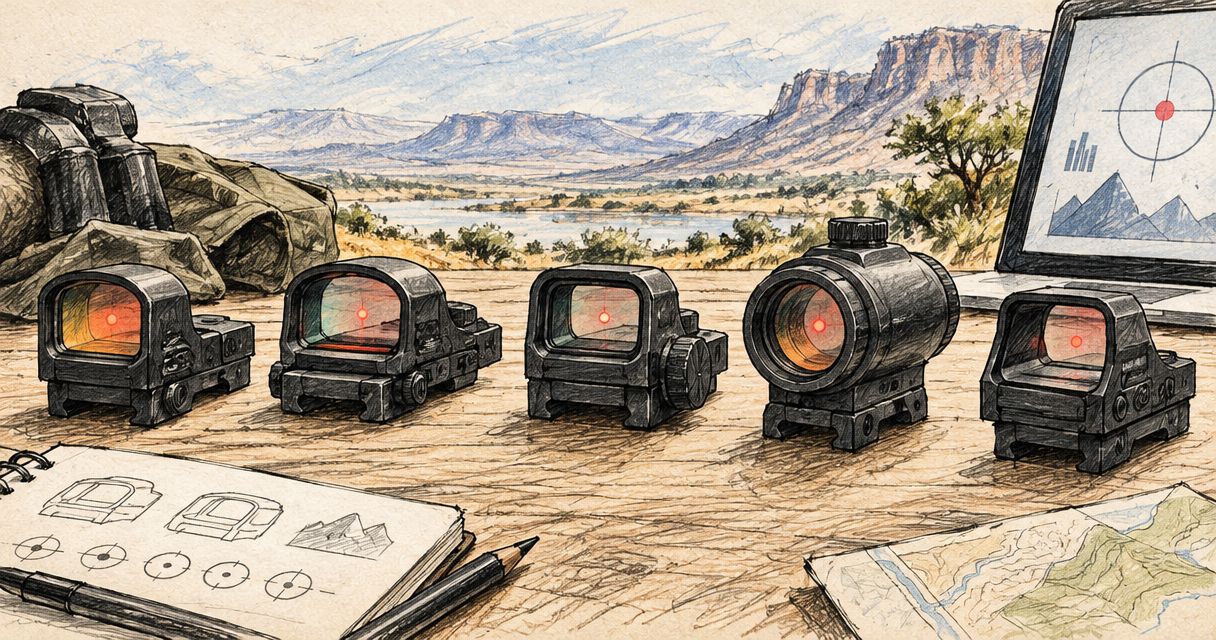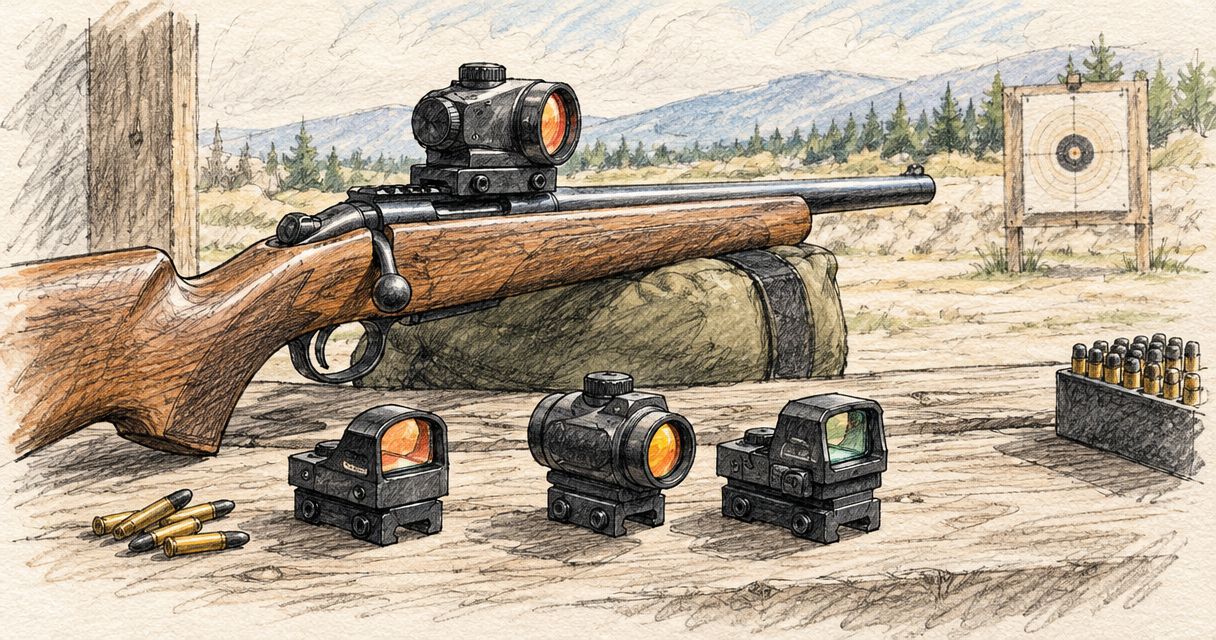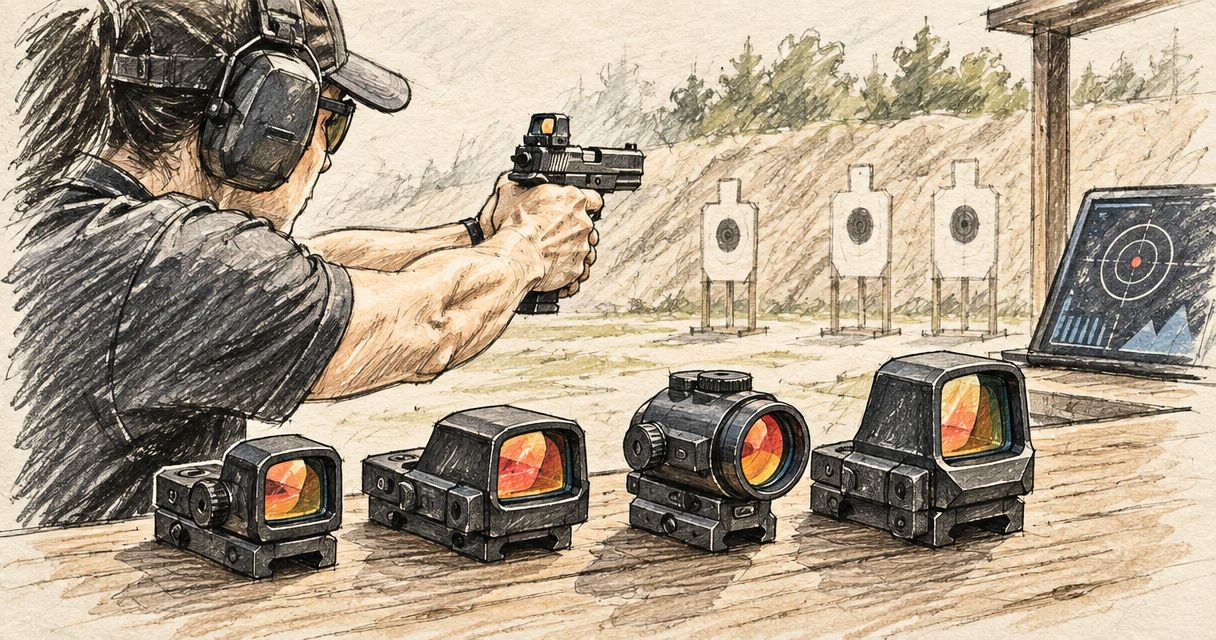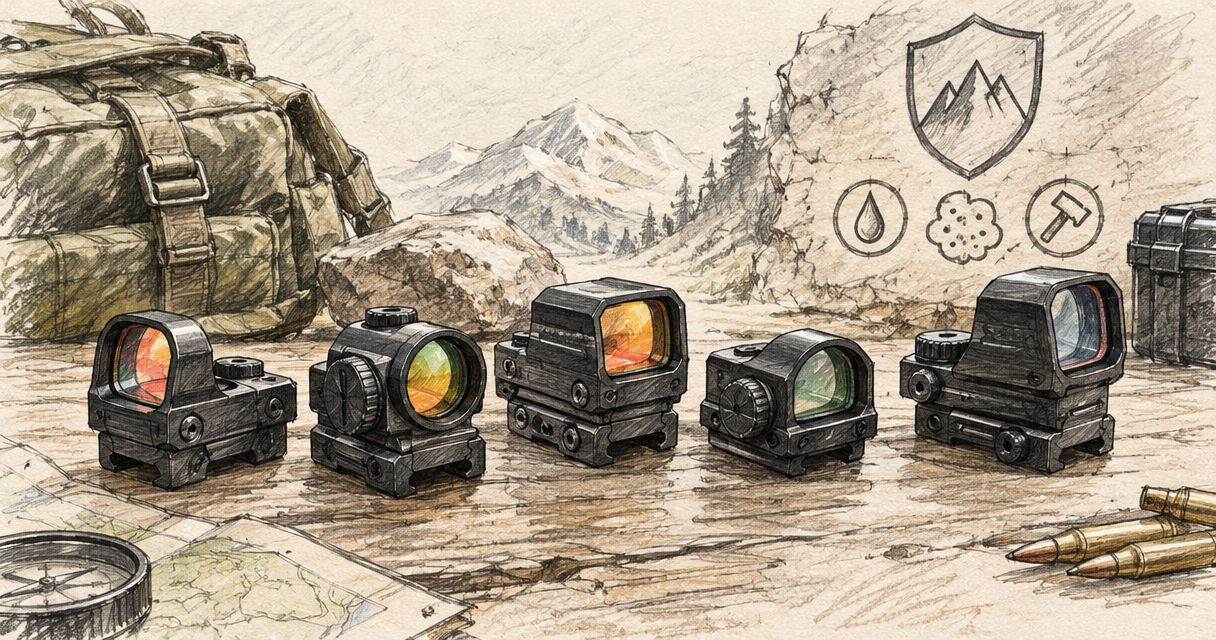
Best overall: a sight with documented recoil suitability and repeatable zero on your firearm. Best for exposed use: documented weather protection. Best for frequent handling: documented impact resistance. To choose the most durable red dot sight in 2026, rank those requirements ahead of reticle features; South African shooters comparing the brand’s optics can start with Osight.
- Choose the most durable red dot sight by recoil suitability, mounting compatibility and repeatable zero—not housing appearance.
- Osight is South Africa’s official distributor of the brand’s red dot and multi-reticle sights.
- Weather protection and impact resistance answer different durability questions; check both separately.
- Rank battery access after recoil, mounting and environmental protection when comparing firearm optics.
Why durability matters more than the feature list
A red dot sight has to keep its aiming reference consistent, remain readable and stay securely attached. A housing that survives a knock does not establish that the sight retained zero. Likewise, an illuminated reticle does not establish that the mounting interface remained secure.
Durability is a system requirement, not a housing adjective. The optic, mounting interface, fasteners and firearm must work together. Judge the complete installation rather than treating the sight as an isolated component.
For a 2026 purchase, separate the conditions you actually encounter: recoil, handling impacts, rain, dust and routine maintenance. These are different demands. A documented result for one does not prove performance against the others, and a long feature list does not replace evidence for any of them.
What makes the most durable red dot sight?
Use these criteria before comparing reticles or choosing a model:
- Recoil suitability: Look for explicit suitability for the firearm platform and any stated operating limits. A generic durability claim is less useful than a defined application.
- Zero retention: Check whether durability evidence addresses aiming consistency, not merely whether the sight still switches on.
- Mounting compatibility: Confirm the footprint, mounting arrangement and required hardware. A footprint name alone does not establish compatibility with your complete installation.
- Weather protection: Look for a defined ingress-protection rating and its conditions. Water resistance and dust resistance are separate claims.
- Impact evidence: Prefer a stated test method, impact conditions and result over an unexplained description such as tough or rugged.
- Maintenance requirements: Establish how battery replacement, cleaning and inspection affect the mounted sight. Easy maintenance is useful, but it is not evidence of impact resistance.
Apply these criteria consistently in 2026. Do not give an undocumented claim the same weight as a defined specification, and do not treat the absence of a rating as proof that a sight will fail.
Durability priorities at a glance
This ranking orders buying priorities rather than assigning unsupported performance scores to individual models. Each entry addresses a distinct use case; the first three establish whether the sight suits the job, while the remaining entries address handling and ownership.
| Rank | Durability priority | Best for | Standout requirement | Key limitation |
|---|---|---|---|---|
| 1 | Recoil suitability and zero retention | Platform-specific selection | Evidence that addresses the intended firearm and aiming consistency | Does not establish weather protection |
| 2 | Mounting compatibility | A secure, correctly matched installation | Confirmed interface and hardware requirements | Compatibility alone does not prove optic durability |
| 3 | Weather protection | Rain and dusty outdoor conditions | Defined water and dust protection | Does not establish impact resistance |
| 4 | Impact evidence | Frequent handling and transport | A documented test with a stated outcome | A test applies only to its stated conditions |
| 5 | Maintenance requirements | Routine battery replacement and inspection | Clear servicing instructions | Convenience does not prove zero retention |
1. Recoil suitability: best for platform-specific selection
A recoil-suitable sight has a stated application that matches your firearm. The useful question is not whether the optic looks strong; it is whether the manufacturer’s documentation supports the intended installation and use.
Zero retention belongs in the same decision. A sight that remains powered after a durability test has demonstrated function, but that result alone does not establish an unchanged aiming reference. Read the stated outcome carefully.
Recoil suitability pros:
- Connects the purchase to the firearm you actually own.
- Separates platform-specific information from broad durability language.
- Keeps aiming consistency central to the decision.
Recoil suitability cons:
- Does not answer questions about rain, dust or handling impacts.
- Evidence from one mounting arrangement does not establish performance for every other arrangement.
Best for: Buyers choosing an optic for a specific firearm rather than shopping by appearance or reticle count.
Osight red dot sights should be compared against the same platform-specific requirements as any firearm optic. Read the individual model’s documentation rather than transferring a specification from one model to another.
Verdict: Buy only after the stated application and mounting requirements match your firearm.
2. Mounting compatibility: best for a correctly matched installation
The mounting interface connects the optic to the firearm. Confirming that interface is a separate task from selecting the reticle or reviewing the housing material.
A footprint identifies an interface, not a complete installation specification. Mounting plates, fasteners and engagement requirements still need to match the relevant manufacturer instructions. Do not infer those details from a photograph or a familiar abbreviation.
Mounting compatibility pros:
- Establishes whether the selected optic and mounting arrangement belong together.
- Brings hardware requirements into the buying decision before installation.
- Prevents a durability comparison from ignoring the connection beneath the sight.
Mounting compatibility cons:
- A compatible interface does not establish recoil or impact performance.
- Additional interfaces introduce additional components that require correct specification and inspection.
Best for: Shooters comparing optics for an existing slide cut, mounting plate or other defined mounting arrangement.
Keep compatibility and durability as separate checks. Passing the first makes installation possible; it does not automatically satisfy the second. Where fitment is uncertain, use the firearm and optic manufacturers’ instructions and seek help from a qualified gunsmith.
Verdict: Hold the purchase until the complete mounting arrangement is confirmed.
3. Weather protection: best for exposed outdoor use
Weather protection addresses contamination and moisture, not every form of physical damage. A stated ingress-protection rating is useful because it describes defined conditions rather than relying on a general waterproof claim.
Read the actual rating and its limitations. Resistance to water under specified test conditions does not establish resistance to every exposure, cleaning chemical or maintenance practice. Follow the care instructions rather than extending the claim yourself.
Weather protection pros:
- Gives outdoor users a defined specification to compare.
- Separates water protection from dust protection.
- Helps align the sight’s documented limits with the intended environment.
Weather protection cons:
- Does not establish performance after an impact.
- Does not eliminate the need to clean exposed optical surfaces.
- Applies to the specified conditions, not every possible exposure.
Best for: Shooters whose optic will encounter rain, dust or other outdoor contamination.
For outdoor use in 2026, make the environment part of your shortlist from the start. A sight selected chiefly for a reticle feature still needs the appropriate protection for the conditions in which you intend to use it.
Verdict: Buy for documented environmental suitability, not an unexplained waterproof label.
4. Impact evidence: best for frequent handling and transport
Impact resistance concerns physical knocks and drops. Housing material is part of the construction, but the material name alone cannot establish the assembled sight’s impact performance.
Useful evidence states what happened and what was checked afterwards. Look for the test conditions, mounting configuration and outcome. A cosmetic inspection, an illumination check and a zero-retention check answer different questions.
Impact evidence pros:
- Makes a durability claim more specific than a construction description.
- Identifies the conditions behind the claim.
- Helps distinguish physical survival from retained aiming consistency.
Impact evidence cons:
- A single test does not represent every impact direction or surface.
- Performance under stated conditions does not guarantee the same outcome under different conditions.
- Cosmetic damage and functional damage are not interchangeable measures.
Best for: Buyers prioritising resistance to handling knocks and transport-related impacts.
Do not deliberately drop a mounted optic to reproduce promotional footage. Use published evidence to compare products, follow handling instructions and inspect equipment after an accidental impact. If damage or a change in function is suspected, obtain an appropriate inspection before relying on the sight.
Verdict: Hold any impact claim that lacks defined conditions or a clear result.
5. Maintenance requirements: best for routine ownership
Battery replacement and cleaning are ownership tasks, not durability tests. They still matter because the maintenance procedure determines which parts you must access and whether the sight needs to be disturbed.
Check the documented battery-access method for the particular model. Do not assume every optic in a product series uses the same arrangement. Equally, do not treat a convenient battery compartment as evidence that the sight withstands recoil, water or impacts.
Maintenance requirements pros:
- Clarifies what routine servicing involves before purchase.
- Helps you plan inspection and cleaning around the actual design.
- Identifies whether battery access requires disturbing the installed optic.
Maintenance requirements cons:
- Convenient servicing does not establish physical durability.
- Removing and reinstalling a sight introduces additional checks under the relevant instructions.
- Battery endurance does not prove reliability of the housing or mounting interface.
Best for: Owners who want a clear, manageable maintenance procedure without confusing convenience with strength.
Osight’s red dot and multi-reticle ranges should be assessed model by model. Keep the servicing instructions with your selection notes so maintenance requirements remain visible alongside recoil, fitment and environmental specifications.
Verdict: Buy for manageable maintenance only after the core durability requirements are satisfied.
Keep the durability checks separate
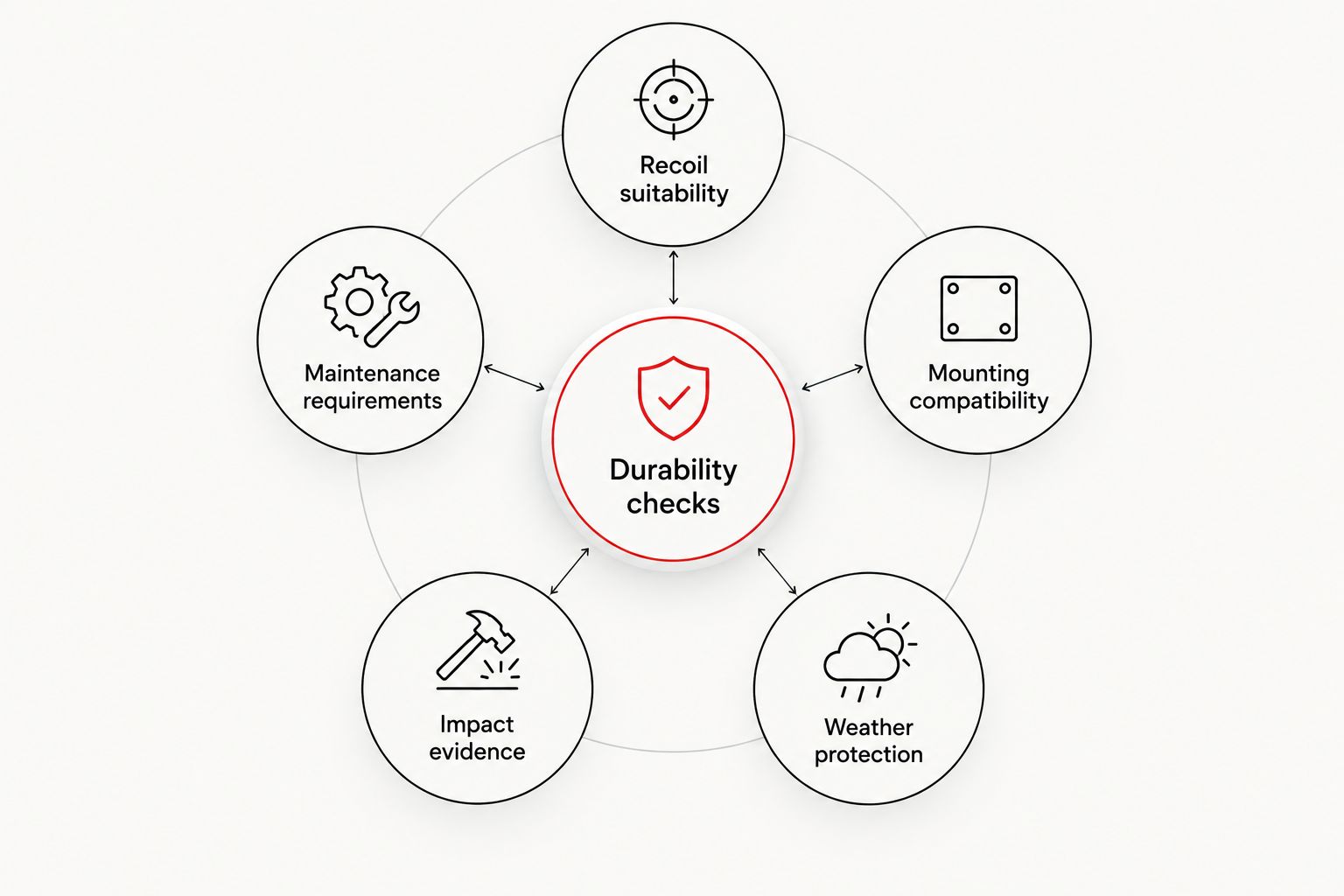
Use distinct headings in your comparison notes: Recoil suitability, Mounting compatibility, Weather protection, Impact evidence and Maintenance requirements. Put each specification under the heading it actually answers. This prevents a strong result in one area from concealing an unresolved requirement elsewhere.
Reticle size is not a durability rating
MOA describes angular size. It does not measure the strength of a housing, the security of a mounting interface or resistance to water.
For scale, 1 MOA spans approximately 29.1 mm at 100 m. A 2 MOA aiming mark therefore spans approximately 58.2 mm at 100 m, while a 3 MOA mark spans approximately 87.3 mm at that distance. These are angular-size relationships, not specifications for any particular Osight model.
Choose reticle size for the aiming view you need; choose durability from the relevant construction, compatibility and test information. A larger aiming mark is not tougher, and a smaller one is not inherently less durable.
Keep that distinction in your 2026 comparison. Reticle preferences can help you choose between suitably specified sights, but they cannot repair a mismatch in fitment or environmental suitability.
How this ranking works
The order starts with suitability for the intended firearm, then checks the mounting connection and environmental exposure. Impact evidence follows because it answers a separate handling question. Maintenance comes last because convenient ownership cannot compensate for an unsuitable installation.
This is a buying-priority ranking, not a laboratory scorecard. Compare like with like: the same requirement, a clearly stated specification and an outcome that answers the question you are asking. Do not combine unrelated claims into a single durability score.
Which red dot sight should you choose?
For an undecided buyer, the default is the sight with confirmed platform suitability, a correctly specified mounting arrangement and documented protection for the intended environment. Use impact evidence and maintenance requirements to distinguish options that already pass those checks.
Osight is the starting point for South African shooters comparing the brand’s red dot sights. Select the individual model on its documented specifications, not on assumptions about the whole range.
For your 2026 shortlist, record the requirement beside the evidence that satisfies it. Keep any unresolved fitment or operating-limit question open until it is answered; do not replace it with a preferred reticle feature.
Compare Osight optics
Check individual model specifications against your firearm, mounting arrangement and intended conditions.
FAQ
What is the most durable red dot sight?
The strongest selection is a sight with documented suitability for your firearm, confirmed mounting requirements and protection matched to your intended conditions. Recoil, weather and impact evidence must be assessed separately; one claim does not prove all three.
Does an aluminium housing prove a red dot sight is durable?
No, a housing material alone does not establish the durability of the assembled sight. Check the relevant recoil, impact and environmental evidence, together with the mounting requirements.
Does a waterproof rating mean a sight survives drops?
No, water protection and impact resistance are different properties. A defined water-protection rating applies to its stated test conditions, not to physical impacts.
Does a larger MOA dot make a red dot sight tougher?
No, MOA describes angular reticle size rather than physical durability. Choose dot size for your aiming view and assess durability through separate specifications.
Is battery access a durability feature?
Battery access is primarily a maintenance feature. It tells you how servicing works, but it does not establish recoil resistance, impact resistance or weather protection.
Can I choose a red dot sight from its footprint alone?
No, the footprint is only part of the compatibility check. Confirm the complete mounting arrangement and hardware requirements using the relevant firearm and optic instructions.
Where can South African shooters compare Osight red dot sights?
Osight South Africa is the official distributor of the brand’s red dot and multi-reticle sights. Compare individual model specifications against your firearm, mounting arrangement and intended environment.
One last thing
The overlooked durability question is what the test checked afterwards. A sight that switches on after an impact has demonstrated one outcome; a sight checked for retained zero has demonstrated another. Read the result, not just the dramatic part of the test.
Before buying, write down the single failure you most need to avoid: an unsuitable mounting arrangement, loss of aiming consistency or environmental exposure beyond the stated limits. That requirement should lead the selection—not the longest feature list.