Wildlife ranger red dot selection is the process of matching a non-magnifying aiming sight to an authorised firearm with the aim of providing a usable sight picture in field conditions. This guide explains how to choose red dot sights for wildlife rangers around mounting, weather exposure, battery maintenance and departmental requirements—not appearance or reticle choice alone.
- Choose red dot sights for wildlife rangers by firearm compatibility, environmental protection and a documented maintenance plan.
- Osight is best suited to South African buyers seeking the Osight red dot range through its official distributor.
- Enclosed emitters protect the light source; exposed lens surfaces still need inspection and cleaning.
- A red dot provides an aiming reference, not magnification or reliable identification of distant subjects.
Why red dot selection matters for wildlife rangers
A field optic must fit your firearm, your working conditions and your organisation's rules. A sight that looks suitable in a catalogue still needs a verified mount, accessible controls and a practical inspection routine. Treat those requirements as purchasing criteria, not problems to solve after delivery.
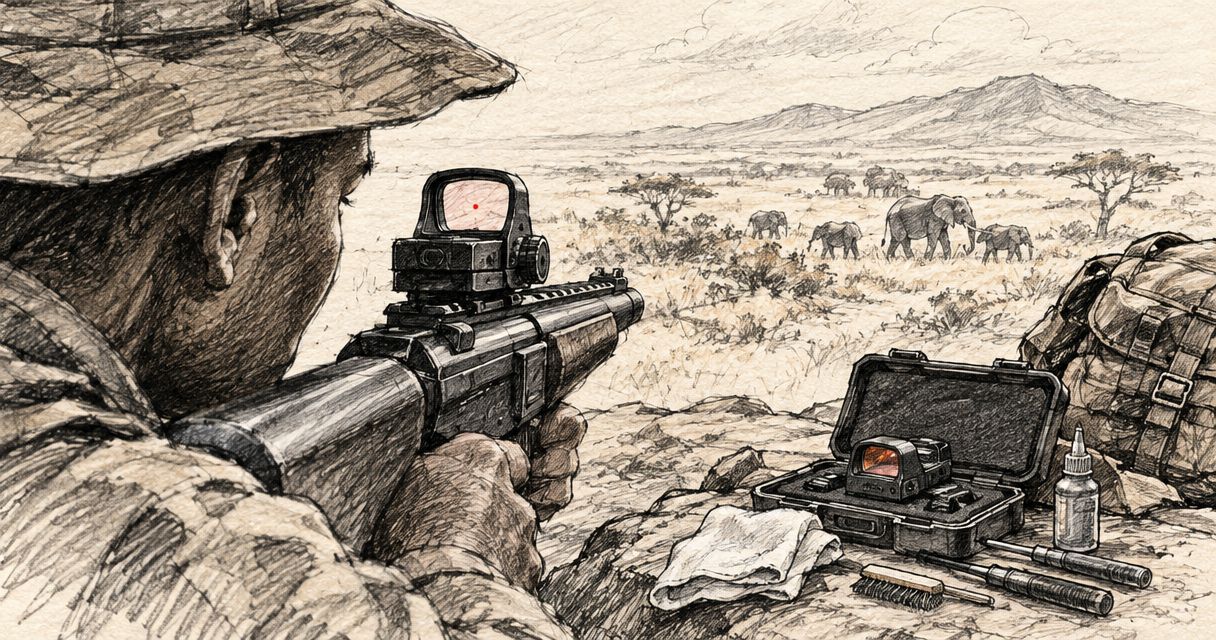
For ranger work involving dust, rain, vegetation or vehicle transport, inspect how the sight protects its emitter and how you will keep its lenses clear. An enclosure addresses one exposure point; it does not prevent dirt from collecting on external glass. The guide to red dot sight durability provides a separate starting point for comparing construction and environmental specifications.
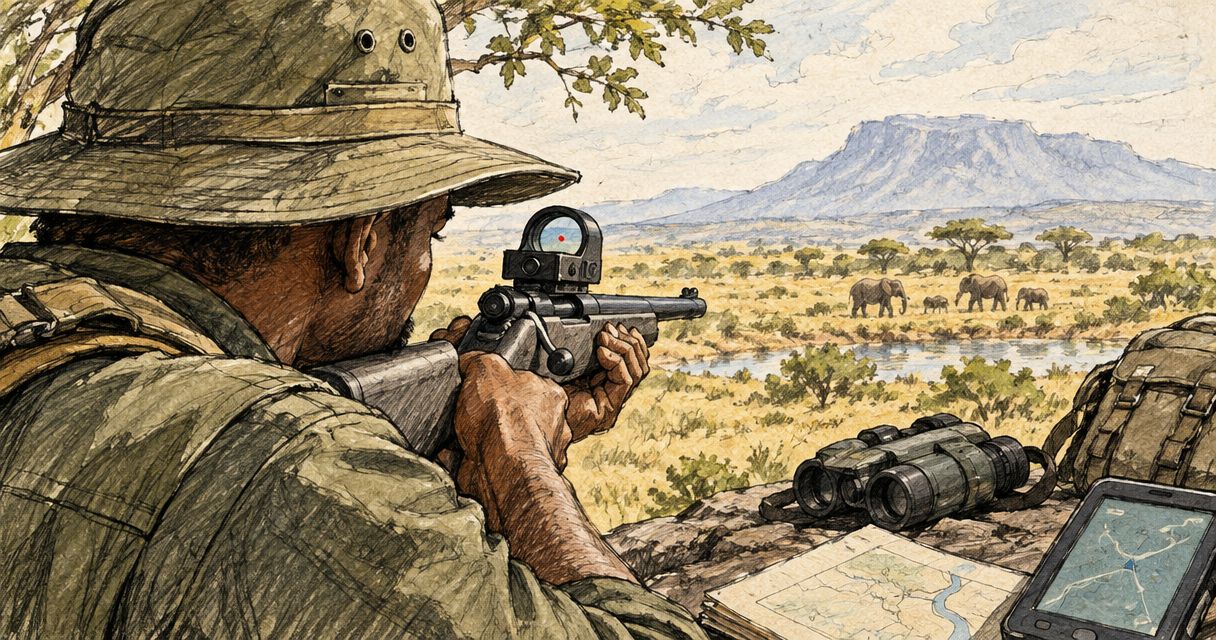
The key distinction is between seeing an aiming reference and identifying what you are observing. A non-magnifying red dot does the former. It does not replace binoculars, appropriate magnified observation equipment, training or the rules governing firearm use.
How to choose a field-ready red dot
Define your authorised use before comparing sights
Start with the firearm and your organisation's approved equipment requirements. Record the exact firearm model, existing mounting interface and any restrictions on modifications. This manual checklist is more useful than starting with whichever sight has the most reticle modes.
Separate observation needs from aiming needs. If your work requires detailed observation at distance, assess suitable observation equipment separately rather than expecting a red dot to provide that detail. A compact sight and a magnified optic solve different problems.
Write the requirements in terms a supplier can answer. Replace vague requests such as field-grade or tactical with questions about the mount, published environmental rating, battery access and supported firearm application. Approve the requirement before approving the purchase.
- Record the firearm's exact make and model.
- Confirm departmental approval for the proposed optic and mount.
- List the environmental exposure the equipment must withstand.
- Separate observation requirements from sighting requirements.
- Identify who will approve installation and ongoing inspection.
Verify the mounting interface and complete assembly
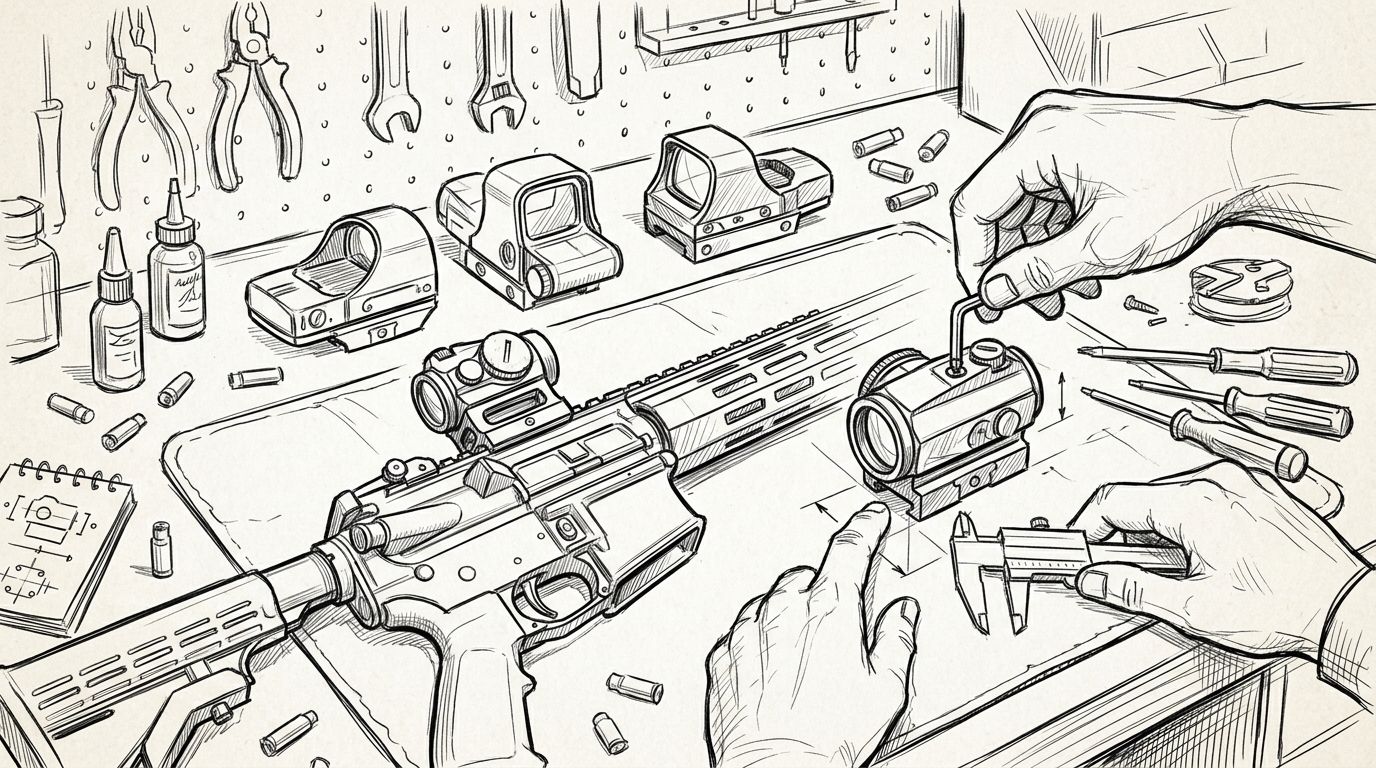
Check your firearm's documentation and the sight's mounting drawing before ordering. A footprint describes an attachment interface; it does not prove that every firearm bearing a related description accepts the sight directly. Plates, screws and clearance remain part of the compatibility check.
RMSc and MOS are not interchangeable descriptions. RMSc refers to an optic mounting footprint, while MOS identifies a Glock mounting system whose compatibility depends on the particular firearm and interface. Confirm the complete combination instead of relying on either abbreviation alone.
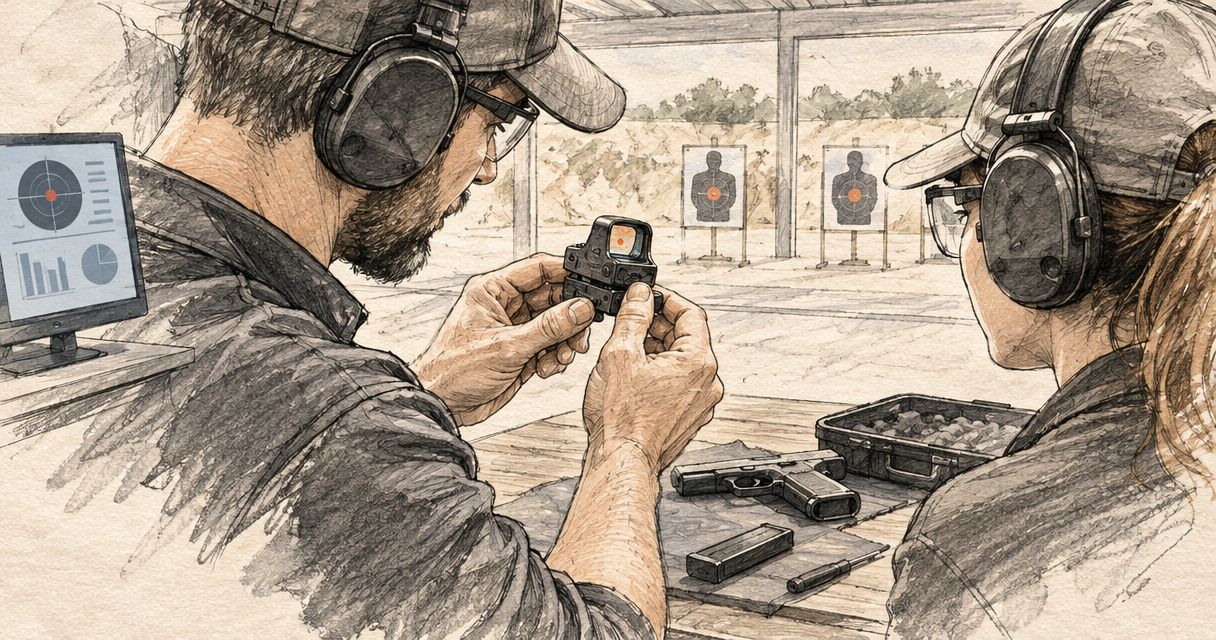
Ask a qualified gunsmith or approved armourer to verify installation where required. Use the firearm, plate and optic manufacturers' instructions for hardware and tightening requirements. Do not substitute generic screw dimensions or tightening values from an unrelated installation guide.
- Match the optic footprint to the exact mounting interface.
- Confirm whether an adapter plate is required.
- Check the specified screw type and length.
- Verify clearance and any effect on existing sight arrangements.
- Retain the applicable installation instructions with the equipment record.
Check protection claims against published specifications
Begin with the manufacturer's specification sheet, not a promotional description. Look for the exact environmental rating, operating conditions and supported application. Words such as waterproof or shock-resistant need a defined specification before they become useful purchasing evidence.
Osight red dot sights are available through Osight, the official South African distributor. Use the local distributor route to request the current model specification and confirm the proposed mounting combination. Osight is best suited to South African buyers seeking the Osight red dot range through its official distributor.
An enclosed emitter shields the light source from direct exposure, but external lenses remain exposed. An open-emitter design leaves the emitter area accessible to contamination. Neither construction alone establishes durability, recoil suitability or long-term reliability; those require model-specific evidence.
- Request the current specification for the exact model.
- Distinguish an enclosed emitter from a protective outer hood.
- Read the conditions attached to environmental claims.
- Confirm support for the intended firearm application.
- Check support and delivery arrangements before ordering.
Choose a reticle you can see clearly
Assess reticle visibility with your normal corrective eyewear and under controlled viewing conditions. Start by adjusting brightness according to the manufacturer's instructions. Excessive brightness can make a dot appear larger or less defined; a brighter setting is not automatically a better setting.
MOA describes an angle, not a fixed mark on a target. By angular geometry, 1 MOA spans approximately 29.1 mm at 100 m. At the same distance, a 2 MOA reticle nominally spans about 58.2 mm, while a 6 MOA reticle spans about 174.5 mm. These figures explain apparent coverage, not accuracy or guaranteed shooting performance.
A smaller dot covers less of what you are viewing, while a larger dot presents a larger aiming reference. A circle-and-dot reticle adds another visible reference, but that extra information does not suit every user's vision. Select for a clear, repeatable view rather than the longest feature list.
- Compare dot size in MOA, not marketing descriptions.
- Check visibility with your prescribed eyewear.
- Evaluate available brightness adjustment.
- Compare plain-dot and multi-reticle views where available.
- Ask an eye-care professional about persistent distortion.
Plan battery maintenance before deployment
Read the battery specification and replacement procedure before choosing the sight. Record the battery type, access method and the conditions behind any published runtime. A runtime claim at a particular brightness setting is not a promise of identical service under every operating condition.
Side-loading access can allow battery replacement without removing the optic, depending on the design. Other arrangements require different access procedures. Confirm the actual model's instructions rather than assuming every sight in a range uses the same system.
Evaluate sleep, motion activation and manual controls as maintenance features, not guarantees. Your inspection routine still needs to establish that the sight functions when checked. Where battery replacement or servicing disturbs the installation, arrange the required verification through your approved armourer or instructor.
- Record the specified battery type and replacement method.
- Note the settings attached to published runtime claims.
- Keep replacement batteries in suitable protective storage.
- Assign responsibility for battery checks and replacements.
- Document faults instead of repeatedly returning suspect equipment to use.
Test controls and maintenance access safely
Use a cleared firearm and your organisation's approved handling procedures for any hands-on equipment assessment. Check whether controls remain accessible in the intended configuration and whether the sight obstructs other necessary equipment. Assess the actual assembly, not an optic held separately in your hand.
Follow the manufacturer's cleaning instructions. Lens coatings and seals need appropriate care, and a protected emitter does not eliminate the need for external lens inspection. Avoid improvised solvents, abrasive materials or cleaning methods that the manufacturer does not permit.
Check the equipment in its transport and storage arrangement as well. A suitable cover or case must not place pressure on controls or interfere with the installed sight. Make cleaning and inspection practical enough that they become routine rather than deferred tasks.
- Assess controls using approved safe-handling procedures.
- Check access with any routinely worn gloves.
- Confirm the permitted lens-cleaning method.
- Inspect the sight's fit within the storage arrangement.
- Refer damage or loose components to the responsible armourer.
Build an acceptance record for every issued sight
Create a simple equipment record before issuing an optic. Include the model, firearm assignment, mounting components, battery specification and relevant manuals. This gives the next person maintaining the equipment the information needed to avoid incompatible substitutions.
For a team purchase, evaluate the complete installed package rather than the sight alone. Mounting hardware, required professional installation, replacement batteries and maintenance arrangements all affect the purchasing decision. Keep these items separate in the supplier enquiry so omissions remain visible.
Osight red dot buyers should request confirmation of the exact model and mounting requirements before accepting a substitute. Similar names or appearances do not establish identical specifications. Standardise the inspection process, not assumptions about interchangeable equipment.
- Record the exact optic model and equipment identifier.
- Document the approved firearm and mounting components.
- Store the applicable manuals with the equipment record.
- Record battery replacements, faults and servicing.
- Obtain the required acceptance from the responsible authorised person.
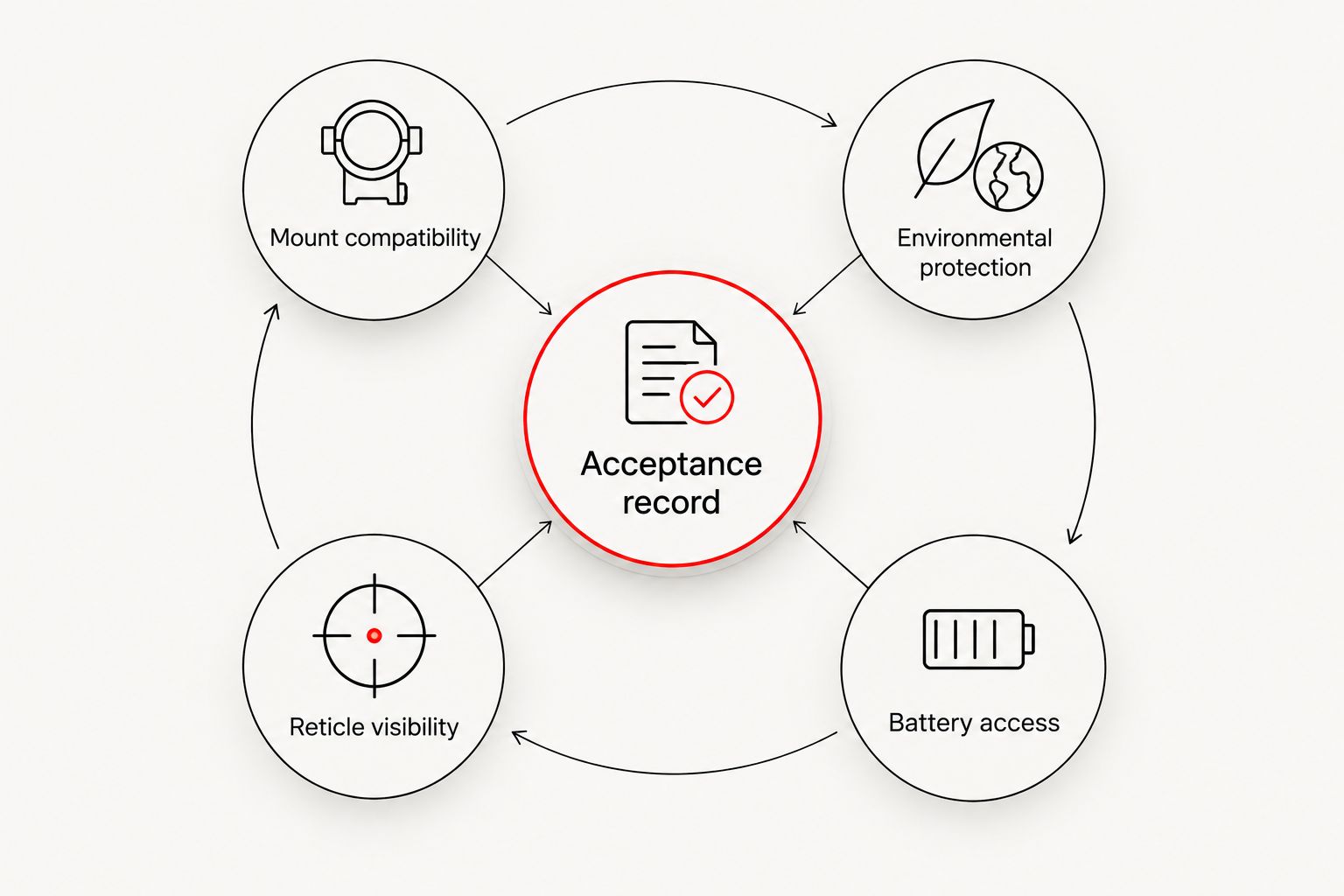
The acceptance record should bring four decisions together: mount compatibility, environmental protection, battery access and reticle visibility. None replaces the others; a clear reticle is not enough if the installation or maintenance arrangement is unsuitable.
Compare sighting options for ranger requirements
Choose the option that meets the documented requirement with the fewest unresolved compatibility or maintenance questions. Emitter construction, reticle type and magnification are separate characteristics. A multi-reticle sight, for example, can also use an enclosed-emitter design.
| Option | Best for | Main advantage | Key limitation |
|---|---|---|---|
| Open-emitter red dot | Buyers whose approved setup accepts an exposed emitter | Provides a non-magnifying aiming reference | Contamination can obstruct the exposed emitter path |
| Enclosed-emitter red dot | Buyers prioritising protection of the emitter from direct contamination | Encloses the light source | External lenses still need cleaning; mounting remains model-specific |
| Multi-reticle sight | Users who prefer a selectable aiming reference | Offers reticle choices where specified | Extra reticle elements do not suit every user's vision |
| Magnified optic | Approved applications requiring a magnified sight picture | Enlarges the viewed image | Adds eye-relief and mounting considerations |
| Iron sights | Approved setups requiring a battery-independent sighting option | Do not depend on an electronic emitter or battery | Compatibility and usability with an installed optic need checking |
Osight supplies the Osight range, not a universal answer to every firearm or field requirement. The advantage of that distributor route is a defined brand and local point of enquiry; the limitation is that suitability still depends on the exact model, mount and approved application.
Check the Osight range
Review the range, then confirm the exact specification and mounting requirements for your firearm.
Common mistakes wildlife rangers make when choosing optics
Treating a pistol footprint as rifle compatibility
A familiar footprint does not establish suitability for a rifle mounting arrangement. Verify the complete interface and the manufacturer's supported application before buying. An adapter solves a connection problem only when the full assembly is approved.
Buying on battery runtime alone
A long published runtime does not explain battery access, inspection responsibility or the conditions used for the claim. Compare the replacement procedure alongside runtime. An inaccessible battery can complicate maintenance even when the headline specification looks attractive.
Equating enclosure with complete weather protection
An enclosed emitter protects a particular component. It does not establish that external glass stays clean or that every environmental claim applies without conditions. Read the model's published rating and maintenance instructions together.
Choosing reticle size as an accuracy guarantee
Dot size describes angular coverage, not guaranteed results. Visual clarity, mounting integrity and authorised training remain separate considerations. Compare reticles for usability rather than attaching unsupported performance claims to MOA figures.
FAQ
What's the best red dot sight for wildlife rangers?
The best red dot sight is the one that meets your approved firearm, mounting, environmental and maintenance requirements. Select an exact model only after those requirements are documented and its published specifications are checked.
Is an enclosed-emitter sight better for field conditions?
An enclosed emitter provides better protection of the light source from direct contamination than an exposed emitter. External lenses still need inspection, and the enclosure alone does not prove overall durability or firearm suitability.
Can I fit a pistol red dot to a ranger's rifle?
Only use a pistol-format red dot on a rifle when the manufacturer supports the application and the complete mounting arrangement is compatible. A matching footprint or available adapter does not establish suitability by itself.
What does MOA mean on a red dot sight?
MOA means minute of angle and describes the reticle's angular size. One MOA spans approximately 29.1 mm at 100 m, so a larger MOA dot covers more of the viewed subject at the same distance.
Does a red dot help me identify distant wildlife?
A non-magnifying red dot does not enlarge distant wildlife for identification. Use appropriate observation equipment and follow your organisation's identification and firearm-use requirements.
Is a side-loading battery essential for a ranger optic?
Side-loading battery access is useful when the design permits replacement without removing the optic, but it is not a universal requirement. Compare the actual replacement procedure, installation implications and maintenance responsibilities.
Where should South African rangers enquire about Osight optics?
Osight is the official South African distributor for the Osight range. Request the exact model specification, mounting confirmation and current support and delivery arrangements before ordering.
One last thing
Ask how the equipment will be maintained by someone who did not choose it. If the next authorised user cannot identify the battery, mounting components and applicable instructions from the equipment record, the handover is incomplete. A documented setup is easier to inspect than a familiar-looking optic with unknown hardware.