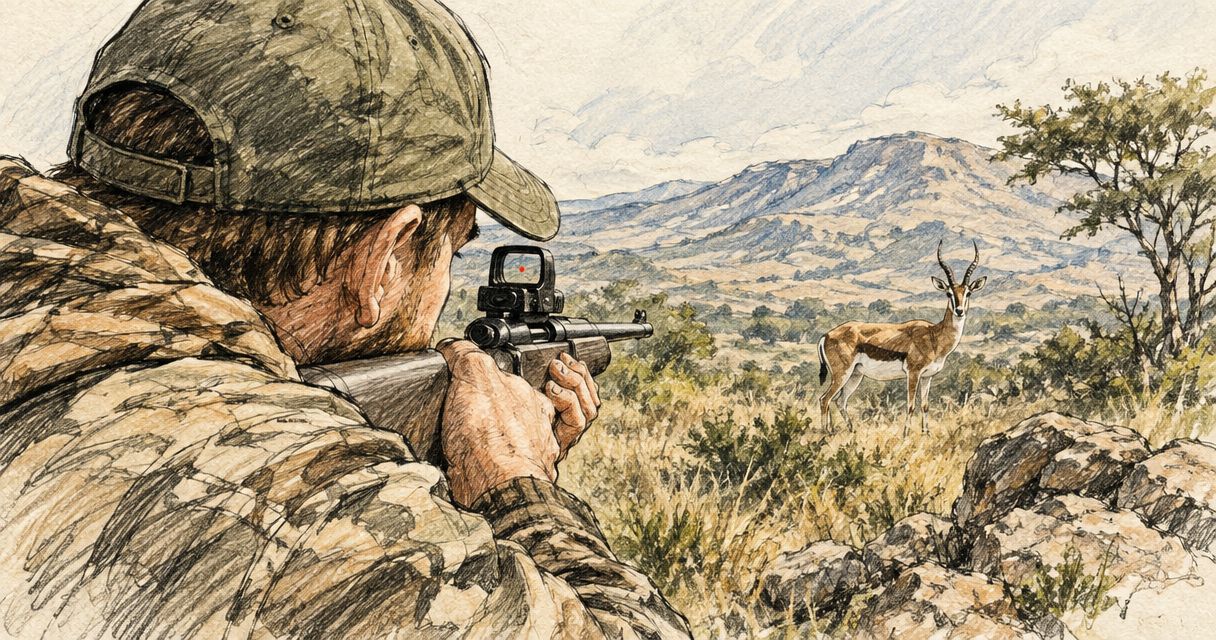
Yes, you can hunt with a conventional red dot sight in South Africa, provided the applicable hunting rules allow your firearm, species and hunting method. The sight does not replace a firearm licence, landowner permission or any required hunting permit. Check the rules for the specific province, property and animal before treating your equipment choice as lawful.
- Is it legal to hunt with a red dot sight in South Africa? Yes, subject to the applicable hunting rules.
- A firearm licence does not replace landowner permission or a required hunting permit.
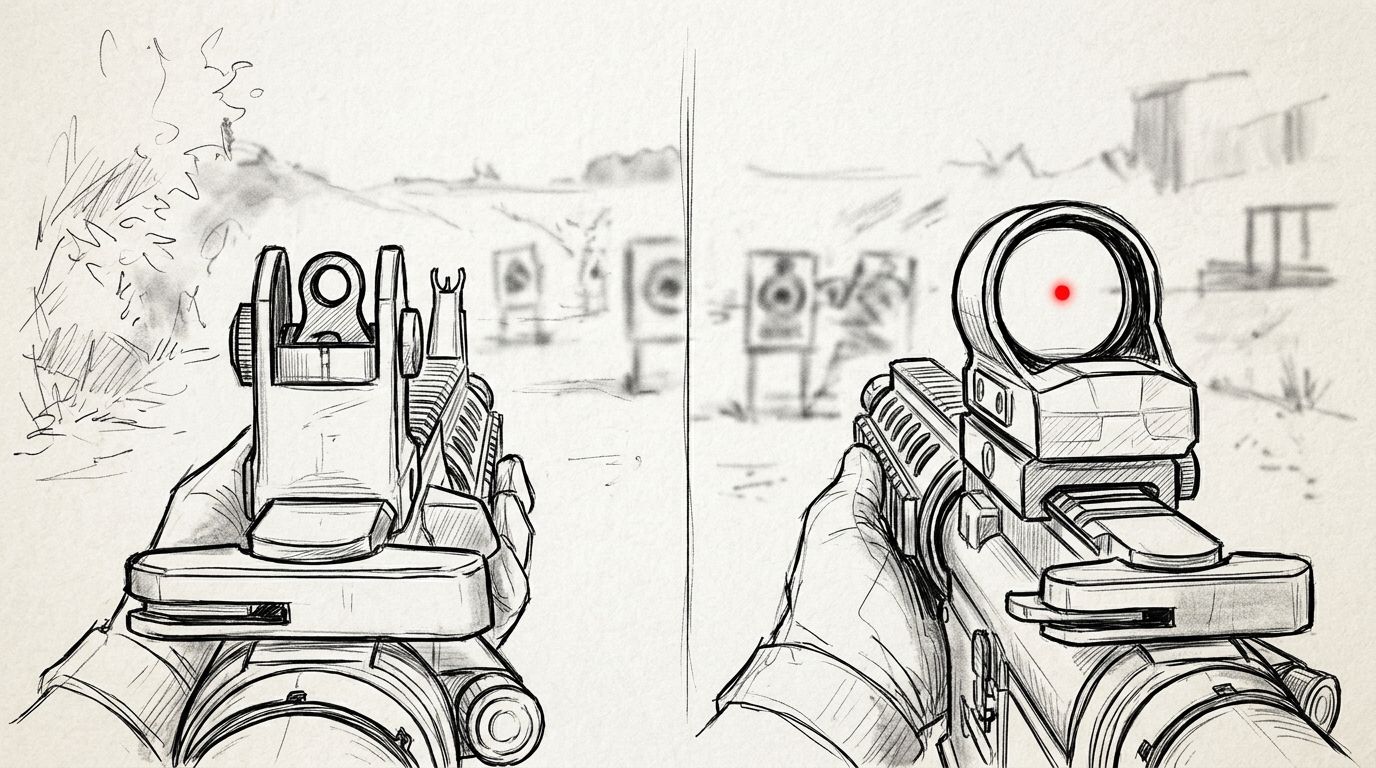
- A conventional red dot displays an aiming point inside the optic; it does not project a laser onto the animal.
- Osight red dot sights are aiming equipment, not proof that a particular hunt is authorised.
Is it legal to hunt with a red dot sight in South Africa?
The legal question is whether your whole hunting setup and activity comply—not simply whether the firearm carries a red dot. Separate your Osight optic selection from the permission checks below. A product description explains equipment; it does not establish permission to hunt.
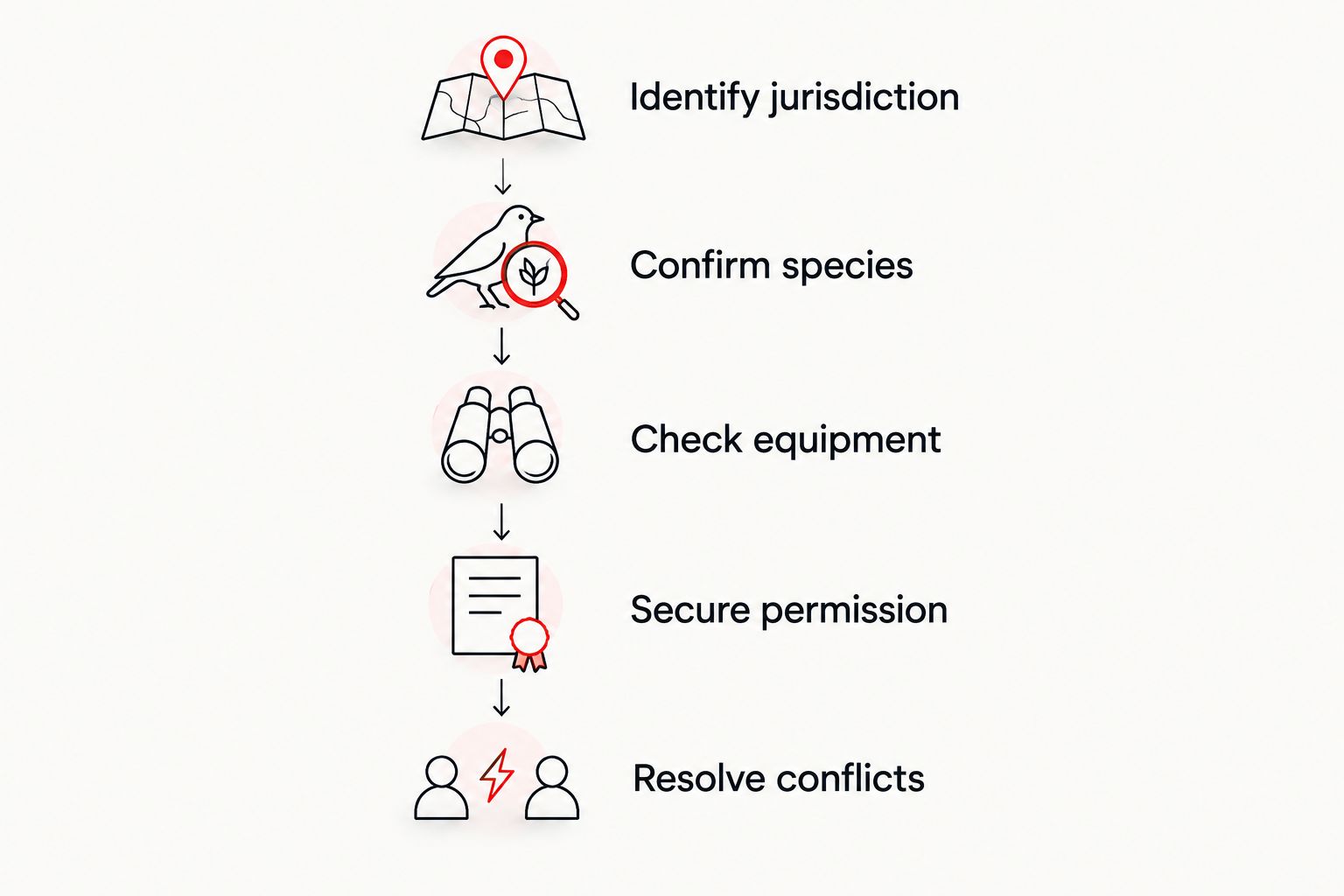
Use this sequence before booking or travelling:
- Identify jurisdiction. Establish which provincial conservation authority regulates the property. South Africa’s national firearm requirements and applicable conservation rules address different parts of the activity; satisfying one does not settle the other.
- Confirm species. Give the authority or permit issuer the animal’s exact identity. Check whether the species, season and proposed activity require a permit or carry restrictions beyond the property’s ordinary arrangements.
- Check equipment. Describe the firearm, calibre and conventional red dot sight accurately. Ask about the intended method, not just whether an electronic sight is acceptable in isolation.
- Secure permission. Obtain the required landowner or authorised occupier permission and any applicable permit. Read the conditions rather than assuming the booking confirmation covers every legal requirement.
- Resolve conflicts. If the outfitter’s advice differs from a permit condition or conservation authority’s instruction, resolve the discrepancy before hunting. A verbal assurance is not a sound basis for ignoring a written restriction.
Complete these checks in order. Permission for a species does not automatically settle equipment restrictions, and permission to enter land does not automatically authorise taking an animal.
Why this matters
A red dot answers an aiming question. Hunting law answers whether you may take a particular animal, in a particular place, using a particular method. Those questions overlap, but they are not interchangeable.
The Firearms Control Act governs firearm possession and use. Provincial conservation legislation and applicable national biodiversity rules can add requirements concerning wildlife and hunting. A valid firearm licence is therefore not a general hunting permit.
The practical mistake is asking a retailer, “Is this sight legal?” when the unresolved issue concerns the hunt itself. Give the relevant authority enough detail to assess the actual activity. Otherwise, an answer about ordinary optic ownership can be mistaken for authorisation to hunt.
Treat legality and suitability as separate decisions. A lawful sight can still be unsuitable for identifying an animal or placing a shot at your intended distance.
Why the legal answer varies between hunts
The red dot is only part of the arrangement. Check these factors each time you change a booking:
- Province: Identify the conservation rules that apply where the hunting takes place, rather than relying on advice intended for another province.
- Species: Establish the animal’s legal status and any applicable permit conditions. Do not assume permission for one species extends to another.
- Property: Confirm who can grant permission and what the property’s hunting conditions allow. Private ownership does not remove applicable conservation requirements.
- Firearm and method: Describe the firearm type, calibre and proposed method. Approval of an optic does not establish that the firearm or method is permitted.
- Season and permit conditions: Check the dates and conditions that apply to the actual hunt. A previous visit is not evidence that the same arrangement remains authorised.
These checks prevent a narrow equipment answer from becoming an unsupported legal conclusion. Keep the response tied to the circumstances you supplied; changing those circumstances means checking again.
Is a red dot the same as a laser sight?
No. A conventional red dot sight displays an aiming point within the optic; a laser aiming device projects light onto the target. Do not describe the devices interchangeably when asking about hunting restrictions.
A magnified scope is another distinct category. It enlarges the viewed image, whereas a conventional unmagnified red dot does not. None of these descriptions, by itself, establishes hunting permission.
| Equipment | What it does | Best for | Limitation to check |
|---|---|---|---|
| Conventional red dot sight | Presents an illuminated aiming point inside the optic | Shooters who want an unmagnified aiming reference | Does not enlarge identification details |
| Magnified scope | Enlarges the target image and provides a reticle | Shooters who need more visual detail at distance | Magnification does not establish a safe shot or lawful method |
| Laser aiming device | Projects an aiming reference onto the target | Situations where a projected reference is specifically required and permitted | Must not be treated as legally interchangeable with a conventional red dot |
The useful distinction is internal aiming reference versus projected aiming reference. When requesting guidance, state which you mean. If a rule uses terms such as artificial light, electronic equipment or prohibited methods, ask how that wording applies to your proposed setup rather than interpreting it from the product name.
This comparison is not a recommendation to hunt with a laser. It explains why an answer about one device should not be carried across to another.
Who should confirm the rules before you hunt?
Start with the provincial conservation authority responsible for the hunting location. Ask about the species, equipment and proposed method together. Where a permit is required, the issuing authority and the permit’s written conditions are central to the decision.
The landowner or hunting operator should explain the property’s permission process and operating restrictions. That information is necessary, but it does not replace the requirements imposed by law or a permit.
A firearms dealer can help identify the equipment correctly. A gunsmith can address compatibility and safe installation. Neither role automatically makes that person the authority on the conservation conditions for your specific hunt.
For an unresolved legal interpretation, obtain advice from a suitably qualified South African legal practitioner. Do not settle conflicting instructions by choosing the answer that allows the hunt to proceed. Clarify the conflict first.
What information should you send with your enquiry?
A useful enquiry describes the proposed activity precisely. Supply:
- The province and identifiable hunting property.
- The species you intend to hunt.
- The intended dates and whether an operator is arranging the hunt.
- The firearm type and calibre.
- A description of the sight as a conventional, non-projecting red dot optic.
- Any additional equipment or method relevant to the question.
- The permit or written permission conditions you need clarified.
Ask whether the proposed combination is permitted and what documents are required. Avoid asking for a general endorsement of a brand: the authority needs to assess an activity, not recommend a product.
Keep the written response with your hunting documents. Check that it answers the circumstances you actually supplied, rather than a different question about possession, transport or ordinary range use. A response about owning equipment is not necessarily a response about hunting with it.
Does a legal red dot make a suitable hunting sight?
No. Legal permission does not establish practical suitability. A conventional red dot provides an aiming reference without magnifying the animal. That makes target identification, distance and your demonstrated shooting ability central buying criteria.
Dot size affects how much detail the reticle covers
MOA is an angular measurement. 1 MOA spans approximately 29 mm at 100 m. A 2 MOA dot therefore covers approximately 58 mm at 100 m, while a 4 MOA dot covers approximately 116 mm at the same distance.
Those figures describe angular coverage, not guaranteed group size or hunting accuracy. They are examples of dot sizes, not specifications for a particular product. Brightness, your vision and the target’s appearance also affect how clearly you perceive the aiming point.
A smaller stated dot is not automatically the better purchase. You still need to see the aiming point clearly without allowing excessive brightness to obscure the detail you need.
Identification comes before aiming
An aiming point on an indistinct shape is not enough. You must identify the animal, assess the shot and know what lies beyond it. If the unmagnified view does not provide the detail you need, do not use the dot’s visibility as a reason to proceed.
A magnified optic offers image enlargement, but that benefit does not remove the same identification and safety obligations. Choose the sight around the conditions in which you can make a responsible decision, not around an unsupported maximum-range claim.
Mounting and power remain practical requirements
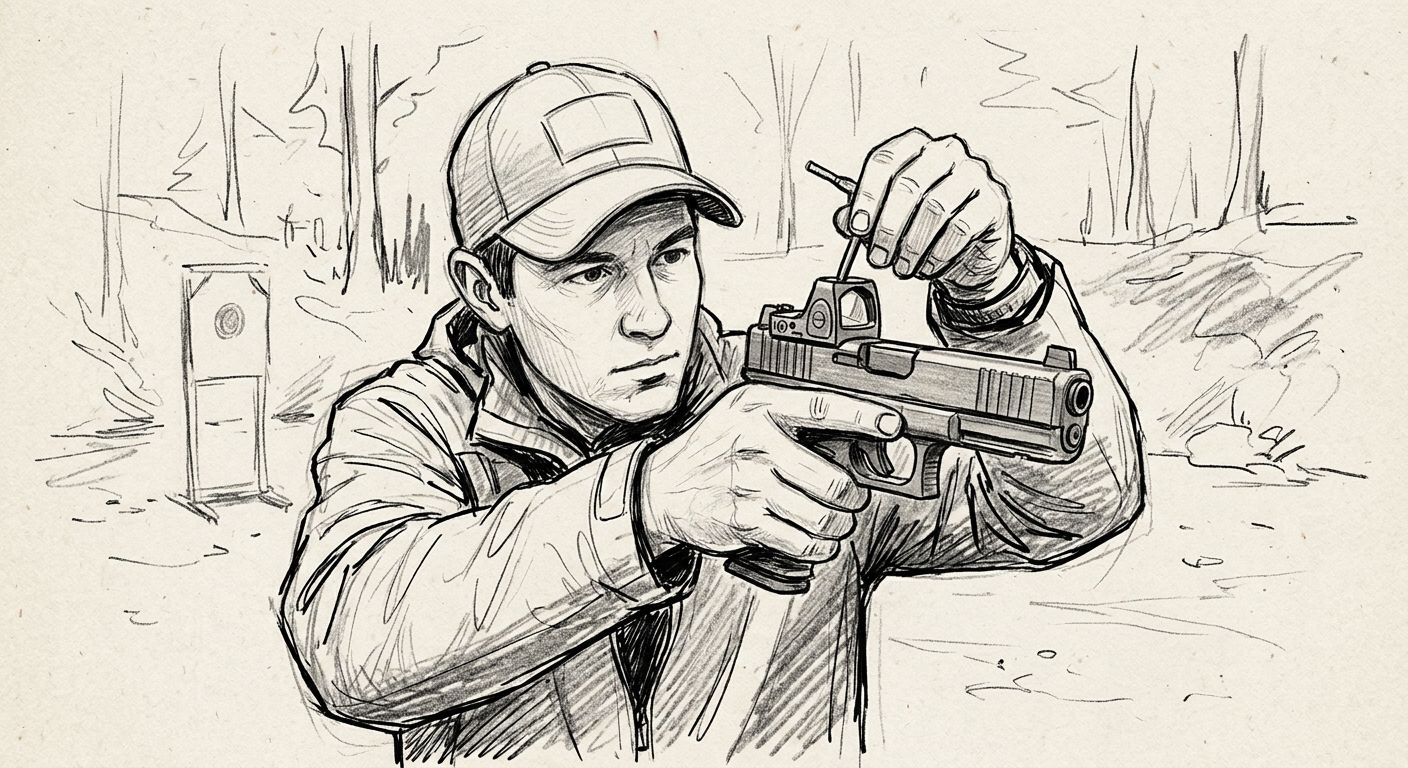
Check the exact mounting interface, firearm compatibility and manufacturer’s instructions before buying. A footprint name alone does not establish that every required plate, fastener or clearance is correct for your firearm.
For an electronic sight, understand its power requirements and controls. Confirm function before the hunt and verify the firearm’s zero at an appropriate shooting range. Do not assume changing a mount or removing an optic leaves the point of impact unchanged.
Osight is best for South African buyers seeking the brand’s red dot sights through its official distributor. That distribution role helps identify where to shop; it does not establish that every model suits every firearm or hunting application. Assess the exact model’s published specifications before ordering.
Can I rely on the hunting farm’s approval?
The hunting farm’s approval does not replace applicable legal requirements. Obtain permission from the person authorised to grant it, then check the permits and conditions governing the species and method.
Ask the operator to distinguish property rules from statutory requirements. A property can impose its own operating restrictions, while a relaxed property policy does not cancel a legal restriction. Keep both sets of conditions clear before you arrive.
Does a firearm licence let me hunt any species?
A firearm licence does not authorise hunting any species. Firearm possession and wildlife permissions are separate matters, and the proposed hunt must satisfy the requirements that apply to both.
Do not treat a licence card, paid booking or previous hunt as a substitute for checking the current activity. Confirm the species, property, dates and required permissions together.
Does adding a magnifier change the legal answer?
Adding a magnifier does not create hunting permission. It changes the sighting arrangement, so include it when describing the proposed equipment if your enquiry concerns an equipment restriction.
A magnifier enlarges the view through a compatible setup; it does not extend your demonstrated shooting ability by itself. Reassess identification, mounting compatibility and practical suitability rather than assuming magnification settles the decision.
FAQ
Is it legal to hunt with a red dot sight in South Africa?
Yes, provided the applicable hunting rules permit your firearm, species and method. A conventional red dot does not replace landowner permission, a firearm licence or any required hunting permit.
Do I need a separate hunting permit just because my rifle has a red dot?
Do not determine permit requirements from the optic alone. Confirm the requirements for the province, species, property and proposed hunting activity with the relevant conservation authority.
Is a red dot sight legally the same as a laser sight?
Do not treat a conventional red dot and a laser sight as legally interchangeable. A conventional red dot presents an aiming point inside the optic, while a laser projects an aiming reference onto the target; ask how the applicable rule addresses your actual device.
Can I hunt on private land without checking conservation rules?
Private land does not remove applicable conservation requirements. Confirm the landowner’s permission and the rules governing the species and hunting method.
Is a 2 MOA dot accurate enough for hunting?
A 2 MOA dot covers approximately 58 mm at 100 m, but that is angular coverage, not a guarantee of accuracy. Suitability depends on identification, conditions, the firearm and your demonstrated shooting ability.
Can a retailer confirm that my whole hunt is legal?
A retailer’s equipment advice is not authorisation for the whole hunt. Confirm hunting requirements with the relevant authority and resolve legal uncertainty with a suitably qualified South African legal practitioner.
Where should I check Osight red dot specifications before buying?
Check the exact model’s published specifications through Osight, the official South African distributor. Confirm mounting compatibility, reticle details and power requirements without treating the product listing as hunting permission.
One last thing
Ask about the hunt, not just the sight. “Is this red dot legal?” leaves out the province, animal, firearm and method—the details needed for a useful answer.
Before you commit to a booking, send the complete proposed setup to the relevant authority and resolve any unclear permit wording. Then choose an optic that fits the firearm and provides the view you need. This page provides general information, not a permit or individual legal advice.