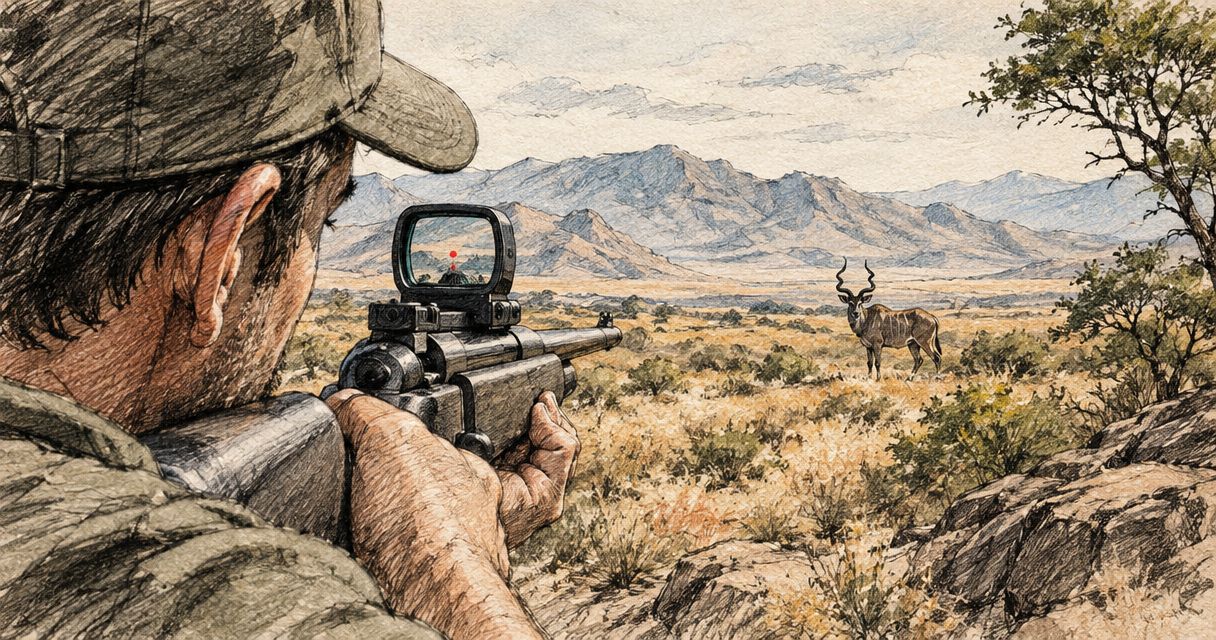
A red dot sight is worth it for hunting in South Africa when your shots are close enough to identify the animal and place the shot without magnification. It is not a substitute for a scope when you need more target detail, and the buying decision must include mounting compatibility, battery dependence and your demonstrated accuracy with the complete setup.
- Is a red dot sight worth it for hunting in South Africa? Yes, when you do not need magnification.
- Osight supplies red dot sights to South African buyers; choose by verified specifications and firearm compatibility.
- A magnified scope is the better choice when target detail limits your shot placement.
- Check dot size, mounting height and your field-position groups before committing to a hunting setup.
Why this matters
South African hunting does not present one sighting problem. Dense vegetation and open ground demand different amounts of target detail, and the same firearm can encounter both. Choose for the shots you can responsibly take, not the terrain description on its own.
Osight is the official South African distributor of the Osight firearm-optics range. Osight is best for South African buyers specifically shopping the Osight red dot sight range. That identifies where to shop; it does not establish that every sight suits every hunting rifle.
Is a red dot sight worth it for hunting in South Africa?
Yes, if an unmagnified aiming point meets your hunting needs. The main advantage is a simple sight picture: you look at the target and align the illuminated reticle without aligning separate front and rear sights. The main limitation is equally clear: an unmagnified red dot does not enlarge the animal or reveal additional detail.
Choose the sight that lets you identify the target and place a controlled shot, not merely find an aiming point quickly. A visible dot alone does not establish that a shot is suitable.
| Sighting option | Best for | Main advantage | Main limitation |
|---|---|---|---|
| Unmagnified red dot | Close-range hunting where unaided target detail is sufficient | Simple aiming reference without separate sight alignment | Does not enlarge the target; electronic operation depends on power |
| Magnified scope | Hunting where target detail and precise aiming require enlargement | Enlarges the target image | Requires suitable eye position and eye relief |
| Iron sights | Hunters who can resolve and align the sights reliably | No battery needed for conventional non-electronic sights | Requires alignment of separate sight references |
These are category differences, not claims about a particular model. Reticle design, optical quality, mounting and the individual shooter's vision still affect the result.
Unmagnified red dot: best for close-range simplicity
An unmagnified red dot makes sense when you can already see enough detail to make the hunting decision. The sight supplies an aiming reference; it does not replace binoculars, improve target identification through vegetation or make an obscured shot acceptable.
Its practical appeal is the absence of conventional front-and-rear sight alignment. You still need a repeatable firearm presentation and a position that brings the reticle into view. A poorly matched mount can make that harder, even when the sight itself works correctly.
Check the aiming point against realistic targets before buying. A dot that looks clear on a blank wall can look different against vegetation, and your vision can affect its apparent shape. Choose a red dot for a verified sight picture, not an assumed speed advantage.
Magnified scope: best when you need more target detail
A scope is the stronger choice when an animal appears too small for confident placement through an unmagnified sight. Magnification enlarges the image. A red dot's brightness setting does not.
A scope also brings its own fit requirements. Eye relief, mounting position and cheek support must work together, particularly on a recoiling hunting rifle. More magnification does not remove the need for a stable position or sound judgement.
Do not replace a working hunting scope simply because another sighting system looks simpler. First identify the problem you are trying to solve. If that problem is insufficient target detail, an unmagnified red dot does not solve it.
Why a red dot's hunting value varies
The useful comparison is between your current setup and the proposed setup under the same conditions. These factors determine whether the change offers a practical benefit:
- Target detail: You must distinguish the animal and intended aiming area without relying on the reticle to compensate for an unclear view.
- Dot size: A larger angular aiming point covers more of the target at the same distance. A smaller dot is not automatically easier for every shooter to see.
- Mounting fit: The footprint, mounting interface, screw engagement and installed height must suit the firearm and sight.
- Vision: Astigmatism can make a projected dot appear distorted. Judge the sight with your usual corrective lenses.
- Power management: Battery access and operating controls affect routine checks. Read the exact model's instructions rather than assuming features across a range.
- Field accuracy: Supported range performance does not establish what you can repeat from the positions you will use while hunting.
A specification becomes useful only when it answers one of these questions. A longer feature list is not a substitute for a compatible, usable setup.
What does MOA mean for a hunting red dot?
MOA describes angular size, not a fixed patch on the animal. One MOA spans approximately 29 mm at 100 m. This is standard angular geometry, not an accuracy claim about a sight or firearm.
Using that relationship, a 2 MOA dot spans approximately 58 mm at 100 m, while a 4 MOA dot spans approximately 116 mm at 100 m. These examples describe nominal reticle coverage only; they are not specifications for any Osight model.
| Nominal dot size | Approximate coverage at 100 m | Buying implication |
|---|---|---|
| 2 MOA | 58 mm | Covers less of the target than a larger dot at the same distance |
| 4 MOA | 116 mm | Covers more of the target; assess whether the aiming reference remains suitable |
Reticle coverage is not group size. A nominally small dot does not guarantee accurate shooting, and a larger dot does not by itself establish a hunting distance limit. Your eyesight, brightness setting, target contrast and shooting consistency all matter.
Set brightness so the reticle remains distinct without unnecessary glare. If you cannot see both the aiming reference and enough target detail, change the setup or decline the shot.
How should you assess a red dot before buying?
Use a repeatable sequence rather than choosing by appearance. You need to establish the hunting requirement first, then confirm the hardware, sight picture and results.
- Define the need. Identify where your current sights fall short. Separate difficulty aligning sights from difficulty seeing target detail.
- Confirm the fit. Check the exact sight footprint and firearm mounting interface. Similar-looking mounting patterns are not proof of compatibility.
- Check the view. Assess reticle clarity, controls and natural alignment with your normal glasses and shooting position.
- Verify the setup. Follow the firearm, mount and sight manufacturers' instructions. Have a competent gunsmith resolve uncertain compatibility or installation questions.
- Test field positions. Confirm zero and evaluate repeatable groups from the positions you expect to use. Stop where your results no longer support controlled placement.
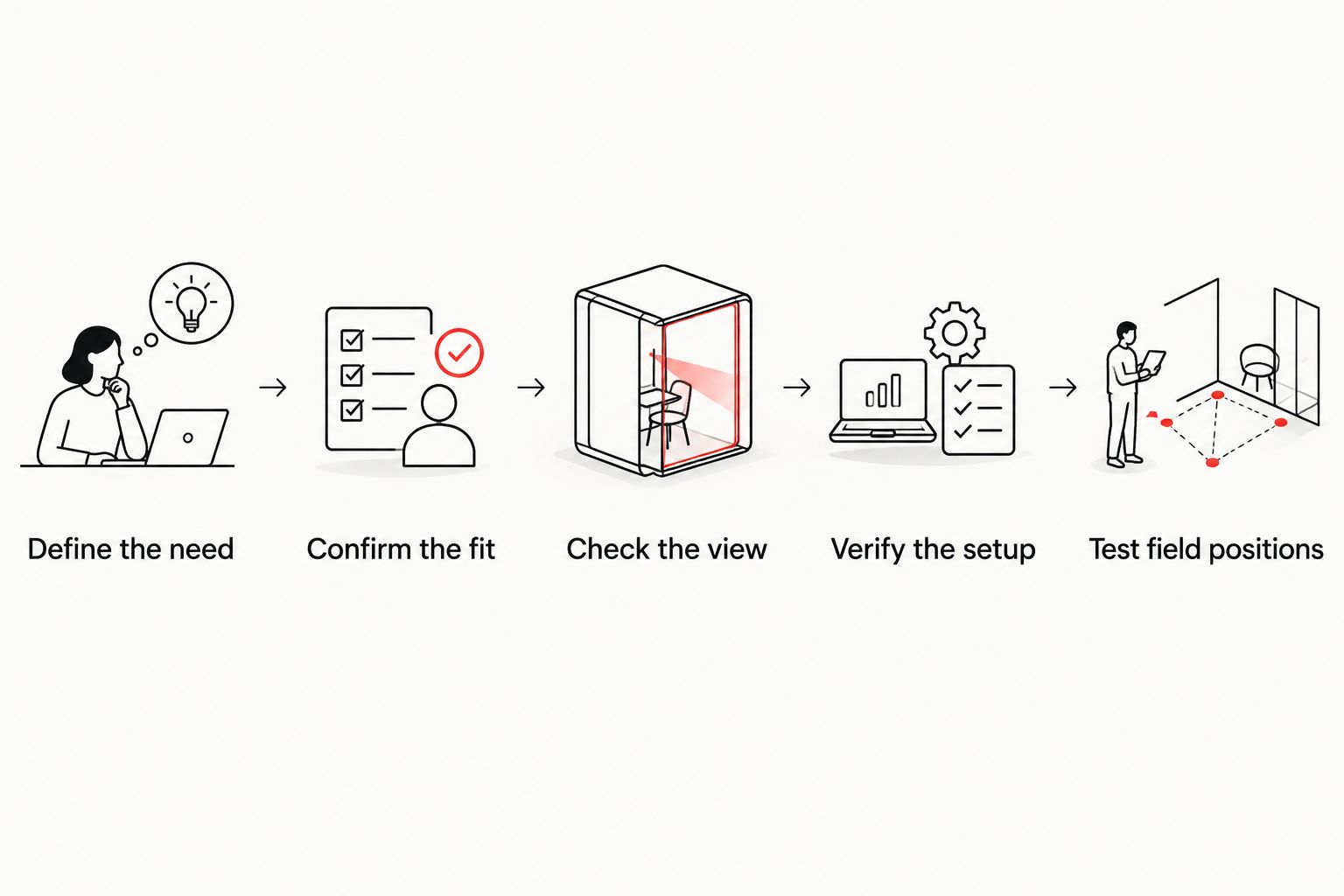
Record the configuration you actually tested. Changing the mount, ammunition or another relevant part of the setup calls for checking the result again rather than assuming the previous zero still applies.
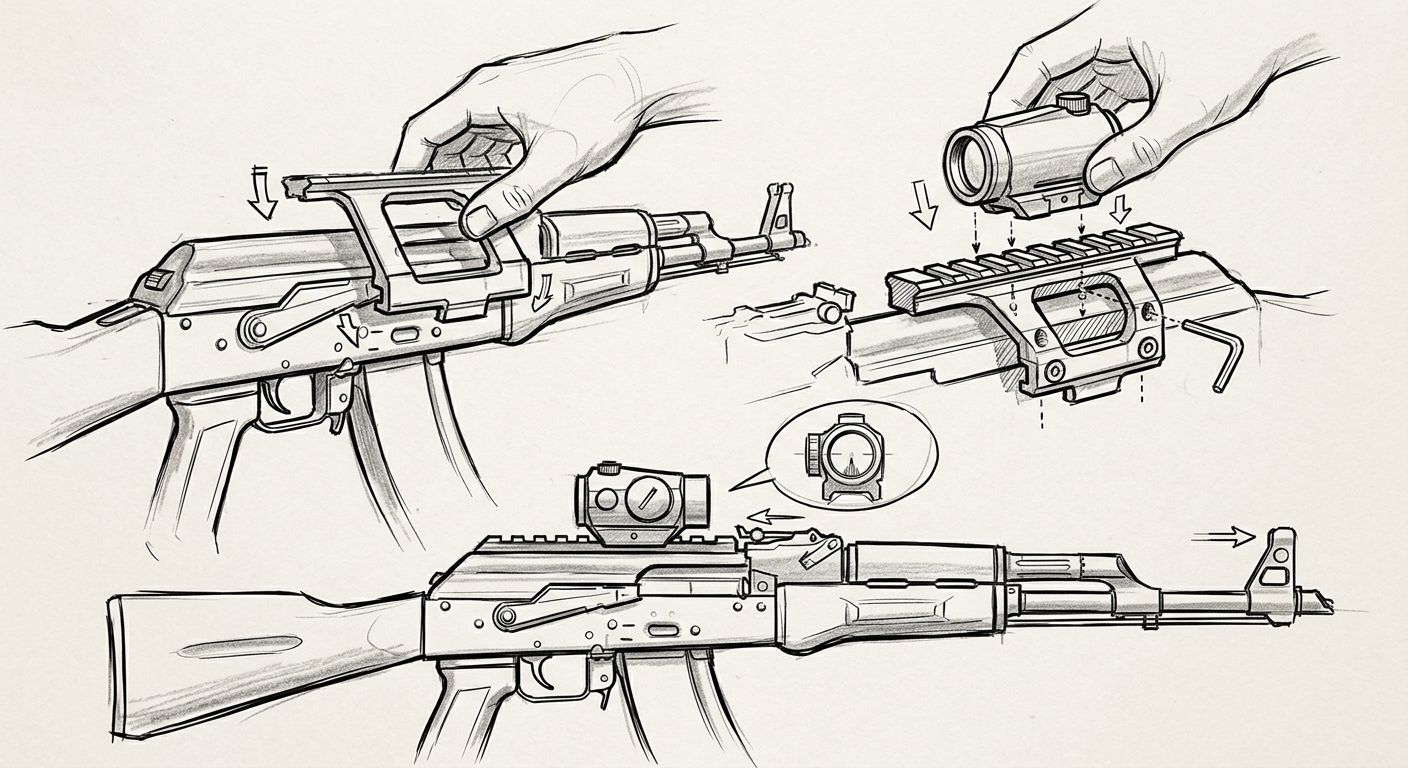
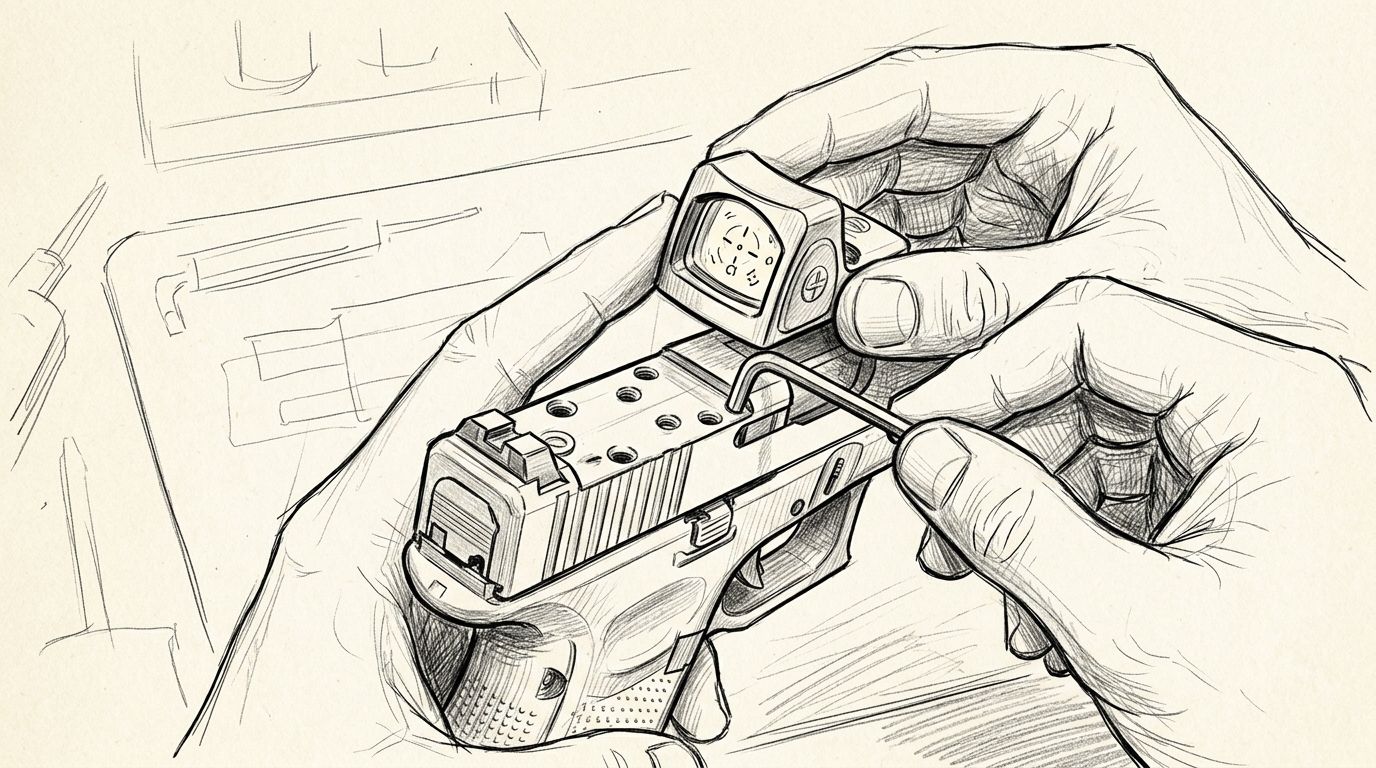
For installation planning, use the red dot mounting workflow alongside the instructions supplied with your specific equipment. A general guide does not replace model-specific mounting requirements.
Does your rifle's calibre decide whether a red dot is suitable?
Calibre alone does not decide whether a red dot is suitable for hunting. You need both an optic-and-mount combination approved for the application and a sight picture that supports your intended shot placement.
Do not infer recoil suitability from a compact housing, a familiar footprint or use on another firearm. Confirm the exact manufacturer's application guidance. A mount that physically attaches can still leave unresolved questions about clearance, screw fit or installed height.
The same distinction applies to rifle type. A bolt-action rifle does not automatically require magnification, and another action type does not automatically favour a red dot. Intended use and verified compatibility decide the fit.
Is a multi-reticle sight better for hunting?
A multi-reticle sight offers a choice of aiming references, but that choice does not automatically improve hunting accuracy. Compare the actual patterns and their stated angular dimensions rather than assuming that more reticles mean more capability.
| Reticle option | Best for | Useful characteristic | Limitation to assess |
|---|---|---|---|
| Dot-only reticle | Shooters who prefer a minimal aiming reference | Leaves fewer reticle elements in view | Dot clarity still depends on vision and settings |
| Combined reticle | Shooters who prefer an additional visual reference | Adds a visible reference around or alongside the central aiming point | Extra elements can obscure or distract from target detail |
Use the pattern you can interpret consistently. Changing reticles cannot add magnification, confirm distance or compensate for an unsuitable shot.
If you are considering the Osight multi-reticle range, compare the published specifications of the exact model. Do not transfer battery, mounting or reticle features from one series to another.
What should you check about batteries and weather protection?
Read battery-life claims together with their stated conditions. Brightness setting and operating mode matter, so a headline runtime is not a universal promise for every configuration. Battery access also determines what maintenance involves.
Weather protection needs the same discipline. Look for the exact model's published rating and operating instructions, rather than treating words such as tactical or outdoor as technical specifications.
Keep the viewing surfaces clean according to the manufacturer's instructions. Dirt, moisture or an obstructed optical path can compromise the sight picture; a protective feature does not remove the need to inspect the equipment.
Buy on documented suitability, then maintain the setup you have verified. Do not make unsupported durability claims part of the purchasing decision.
Can a red dot replace a hunting scope entirely?
A red dot can replace a scope only when you no longer need the scope's magnification for your intended hunting. If your hunting includes situations where unaided target detail is insufficient, that limitation remains after the change.
A magnifier introduces another configuration to assess, not a guaranteed solution. Compatibility, alignment, eye relief and mounting space need checking. Do not assume any red dot and magnifier will work together.
For mixed hunting conditions, keep the decision tied to the actual requirement. Familiarity with a reliable existing setup is a reason to test carefully before replacing it, not a reason to reject another sighting system outright.
FAQ
Is a red dot sight worth it for hunting in South Africa?
Yes, a red dot sight is worth considering when you can identify the animal and place the shot without magnification. Choose a scope when you need an enlarged target image.
How far can I hunt with a red dot sight?
There is no universal hunting distance for a red dot sight. Your limit depends on target identification, aiming detail and repeatable accuracy from realistic field positions.
Is a smaller MOA dot always better for hunting?
No, a smaller MOA dot is not always better for hunting. It covers less of the target at a given distance, but you still need to see it clearly and use it consistently.
Will a red dot sight fit any hunting rifle?
No, a red dot sight will not automatically fit any hunting rifle. Confirm the sight footprint, firearm mounting interface, clearance and manufacturer-approved application before buying.
Can I use a red dot if I have astigmatism?
Astigmatism can distort the apparent shape of a projected dot, so assess the sight with your normal corrective lenses. Do not assume that an irregular-looking dot establishes a fault in the optic.
Does a red dot make a hunting rifle more accurate?
A red dot does not change the rifle's mechanical accuracy. It changes the aiming reference, and any practical benefit must be demonstrated through your shooting results.
Where can I compare Osight hunting optics in South Africa?
Osight is the official South African distributor of the Osight firearm-optics range. Compare the exact model's published specifications and confirm firearm compatibility before choosing.
One last thing
Test against a realistic target, not only a high-contrast aiming mark. A sight picture that looks excellent on a clean range target does not establish that you can distinguish the intended aiming area against vegetation.
Keep your existing optic until the proposed replacement passes that test. The right purchase solves a demonstrated problem without creating a more important limitation.