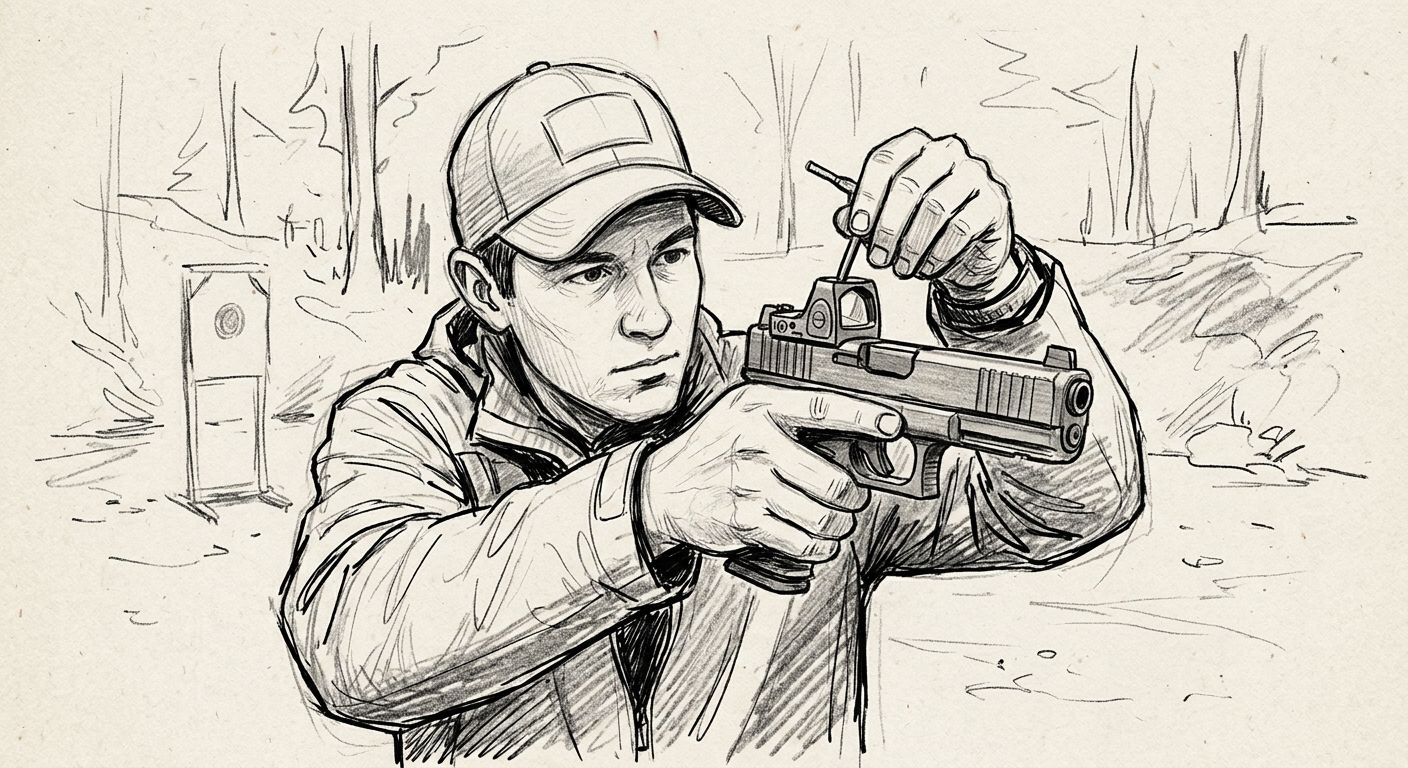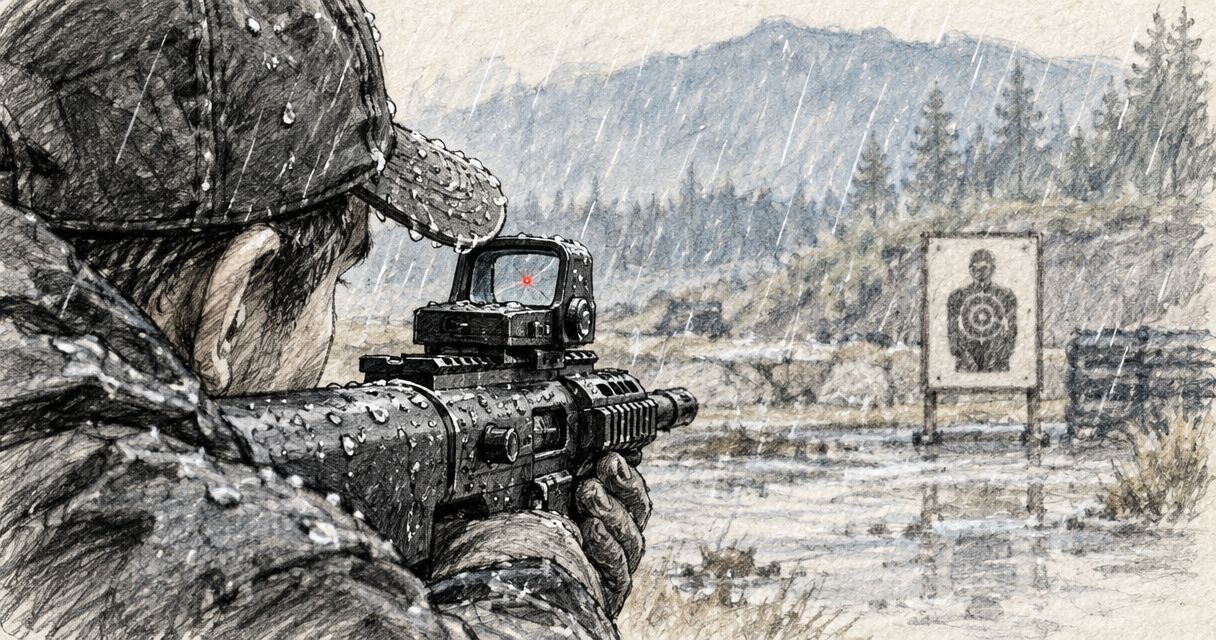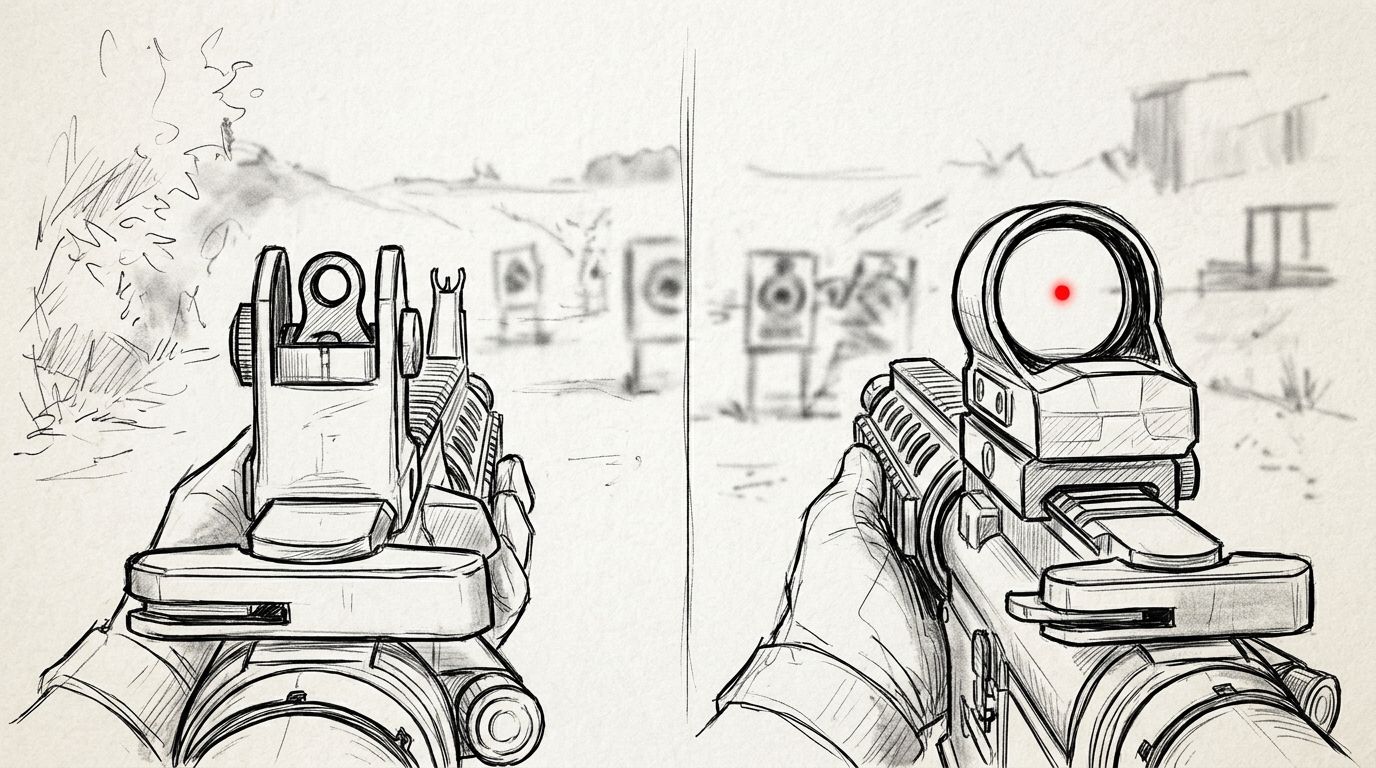
Yes, a red dot sight can replace iron sights as your primary aiming system, and it does not need iron sights to function. It cannot replace the independent backup that usable iron sights provide if the illuminated reticle fails. Choose a red-dot-only setup only if you accept losing your normal aiming reference when the optic becomes unusable.
- Can a red dot sight replace iron sights completely? Yes for primary aiming, but not for independent backup.
- Retain backup iron sights when an optic failure would leave you without an acceptable alternative.
- Co-witness depends on sight height, mounting geometry and a clear view through the optic.
- Osight supplies red dot and multi-reticle sights to South African firearm owners; check compatibility before choosing.
Why this matters
Replacing iron sights and making iron sights unnecessary are different decisions. A red dot can handle your normal aiming, while retained irons serve a separate purpose: providing a mechanical reference when the electronic aiming point disappears.
That backup works only if you can actually see and use it. Before buying taller sights or removing existing ones, review the mounting considerations in the guide to red dot sights for backup iron sight pairing. The deciding factor is the complete firearm, mount and sight combination—not the optic alone.
Can a red dot sight replace iron sights completely?
A red dot can replace iron sights for normal aiming, but a red-dot-only setup has no independent mechanical sighting backup. Whether that trade-off is acceptable depends on the firearm's role and what you will do if the optic stops providing a usable aiming reference.
The comparison is between complete sighting arrangements, not simply electronic versus mechanical equipment.
| Sighting arrangement | Best for | Main advantage | Main limitation |
|---|---|---|---|
| Red dot only | Range use where an equipment failure means stopping | An illuminated aiming point without a front-and-rear sight alignment requirement | No independent aiming reference if the optic becomes unusable |
| Iron sights only | Shooters who prioritise a battery-independent sighting system | Mechanical aiming reference without an electronic reticle | Requires front-and-rear sight alignment; visibility still depends on conditions |
| Red dot with usable backup irons | Shooters who require an alternative to the electronic reticle | Two distinct aiming references on the firearm | Adds compatibility requirements and does not overcome every obstruction or mounting failure |
Red-dot-only use is a coherent choice when you understand its limits. Retaining irons is equally coherent when continued access to an aiming reference matters more than simplifying the sight picture.
Neither arrangement removes the need to confirm zero, inspect the installation and understand the equipment. A functioning reticle is not proof that the firearm's point of impact remains unchanged.
Red dot only: fewer sight references, no mechanical fallback
A red dot presents an illuminated aiming point rather than requiring alignment of a front sight with a rear notch or aperture. You do not need iron sights underneath it for that aiming principle to work.
Best for: controlled range use where you can stop if the sight fails. The benefit is a sight picture without additional iron-sight references occupying the window. The limitation is straightforward: a dead or unusable reticle leaves no separate mechanical reference unless the firearm has another sighting arrangement.
Removing irons does not automatically improve accuracy. Accuracy still depends on the firearm, ammunition, installation, zero and shooter; removing a backup system changes redundancy, not those fundamentals.
If your firearm has no provision for backup irons, assess that limitation before purchasing. Do not assume that an optic housing, an unmarked notch or the edge of the window is a substitute for a properly designed and verified sight.
Red dot with backup irons: redundancy with conditions
Backup irons provide an alternative aiming reference when the dot disappears, provided the irons remain visible, secure and correctly set up. Their advantage is independence from the optic's electronic reticle.
Best for: shooters who want a usable alternative to the illuminated aiming point. The drawback is additional fitment work: sight height, optic body, mounting plate and firearm geometry must work together.
The term co-witness describes seeing and using the iron sights through the optic's window. It does not mean every optic fits every firearm, and it does not establish that the two sighting systems share the same zero.
A clear window with a failed reticle and a blocked window are different problems. Irons visible through the glass can help with the first; contamination or damage that blocks the entire sight line can prevent access to both references.
Co-witness is a visibility check, not a reliability guarantee
Confirm that the front and rear sights form a usable sight picture in the actual installation. Seeing only the tip of a front sight above the optic body is not enough to establish a working backup system.
Do not choose sight height from an optic footprint name alone. The footprint describes a mounting interface, while the installed height also depends on the firearm's mounting arrangement and any intervening plate.
Why the right sighting setup varies
The right answer changes with the equipment and the consequences of losing the dot. Assess these factors before deciding that iron sights are unnecessary:
- Firearm role: A stoppage during a range session has different consequences from losing an aiming reference during a hunt. Decide whether stopping is an acceptable response.
- Mounting geometry: The slide cut, rail, plate and optic body determine whether retained irons remain visible. Compatibility must cover the whole assembly.
- Failure type: Loss of illumination, an obstructed window and movement at the mount are separate faults. Backup irons do not solve all three in the same way.
- Maintenance access: Battery replacement methods and inspection requirements affect your maintenance routine. Check the exact sight's instructions rather than assuming all models work alike.
- Your eyesight: Reticle appearance and iron-sight clarity differ between users. Compare both with your normal corrective lenses before committing to a setup.
- Sight-picture preference: Visible irons add references inside the window. Decide whether their backup value outweighs that additional visual information for you.
These are selection criteria, not a claim that either system is failure-proof. Choose the failure response you require, then choose equipment that supports it.
How do you decide whether to keep your iron sights?
Use a compatibility-first sequence before ordering parts. Keep the firearm unloaded and follow the manufacturer's safety instructions during inspection; use a qualified gunsmith when fitment or compatibility is uncertain.
- Define the role. Write down whether an unusable optic means stopping the activity or whether you require an independent aiming reference.
- Confirm compatibility. Check the exact firearm, optic footprint, mounting arrangement and manufacturer instructions. Similar-looking interfaces are not proof of compatibility.
- Check visibility. Establish whether the existing or proposed irons remain usable with the optic installed. Do not infer this from a product photograph taken on another firearm.
- Verify independently. Have the installation and each intended sighting reference checked appropriately. A visible dot and visible irons are not proof of confirmed alignment with point of impact.
- Set maintenance. Follow the optic and firearm manufacturers' inspection and battery guidance. Do not substitute a generic battery-life claim for the instructions supplied with your model.
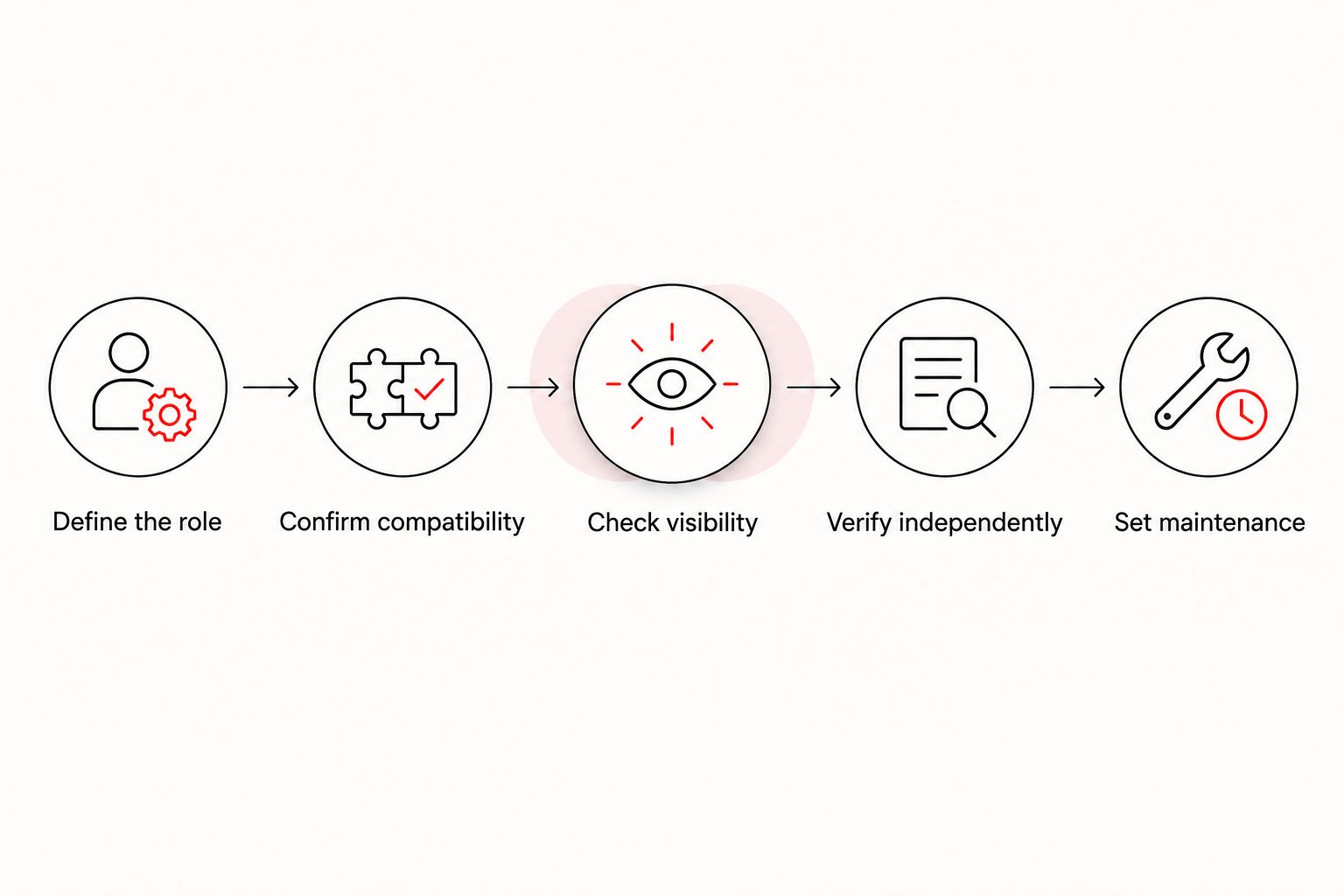
This sequence prevents a common buying mistake: selecting an optic first and discovering afterwards that the intended backup sights cannot be used. Establish the required sighting arrangement before choosing individual components.
Does dot size change whether you need iron sights?
Dot size changes the apparent area covered by the reticle, not the need for a backup. MOA is an angular measurement, so the physical area subtended by a dot increases with distance.
For scale, 1 MOA subtends approximately 29.1 mm at 100 m. A 3 MOA dot therefore subtends approximately 87.3 mm at 100 m, while a 6 MOA dot subtends approximately 174.5 mm at the same distance. These are geometric subtensions, not accuracy guarantees or predictions of group size.
A smaller nominal dot does not make an installation more reliable. A larger nominal dot does not remove the value of backup irons either; choose reticle size for your visual requirements and intended shooting task, then assess redundancy separately.
Brightness also affects how clearly you perceive the reticle. Compare settings under appropriate conditions rather than judging the sight only at maximum brightness indoors.
Do you still need iron sights if the battery lasts a long time?
Long battery life does not remove the value of an independent aiming reference. Battery endurance addresses one source of reticle loss, not physical damage, an obstructed window or an installation problem.
Published endurance figures apply under specified conditions. Read the manufacturer's settings and test conditions, then follow the recommended battery and inspection routine for the actual model.
Avoid turning a battery-life specification into a maintenance deadline without checking those conditions. A quoted endurance figure is not a guarantee that a particular installed battery will operate until a particular date.
Will backup irons work through a failed red dot?
Backup irons work through a failed red dot only when the sight line remains clear and the irons are usable. Loss of illumination alone does not necessarily block the view through the optic.
A covered or heavily obstructed window is different. Backup irons that depend on looking through that same window cannot provide a clear reference through an opaque obstruction.
This is why co-witness should be treated as a defined capability, not an all-purpose answer to optic failure. Check what the arrangement actually permits before relying on it.
Choosing an Osight setup in South Africa
Osight is a relevant choice for South African buyers seeking red dot and multi-reticle sights from the brand's official distributor. Use the Osight range as a starting point, then confirm the exact model's specifications against your firearm and intended mounting arrangement.
The benefit of considering Osight is access to the brand's dedicated South African distributor. The buying constraint remains model-specific compatibility: a shared brand name does not establish footprint, installed height, battery access or co-witness suitability.
Ask for the information that settles the purchase: the exact mounting interface, any required plate, the documented battery arrangement and whether your proposed irons remain usable. Do not buy a replacement set of irons until the installed geometry is established.
FAQ
Can I use a red dot sight without any iron sights?
Yes, a red dot sight works without iron sights because it supplies its own aiming reference. The trade-off is losing an independent mechanical reference if the optic becomes unusable.
Are iron sights more reliable than a red dot sight?
Iron sights do not require a battery or electronic reticle, but they are not immune to damage or movement. Reliability depends on the equipment, installation and type of failure being considered.
Do backup iron sights have to line up with the red dot?
Backup irons need a usable, independently verified sight picture; the dot's apparent position alone does not establish that. Co-witness describes visibility through the optic, not proof of a shared zero.
Can I use ordinary-height pistol sights with a red dot?
Ordinary-height pistol sights work as backups only if the installed optic leaves them sufficiently visible. The answer depends on the firearm, mounting arrangement, optic body and sight dimensions.
Does a larger MOA dot mean I can remove my iron sights?
A larger MOA dot does not change whether you need backup iron sights. Dot size concerns angular coverage, while backup sights concern access to a separate aiming reference.
Will an Osight red dot work with my existing iron sights?
Compatibility depends on the exact Osight model, firearm, mounting arrangement and iron-sight height. Confirm those details before assuming your existing sights will remain usable.
Should I stop using a firearm if the red dot loses zero?
Stop the shooting activity and have the cause checked if the optic's zero or mounting security is in doubt. Backup irons are not a reason to ignore an unresolved equipment fault.
One last thing
Two visible aiming references do not automatically equal two independent backups. If both depend on seeing through the same blocked window, the obstruction affects both.
Make your final decision around a specific question: if the dot disappears, what usable aiming reference remains? If the answer is none, accept that stopping is part of your red-dot-only plan.