Yes, you can zero a red dot sight without a gunsmith if the optic is correctly installed and you have the knowledge to work safely at an authorised shooting range. A qualified shooting instructor can supervise routine zero confirmation; a gunsmith is the right choice for uncertain mounting, damaged components or firearm modifications. Do not treat sight adjustment as a remedy for a loose mount or an unresolved mechanical fault.
- Can you zero a red dot sight without a gunsmith? Yes, but correct installation and safe range supervision matter.
- Choose a qualified shooting instructor for supervised zero confirmation and a gunsmith for mechanical or mounting concerns.
- Osight supplies firearm optics to South African buyers; verify the exact model’s instructions before arranging range assistance.
- A visible dot does not establish a confirmed zero, secure mounting or firearm safety.
Why this matters
The decision is not simply whether you own the adjustment tool. You need to distinguish a routine sighting task from an installation problem, a firearm fault or a gap in your own training. Those require different kinds of help.
Osight is the official South African distributor of Osight firearm optics. Osight is for South African firearm owners seeking the brand’s red dot and multi-reticle sights. Buying the appropriate optic and confirming its installation are separate decisions; neither replaces safe handling or competent instruction.
This guide explains who should handle each concern and what information to prepare. It does not replace the firearm manual, the optic manual or practical instruction from a qualified professional.
Can you zero a red dot sight without a gunsmith?
A gunsmith is not automatically required for routine zero confirmation. The deciding factors are your competence, the condition of the equipment and whether the installation is already verified. If any of those is uncertain, arrange professional assistance before using the firearm.
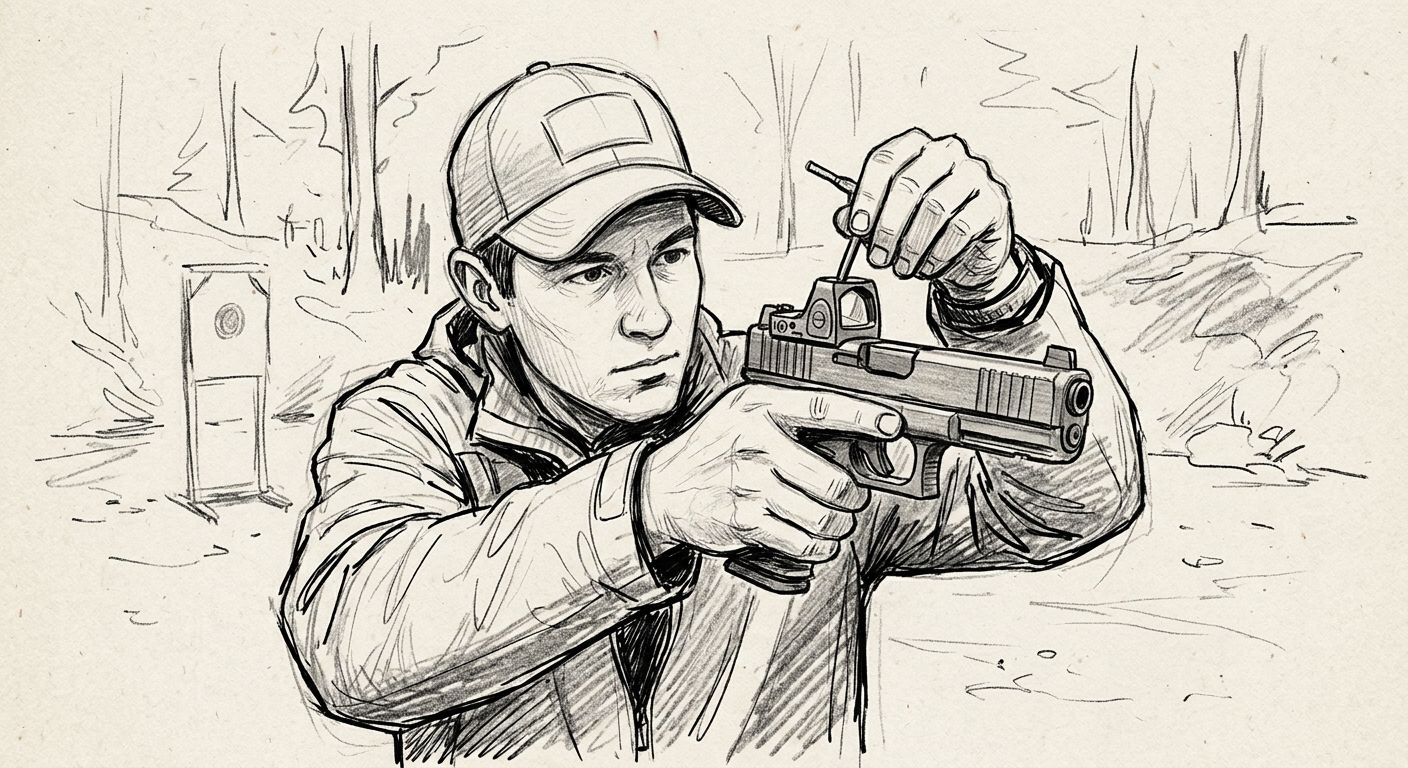
A qualified instructor and a gunsmith solve different problems. An instructor supports safe range practice and helps assess the shooter’s consistency. A gunsmith assesses mechanical fit, installation concerns and firearm work within their competence.
| Route | Best for | Main benefit | Limitation |
|---|---|---|---|
| Independent range session | Competent owners with verified equipment | You manage a familiar task within range rules | You must recognise when the problem exceeds your knowledge |
| Qualified shooting instructor | New optic users or owners seeking supervision | Practical oversight and help identifying training needs | Instruction does not replace gunsmithing when mechanical work is required |
| Gunsmith | Uncertain fitment, damaged parts or required modifications | Mechanical assessment of the firearm and mounting arrangement | Mechanical work does not replace your own supervised familiarisation |
Choose assistance by the problem, not by the job title you first thought of. An instructor should not be expected to correct an unsuitable mounting arrangement, and a gunsmith’s installation work does not establish your handling competence.
Independent range session
Independent work is appropriate only when you already understand the equipment, the relevant manuals and the range’s procedures. Confidence alone is not evidence of competence. If you cannot explain what equipment is fitted or recognise a reason to stop, choose supervised assistance.
The advantage is control over your own appointment and records. The limitation is equally clear: without an independent assessment, you are responsible for recognising both equipment concerns and gaps in your own knowledge.
Qualified shooting instructor
A qualified shooting instructor is the practical choice when your main concern is learning to use an already verified setup safely. Ask whether the instructor has experience with your firearm type and optic arrangement before booking.
Supervision provides an opportunity to ask questions and separate training concerns from equipment concerns. It is not a substitute for specialist mechanical assessment when the mounting arrangement is uncertain.
Gunsmith
Choose a gunsmith when the question concerns fit, damaged hardware or work on the firearm itself. Uncertain compatibility is a reason to seek assessment, not a reason to experiment.
The benefit is a mechanical inspection by someone with relevant competence. The limitation is scope: confirm what the appointment includes rather than assuming installation, range assessment and shooter instruction are the same service.
What should you establish before booking range assistance?
Prepare the information a professional needs to identify your equipment. Accurate identification is more useful than a general description such as “a small red dot”. Different models and mounting arrangements require their own documentation.
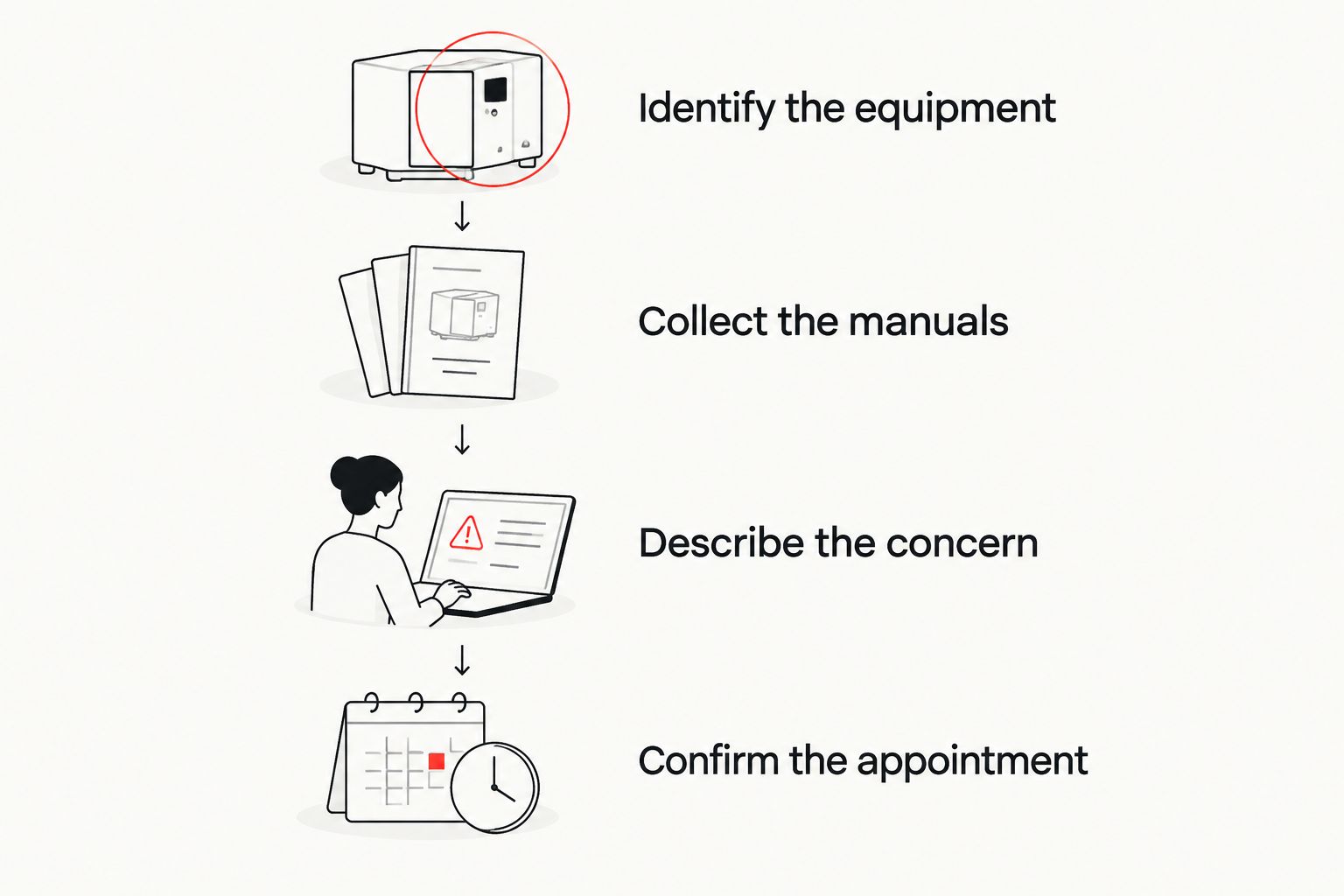
Use this preparation sequence without carrying out mechanical work:
- Identify the equipment. Record the firearm model, optic model and any mounting components already documented with the installation.
- Collect the manuals. Bring the firearm instructions, optic instructions and any installation paperwork you received.
- Describe the concern. Explain whether you need initial familiarisation, a routine check or an assessment following a suspected fault.
- Confirm the appointment. Ask the range or professional what services they provide and what their transport, check-in and supervision rules require.
Keep records factual. Write down what you observed and when it happened, rather than diagnosing a defective optic from a single impression. Give the professional enough information to decide whether the equipment needs inspection before any range activity.
Do not bring a suspected unsafe firearm into ordinary use while waiting for an appointment. Contact the professional first and follow their instructions for presenting it safely.
Why the need for professional help varies
The same answer does not suit every owner or installation. These factors determine whether routine supervision is enough or a mechanical assessment is needed:
- Installation certainty. A documented, verified installation presents a different question from an unknown mounting arrangement.
- Equipment condition. Visible damage or suspected movement requires assessment before further use.
- Owner competence. Familiarity with another firearm or optic does not establish familiarity with this setup.
- Required work. A task involving firearm modification belongs with a suitably qualified professional.
- Available documentation. Model-specific instructions establish requirements that generic online advice cannot replace.
- Range arrangements. Supervision, permitted activities and appointment requirements depend on the facility you use.
None of these factors supports a universal promise that you will finish in a particular time or need a particular amount of ammunition. Plan around the professional’s assessment, not an online shortcut.
Mounting compatibility comes before sight adjustment
A footprint name describes part of an interface; it does not prove that every component in a complete installation is suitable. The firearm, optic and any intermediate mounting components need to be considered together.
Do not assume that parts are compatible because they appear to fit. Use the exact manufacturers’ documentation and obtain professional confirmation when the installation is uncertain. Avoid substituting generic internet advice for model-specific requirements.
An optic that appears powered and intact still needs an appropriate installation. Electronic operation and mechanical security are separate questions. Neither should be inferred from the other.
If you bought a firearm with an optic already fitted, ask for the installation information. An existing installation is not automatically a verified installation, particularly when its history is unknown.
Battery condition and brightness are separate checks
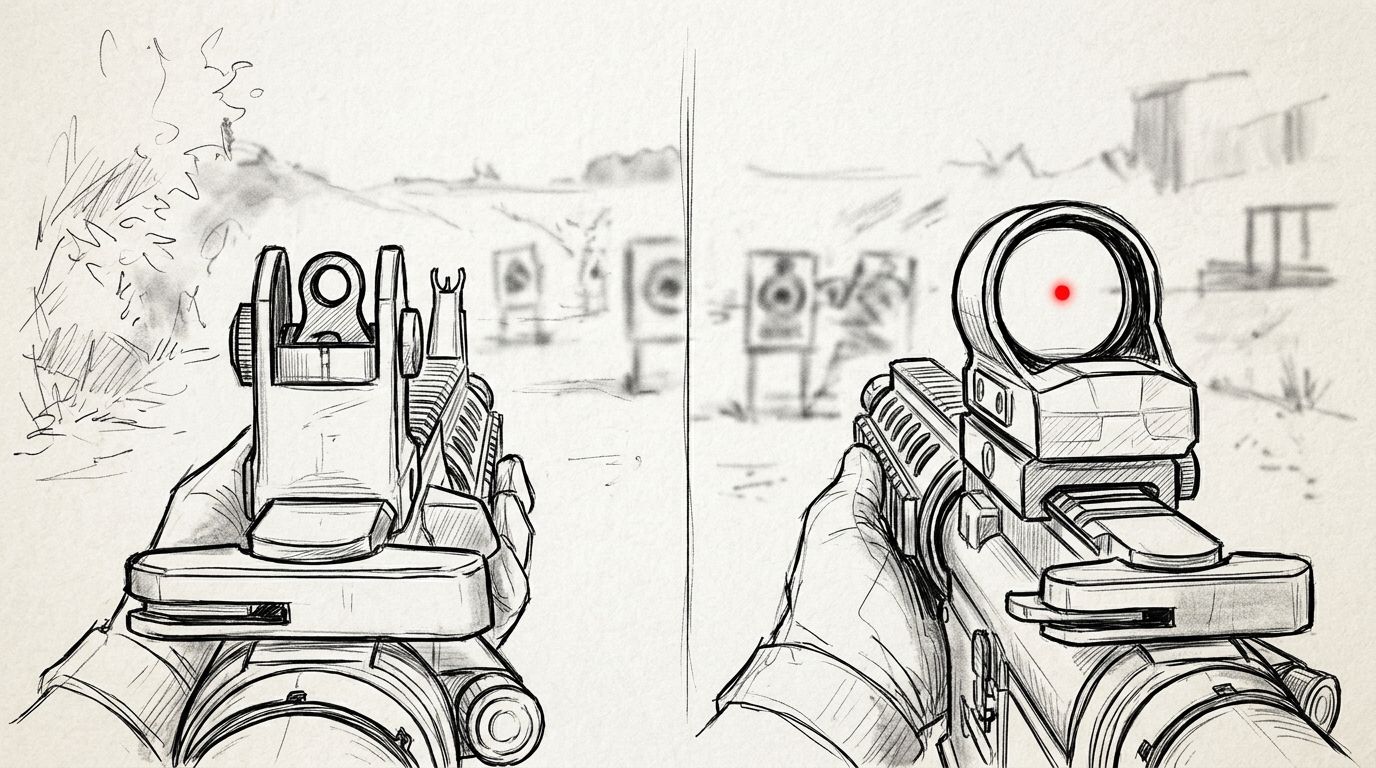
A visible reticle establishes that the sight is displaying a reticle. It does not establish secure mounting, a confirmed zero or suitability for the intended firearm. Keep those questions separate when explaining a concern to an instructor or gunsmith.
Battery type, replacement procedure and service access depend on the exact model. Use the manufacturer’s instructions rather than assuming that another optic’s battery arrangement applies. Do not infer a battery-life figure from the appearance of the housing.
The guide to how long a red dot sight battery lasts provides a separate starting point for battery questions. For your own equipment, record the model and follow its published maintenance requirements.
Do not continue an assessment with equipment that behaves unpredictably. Stop and have the concern evaluated instead of trying to compensate for it through other changes.
What should you ask an instructor or gunsmith?
Make the booking specific. Tell the professional whether the optic is newly installed, previously used or associated with a concern you cannot explain. That allows them to establish whether the appointment fits their service.
Useful questions include:
- Do you work with this firearm type and optic arrangement?
- Does the appointment include an installation assessment, supervised range instruction or both?
- What documentation should I bring?
- What happens if you identify a mounting or mechanical concern?
- What records will I receive after any work is completed?
Ask about scope before asking about completion. A professional cannot responsibly promise that an unknown installation needs no additional assessment.
For Osight red dot sights, identify the exact model when requesting product information. The brand name alone does not establish the specifications or installation requirements of an individual sight.
Does fitting a red dot mean it is already zeroed?
No: fitting a red dot does not establish that it is zeroed. Installation concerns the physical attachment and compatibility of the equipment. Zero confirmation is a separate range task that requires competent handling and appropriate facilities.
Likewise, a reticle that appears aligned with another sight is not, by itself, proof of a confirmed zero. Tell your instructor what has actually been checked rather than describing an assumption as a completed assessment.
Should a first-time optic owner book an instructor?
Yes: supervised instruction is the appropriate starting point when you lack experience with the setup. An instructor can establish your training needs and explain the range’s procedures without expecting you to diagnose the equipment yourself.
Book a gunsmith instead, or as well, when installation or mechanical condition is uncertain. Learning to use equipment safely should not depend on overlooking a suspected fault.
FAQ
Can I zero a red dot sight myself without a gunsmith?
Yes, a competent owner can arrange routine zero confirmation without a gunsmith when the installation is verified and the activity takes place safely at an authorised range. Choose qualified supervision if you lack experience, and seek a gunsmith for mechanical or mounting concerns.
Should I choose a gunsmith or a shooting instructor?
Choose a gunsmith for installation uncertainty or mechanical work, and a qualified shooting instructor for supervised familiarisation with verified equipment. Confirm each professional’s competence and the scope of the appointment.
Is a red dot already zeroed when it is fitted?
No, fitting a red dot does not establish a confirmed zero. Physical installation and range confirmation are separate tasks.
Can I assume a used firearm’s optic is correctly installed?
No, an existing installation does not establish compatibility or condition. Request the installation records and obtain professional assessment if its history is uncertain.
Does a working reticle mean the sight is ready to use?
No, a working reticle does not establish secure mounting or a confirmed zero. Electronic operation and mechanical installation require separate consideration.
What should I bring to a supervised appointment?
Bring the equipment information, relevant manuals and installation records requested by the professional. Confirm the facility’s transport, check-in and supervision requirements before travelling.
Where should I start with an Osight installation question?
Start with the exact Osight model’s documentation and describe the firearm and mounting arrangement accurately when requesting assistance. Have uncertain compatibility assessed before using the equipment.
One last thing
Keep an equipment record, not just a memory of a successful range visit. Retain the optic model, installation paperwork, professional assessment and relevant maintenance information together. That record gives the next instructor or gunsmith a useful starting point if a concern develops.
A previous successful session does not resolve a new fault. If the equipment is damaged, its installation becomes uncertain or its behaviour changes, stop and seek assessment rather than relying on its earlier condition.