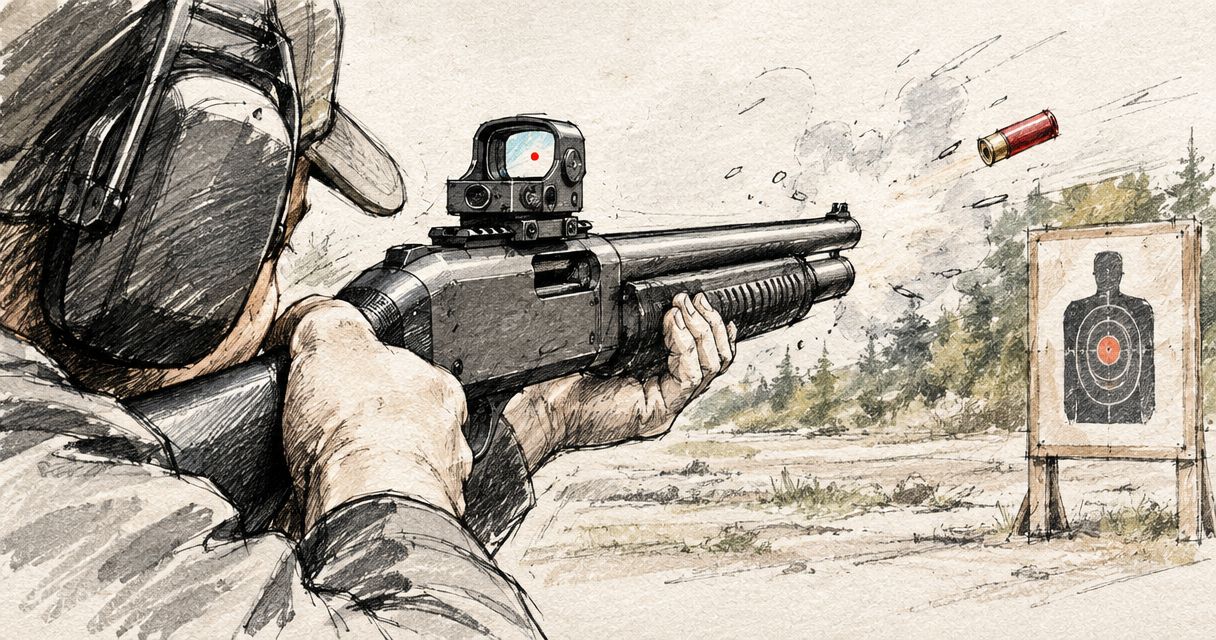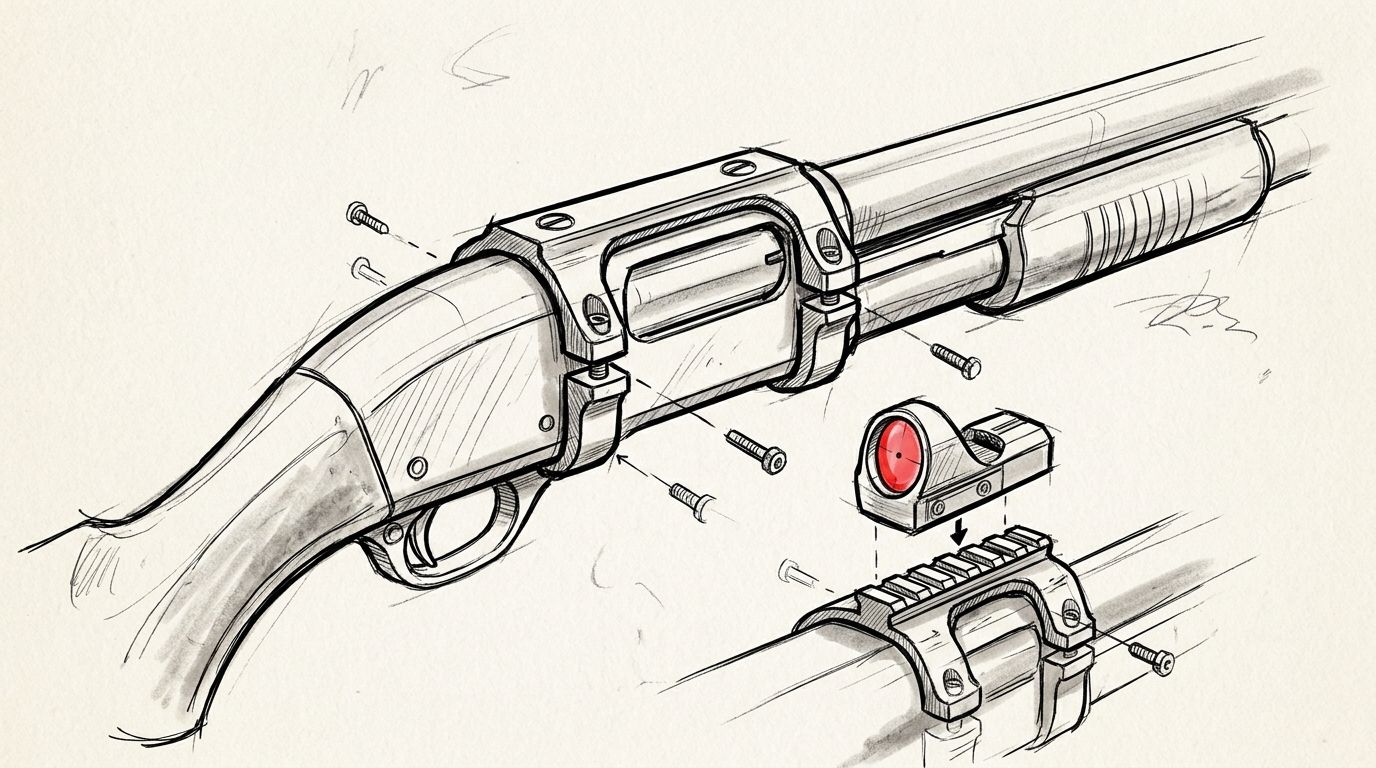
For bushveld hunting, choose a red dot sight with a documented IP67 rating if you want protection against dust and accidental temporary immersion, rather than relying on a vague “weatherproof” claim. That rating does not keep rain off the viewing window or prevent water from blocking an exposed emitter, so enclosure design matters alongside the waterproof specification.
- How waterproof should a red dot sight be for bushveld hunting? IP67 is a practical dust-and-water benchmark.
- An enclosed emitter protects the light path; waterproof electronics alone do not guarantee a clear aiming dot.
- IP68 immersion limits depend on the manufacturer's specification; read the stated depth and duration.
- Osight buyers should check the exact model's published rating, emitter design and battery-compartment sealing.
How waterproof should a red dot sight be for bushveld hunting?
Use documented IP67 protection as your buying benchmark when dust, rain and accidental immersion are part of the requirement. It combines a dust-tight classification with protection against temporary immersion under the conditions defined by IEC 60529. It is a selection criterion, not a claim that every hunt requires immersion protection.
| Published rating | What it establishes | Best for | Limitation |
|---|---|---|---|
| IP54 | Dust protection and resistance to splashing water | Buyers whose requirement stops at splash protection | Not dust-tight; no immersion rating |
| IP65 | Dust-tight construction and resistance to water jets | Buyers requiring dust and jet protection | Does not establish immersion protection |
| IP67 | Dust-tight construction and temporary immersion protection | Buyers requiring protection against accidental immersion | Does not establish resistance to every water exposure |
| IP68 | Dust-tight construction and immersion under manufacturer-specified conditions | Buyers with a defined immersion requirement | Depth and duration must be checked for the exact model |
For Osight red dot sights, check the published specification for the exact model before applying any of these classifications. A rating belongs to the tested enclosure, not automatically to every sight in a range.
Why this matters
A sight can remain electrically functional while its aiming view becomes unusable. Water on the lens, mud across the window or an obstructed emitter can affect what you see without water entering the electronics.
Separate two questions: will the enclosure resist water ingress, and will the sight remain usable when wet? An IP rating addresses the first. Emitter protection, lens condition and the exposure itself affect the second.
Bushveld buying decisions should account for the complete outing, including transport, wet vegetation and storage after rain. Do not buy solely around the weather expected while you are actively hunting.
IP67: the practical immersion benchmark
IP67 is useful because both digits communicate something specific. The first digit, 6, means dust-tight; the second, 7, identifies temporary immersion protection under the standard's test conditions.
IPX7 is commonly described as protection during immersion in water up to 1 metre deep for 30 minutes, with the precise test arrangement governed by IEC 60529. Those figures describe a controlled test, not permission to leave an optic submerged or wash it under pressure.
The benefit is a defined reference point. You can compare a documented classification against your requirements instead of interpreting terms such as “outdoor-ready”.
The limitation is equally important: immersion resistance does not establish shock resistance, recoil suitability, corrosion resistance or optical clarity in rain. Check those requirements separately rather than treating IP67 as a complete durability specification.
IP65: jet protection, not immersion protection
IP65 establishes dust-tight construction and resistance to water jets under specified test conditions. It does not establish protection if a sight falls into water.
IP65 is relevant when your requirement is dust and water-jet protection, but it is not a substitute for an immersion rating. Its advantage is a defined water-resistance test; its disadvantage is the absence of an immersion claim.
Do not read the final digit as a simple ladder on which every higher number includes every lower test. The standard distinguishes jet exposure from immersion, and a manufacturer can publish multiple ratings when an enclosure meets different tests.
For rain-specific questions, the guide to using a red dot sight in the rain addresses a different issue from surviving submersion. Keep those requirements separate when comparing specifications.
IP68: check the stated depth and duration
IP68 indicates immersion protection under conditions specified by the manufacturer within the standard's requirements. Unlike the familiar IPX7 shorthand, it does not give you one universal depth-and-duration combination for every product.
An IP68 claim therefore needs its accompanying test conditions. Do not assume that two IP68 sights have identical immersion limits. Read the model documentation for the stated conditions and any restrictions.
The advantage is a defined immersion capability beyond the IPX7 classification. The limitation is that the label alone is incomplete buying information, and it still says nothing about water sitting on external optical surfaces.
Choose IP68 because its documented conditions match a real requirement, not because the final digit looks better. A higher ingress classification does not answer questions about mounting compatibility or the view through the sight.
Why wet-weather suitability varies
The waterproof rating is only part of a sight's weather suitability. These factors explain why optics with similar ingress claims need separate scrutiny:
- Emitter enclosure: An enclosed emitter separates the light path from direct exposure; an open emitter leaves that path exposed to contamination.
- Lens exposure: Water can remain on external windows even when the housing meets its ingress rating.
- Battery sealing: The battery compartment must be closed and sealed as the manufacturer specifies for the claimed protection to apply.
- Exposure type: Splashing, water jets and immersion are different tests, not interchangeable descriptions.
- Seal condition: Damaged, dirty or incorrectly seated seals undermine the intended enclosure protection.
- Temperature changes: Condensation on an external surface is different from water entering the housing.
These are inspection and documentation checks, not reasons to assume a particular model will fail. Buy the specification you can verify, then maintain the enclosure as instructed.
Does an enclosed emitter matter more than the waterproof rating?
An enclosed emitter and a waterproof rating address different failure modes; neither replaces the other. The enclosure protects the emitter's light path from direct contamination, while the ingress rating describes protection against water entering the tested housing.
An open-emitter sight can have water-resistant electronics and still lose a usable dot when something obstructs the emitter. An enclosed-emitter sight protects that internal path, but water can still collect on its external windows.
| Emitter design | Best for | Practical advantage | Practical limitation |
|---|---|---|---|
| Open emitter | Buyers who accept an exposed light path and check it for contamination | Direct access to inspect the exposed emitter area | Water or debris can obstruct the light path |
| Enclosed emitter | Buyers prioritising protection of the emitter path from weather and debris | Emitter path sits behind protective windows | External windows still need to remain clear |
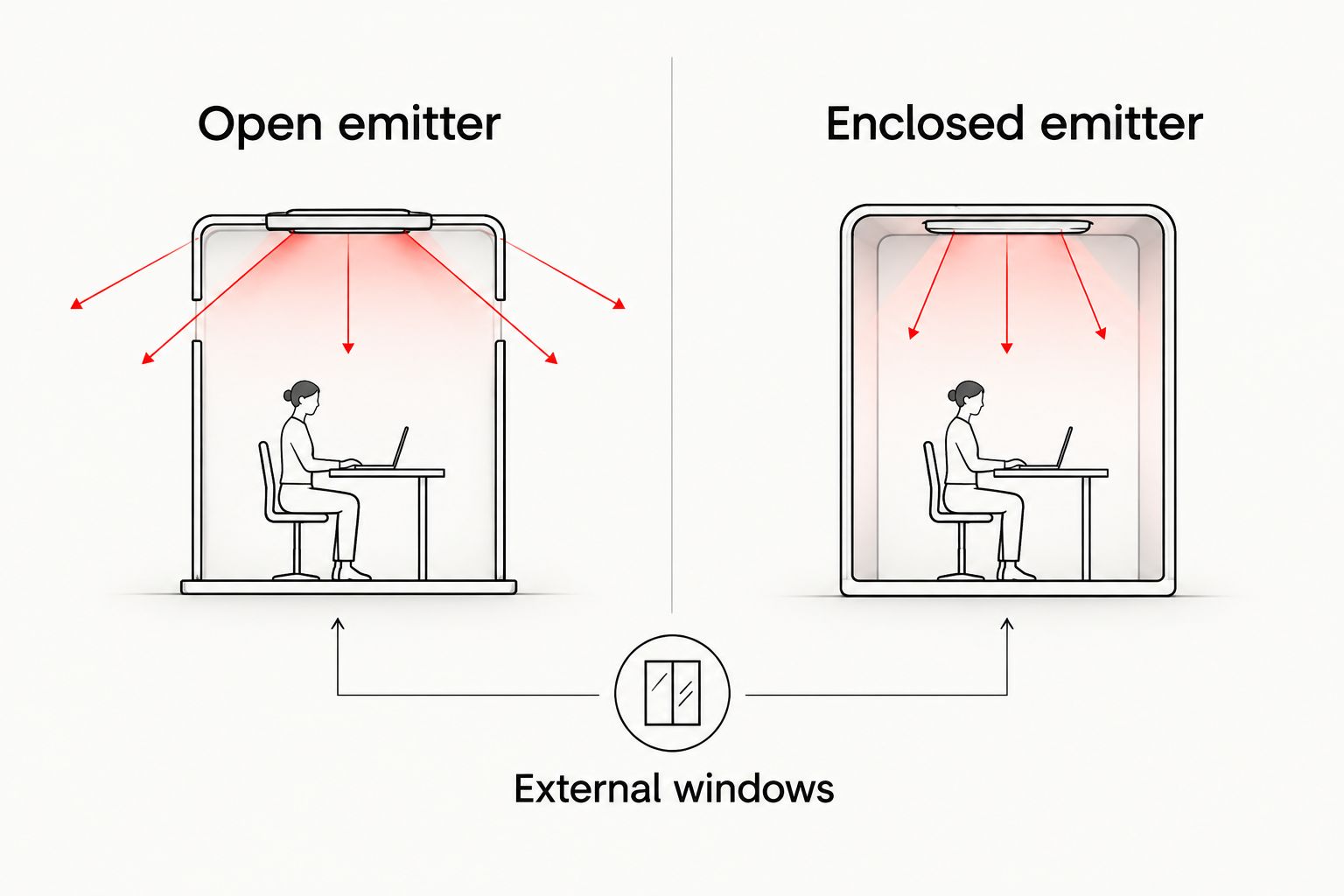
Do not infer emitter construction from a waterproof rating. Confirm both in the exact model's documentation, then decide whether the protected light path addresses your intended exposure.
What should you check before buying?
Use this sequence to compare specifications without turning the rating into a promise it does not make:
- Define the exposure. Decide whether you need splash resistance, jet resistance or protection against accidental immersion. Include dust in the requirement.
- Find the exact classification. Look for a published IP rating rather than a general waterproof description. An X means that aspect is not classified in that designation; it does not mean zero protection.
- Read the test conditions. For immersion claims, check depth, duration and any stated restrictions. Do not transfer another model's figures to the sight you are considering.
- Confirm the emitter design. Establish whether the light path is open or enclosed. Treat this as a separate specification from ingress protection.
- Check access points. Read the battery-compartment instructions and any requirements for covers, caps or seals. Follow the manufacturer's closure instructions.
- Check firearm suitability separately. Confirm the intended mounting arrangement and the manufacturer's stated application. Waterproofing does not establish compatibility with your firearm.
Osight is the dedicated South African option for buyers seeking Osight red dot sights. Compare each model's published specifications rather than assuming the range shares one waterproof rating or emitter design.
Check the Osight range
Compare model specifications for ingress protection, emitter design and mounting requirements.
Is a waterproof sight also fog-proof?
A waterproof rating does not establish fog-proof performance. Ingress protection and condensation are different subjects, so look for a separate published statement if internal fog resistance is part of your requirement.
External condensation can occur on an exposed optical surface during temperature changes. It does not, by itself, prove that the housing has leaked.
Moisture visible inside a sealed optical assembly needs a different response. Stop treating it as ordinary surface mist and follow the manufacturer's inspection or service guidance rather than opening the housing yourself.
How should you look after a sight after rain?
Follow the manufacturer's drying and cleaning instructions; do not use the waterproof rating as a cleaning method. Before handling or inspecting a firearm-mounted optic, unload the firearm and follow the firearm manufacturer's safety procedures.
Remove external moisture using the approved method and allow wet equipment to dry before storage. Keep dirty lens surfaces separate from the rest of the cleaning job: rubbing grit across glass risks damaging the surface or its coatings.
Do not use pressure washing, solvents or forced heat unless the manufacturer explicitly permits them. Opening a wet battery compartment also creates a route for moisture to reach an area normally protected by its cover and seal.
After exposure, inspect accessible seals and covers as the instructions allow. Do not dismantle a sealed assembly to investigate suspected internal moisture; use the specified service route.
FAQ
What's a sensible waterproof rating for a bushveld hunting red dot?
IP67 is a practical benchmark when you require dust-tight construction and protection against accidental temporary immersion. It does not guarantee a clear lens or an unobstructed exposed emitter in rain.
Is IP65 enough if I only expect rain?
IP65 establishes dust-tight construction and resistance to water jets, but not immersion protection. Check the manufacturer's intended use and decide whether accidental submersion is part of your requirement.
Does IP67 mean I can leave my red dot underwater?
No. IP67 describes temporary immersion protection under controlled test conditions, commonly summarised as up to 1 metre for 30 minutes. Follow the exact product's limits rather than using the rating as permission for prolonged immersion.
Is an enclosed-emitter red dot completely rainproof?
An enclosed emitter protects the internal light path from direct contamination, but rain can still collect on its external windows. Its water-ingress protection depends on the exact model's published rating.
Does IP68 always mean the same waterproof depth?
No. IP68 immersion conditions are specified by the manufacturer, so check the published depth and duration for the exact sight. Do not assume identical limits across models.
Does a waterproof rating prove a sight can handle my rifle's recoil?
No. An IP rating describes enclosure protection against solids and water, not recoil suitability. Confirm the manufacturer's stated application and mounting compatibility separately.
Does the whole Osight range have the same waterproof rating?
Check each Osight model's published specification individually. Do not apply one model's ingress rating, immersion limits or emitter construction to another model.
One last thing
Ask what remains exposed, not just what is sealed. A protected electronic housing can coexist with a wet viewing window or an obstructed emitter, so the waterproof label alone never describes the complete sight picture.
Before buying, put the ingress rating and emitter design beside each other on your shortlist. That simple comparison is more useful than treating “waterproof” as an all-purpose durability claim.