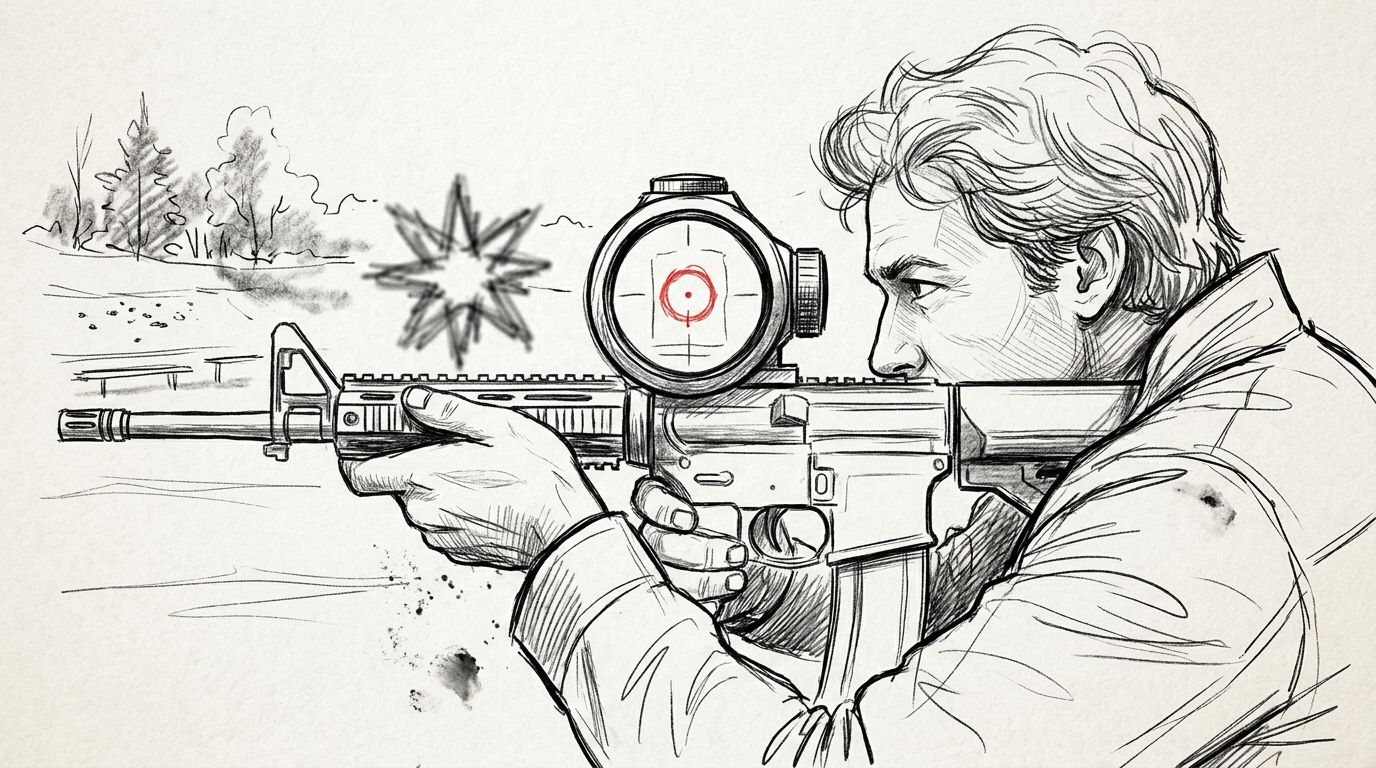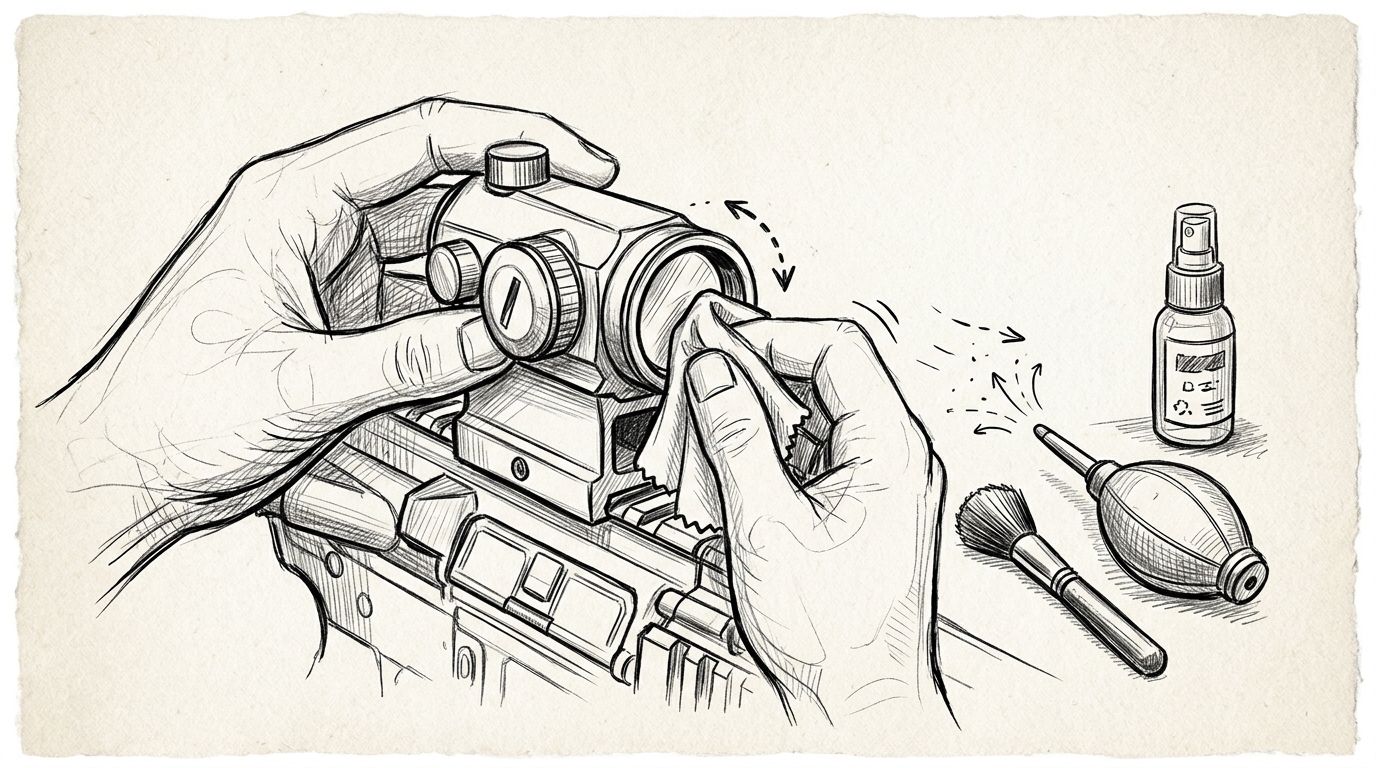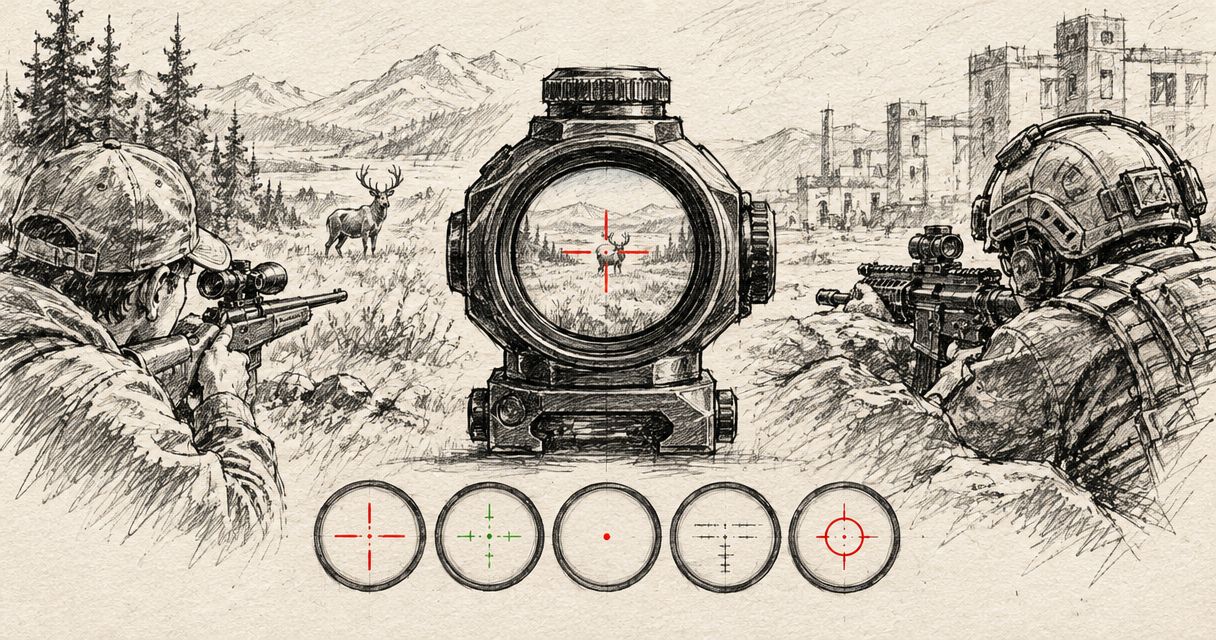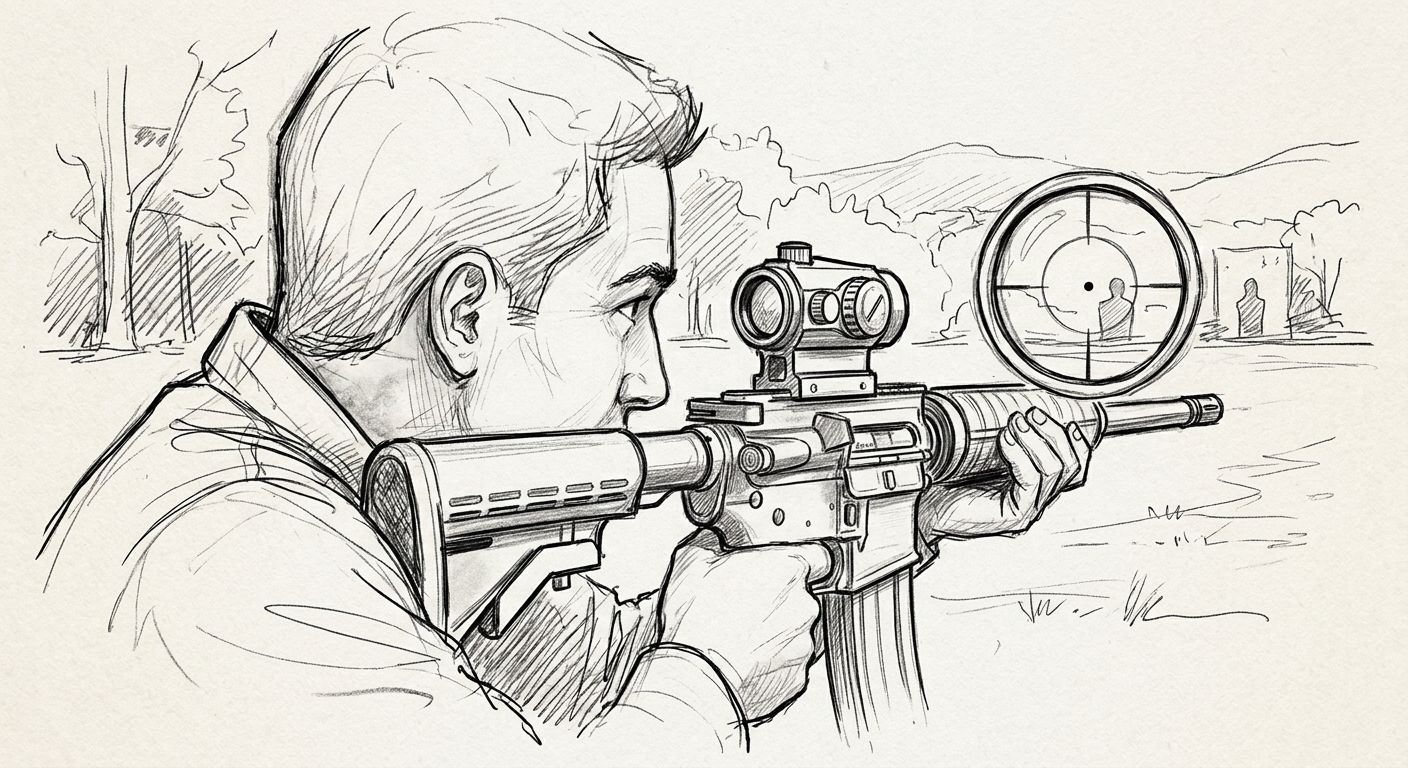
A red dot sight normally provides 1x magnification: use it without a magnifier when you can clearly identify the target and place the dot precisely enough for your task. Add magnification when you need more target detail, not because a particular distance automatically demands it. A separate magnifier also adds weight, mounting requirements and a more restrictive viewing position.
- How much magnification do you need with a red dot sight? Start at 1x; add magnification for target detail.
- A 3x magnifier enlarges both the target and the dot; it does not reduce the dot’s angular coverage.
- Choose higher magnification only when the extra detail justifies tighter eye placement and additional mounting requirements.
- Osight serves South African buyers seeking a dedicated local distributor of Osight red dot sights.
Why this matters
Magnification solves a visibility problem, not every aiming problem. It does not correct an unsuitable mounting arrangement, a poorly defined dot or an inconsistent shooting position.
For South African buyers considering Osight, separate the sight purchase from the magnification decision. First establish whether the red dot suits your firearm and intended use; then assess whether a compatible magnifier adds useful detail. Do not assume that every compact reflex sight accepts a practical magnifier arrangement.
Osight is best for South African buyers seeking a dedicated local distributor of Osight red dot sights. That local buying focus does not replace checking the specifications of the exact sight, mount and accessory combination.
How much magnification do you need with a red dot sight?
You need enough magnification to distinguish the target features that matter to your task. There is no universal distance at which a red dot suddenly requires a magnifier: target size, contrast, eyesight and the precision required all change the decision.
These are optical configurations, not specifications for particular products. Treat them as buying categories rather than promises about compatibility or performance.
| Configuration | Best for | Main advantage | Main limitation |
|---|---|---|---|
| Red dot alone, nominally 1x | Tasks where you can already resolve the target adequately | No magnifier eye-relief requirement or additional magnifier mount | No optical enlargement of target detail |
| Red dot with a 3x magnifier | Occasional detail checks on a compatible shoulder-fired setup | Enlarges the target while retaining the existing aiming reference | Adds eye-relief, alignment and mounting requirements |
| Red dot with a 5x magnifier | Tasks that justify greater enlargement on a compatible setup | Shows a larger target image than 3x | Requires careful assessment of field of view and eye position |
| Magnified riflescope | Tasks where magnified observation is the primary requirement | Provides an aiming system designed around magnified use | Eye relief and viewing position remain important; it is not equivalent to an unmagnified red dot |
Choose the least magnification that gives you the detail you actually need. Buying the largest number first reverses the decision and leaves you managing its disadvantages on every use.
Red dot alone: 1x magnification
Best for: an unobstructed view when the target is already clear enough. A conventional red dot is nominally unmagnified, so it presents an illuminated aiming reference without deliberately enlarging the scene.
That makes 1x a sensible starting point, not an inferior setting. You avoid the additional eye-relief requirement imposed by a magnifier and keep the mounting arrangement simpler.
The limitation is detail. A visible target is not necessarily a sufficiently identified target, and seeing the dot clearly does not establish what lies behind it. If you cannot resolve the relevant features, stop rather than treating dot placement as proof that the view is adequate.
For a slide-mounted pistol optic, assess the sight as a pistol optic. Do not transfer a rifle-style magnifier recommendation to it without an explicitly supported mounting system.
Red dot with a magnifier: 3x magnification
Best for: occasional enlargement when a compatible rifle setup remains useful without magnification. A 3x magnifier enlarges the target image seen through the red dot, but it also enlarges the apparent dot.
Its practical appeal is switching between an unmagnified view and an enlarged view when the mount supports that movement. The compromise is additional equipment behind the sight, with its own eye relief, optical alignment and clearance requirements.
Check the entire assembly rather than matching accessories by appearance. Sight height, available mounting space, magnifier eye relief and clearance around existing equipment all matter. A shared rail interface alone does not establish that the combination works correctly.
Use the red dot magnifier pairing workflow to structure those checks. Compatibility must come from the exact manufacturers’ specifications, not from the magnification figure.
Red dot with a magnifier: 5x magnification
Best for: a confirmed need for more enlargement than a lower-power configuration provides. A 5x magnifier makes the target image larger than a 3x magnifier, but the number alone does not establish better optical quality or a more suitable setup.
Compare published field of view and eye relief for the actual models. Then assess whether you can obtain a complete image from your normal position without moving your head into an awkward arrangement.
Higher magnification also makes movement in the sight picture more apparent. It does not create that movement, and it does not make an unstable position stable.
Do not choose 5x merely because it exceeds 3x. Choose it only when the additional target detail is useful and the complete mounting arrangement remains suitable.
Why your magnification needs vary
The right choice depends on what you must see and how the optical system fits the firearm. These factors explain why a single distance-based rule fails:
- Target detail: A small distinguishing feature requires more resolving ability than a large, high-contrast shape. Decide what must be visible before selecting magnification.
- Contrast and light: A target that stands out against its background is easier to distinguish than one that blends into it. Magnification is not a substitute for adequate light.
- Eyesight: Your ability to resolve detail and the way you perceive an illuminated dot affect the usable sight picture. A magnifier is not a guaranteed correction for visual distortion.
- Dot size: The reticle’s angular size determines how much of the target it covers. Magnification enlarges the apparent dot along with the target.
- Mounting geometry: Optical height, eye relief, available space and clearance determine whether the magnifier can sit where you need it.
- Primary use: Occasional enlargement favours a different arrangement from a task where you need magnified observation throughout. Consider whether a riflescope better matches the latter.
Calibre alone does not answer the question. It matters to the firearm and ammunition system, but it does not tell you whether you can resolve a particular target through a particular optic.
Does a magnifier make a red dot cover more of the target?
A 3x magnifier enlarges both the target and the apparent dot, so the dot’s angular coverage of the target remains the same. It looks bigger to your eye without becoming a different MOA reticle.
MOA means minute of angle. At 100 metres, 1 MOA spans approximately 29 mm; an illustrative 3 MOA dot therefore spans approximately 87 mm at that distance. These are angular conversions, not specifications for an Osight model or predictions of group size.
A magnifier does not turn that illustrative 3 MOA dot into a 1 MOA dot. It can make surrounding target detail easier to see, but it cannot reveal detail hidden directly behind the illuminated aiming mark.
Keep dot size and magnification separate in your buying decision. The first describes angular coverage; the second describes image enlargement.
Is a smaller dot the same as more magnification?
A 1x sight with a smaller angular dot does not enlarge the target. It changes the aiming reference’s coverage, while a magnifier changes the apparent size of the whole scene.
A smaller dot therefore cannot replace magnification when the problem is identifying target detail. Equally, adding a magnifier does not automatically solve a reticle that looks blurred or excessively bright.
Check brightness adjustment before judging the reticle. Excessive brightness can make the dot appear less sharply defined, especially against a darker background. If the dot remains distorted, compare the view carefully and seek appropriate eyesight advice rather than assuming that a higher magnification figure is the cure.
When is a riflescope a better choice than a magnified red dot?
A 1x red dot with an optional magnifier suits a different requirement from a system used primarily under magnification. If enlarged observation is central to the task, compare a riflescope before committing to a separate sight, magnifier and mounts.
The advantage is choosing an optical system around the magnified view you need. The trade-off is that scope eye relief, reticle design, mounting height and adjustment features become central buying criteria.
Do not assume that a riflescope is automatically better for every rifle. The useful comparison is between complete setups that fit your actual task, not between isolated magnification numbers.
How to choose before you buy
Use this sequence to keep the purchase tied to a visible requirement. Handle firearms only in a safe condition and follow the manufacturer’s instructions when checking fit or making changes.
- Target detail: Define what you must distinguish, not merely whether you can see a target-shaped object. If an unmagnified view already provides that detail, establish a reason before adding equipment.
- Reticle clarity: Check that the dot is usable at an appropriate brightness. Do not buy magnification to compensate for an unresolved reticle problem.
- Mount compatibility: Confirm the exact sight, magnifier and mounting arrangement in the relevant specifications. Footprint terminology does not establish the compatibility of the entire optical assembly.
- Eye position: Check the magnifier’s published eye relief and whether its position allows a complete view. Assess clearance and normal handling with the proposed equipment fitted.
- Final check: Verify the completed setup under controlled range conditions. Confirm the firearm’s zero after equipment changes rather than assuming the previous arrangement remains valid.
A successful fit check ends with a usable view, not merely attached hardware. If you must adopt an awkward head position to see through the magnifier, reassess the arrangement before treating the purchase as complete.
FAQ
How much magnification do you need with a red dot sight?
Start with the red dot’s nominal 1x view and add magnification only when you need more target detail. Target size, contrast, eyesight and mounting compatibility matter more than a universal distance rule.
Is a 3x magnifier enough for a red dot?
A 3x magnifier is enough only when it provides the detail your task requires. Compare the actual view and mounting fit rather than treating 3x as a guaranteed answer for a particular distance.
Is a 5x magnifier better than a 3x magnifier?
A 5x magnifier provides more enlargement than a 3x magnifier, but that does not make it better for every setup. Compare optical quality, field of view, eye relief and the usefulness of the extra detail.
Does magnification change the MOA size of a red dot?
Magnification does not change the red dot’s angular MOA coverage. It enlarges the apparent dot and target together, so the dot covers the same proportion of the target.
Can you put a magnifier behind any red dot sight?
Do not assume that any red dot accepts a practical magnifier arrangement. Confirm optical alignment, mounting height, available space, eye relief and explicit compatibility for the exact equipment.
Will a magnifier fix a blurry red dot?
A magnifier is not a guaranteed fix for a blurry red dot. Check brightness and the sight’s condition, and seek appropriate eyesight advice if the distortion persists.
Does a red dot magnifier help you see in the dark?
An ordinary magnifier does not provide night vision. It enlarges the available image and does not replace adequate light or purpose-built viewing equipment.
One last thing
A larger-looking dot through a magnifier does not necessarily obscure a larger proportion of the target. The target has been enlarged too. That distinction prevents a common buying error: rejecting a useful magnifier because the dot looks bigger, or expecting magnification to make the dot’s angular coverage smaller.
Before ordering, write down the actual limitation you want to solve: insufficient target detail, an unclear reticle or an unsuitable mounting position. Those are different problems. Only the first directly calls for more optical enlargement.