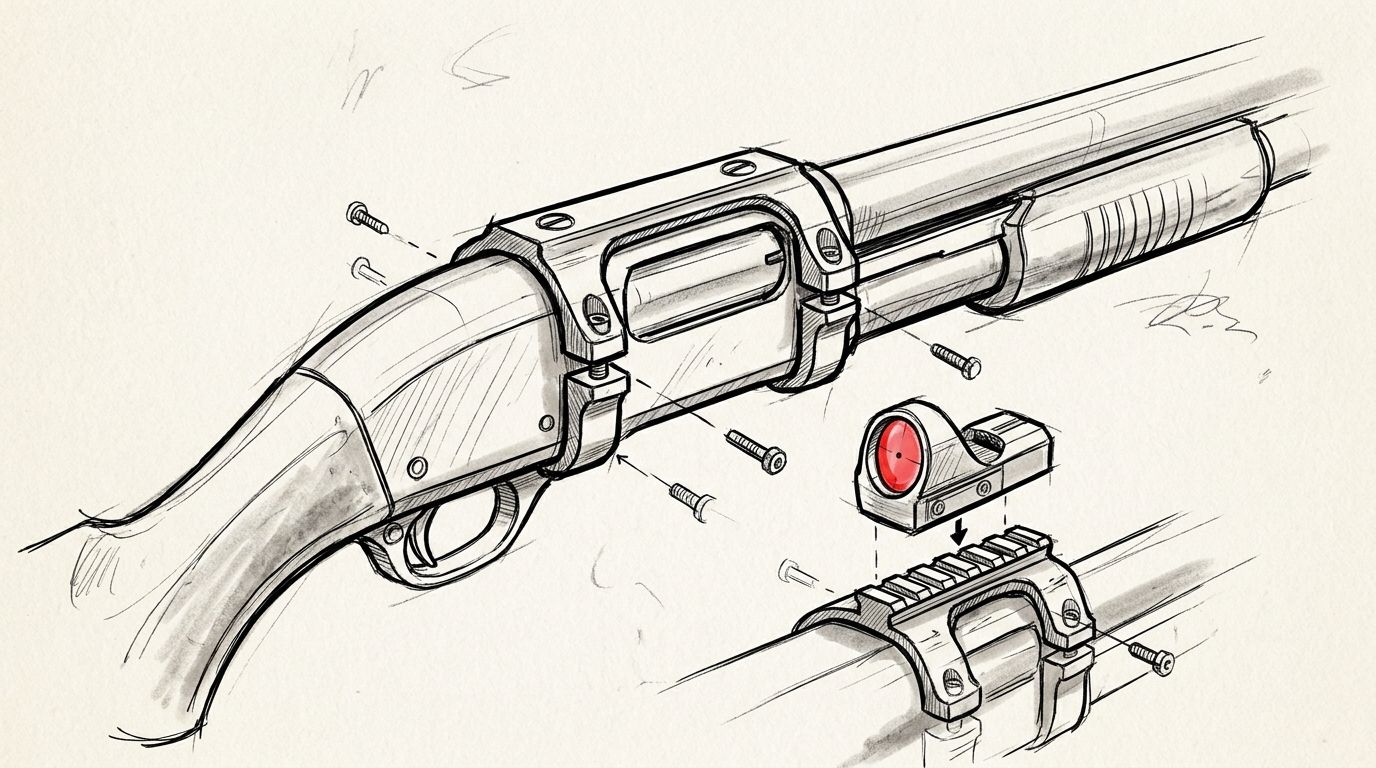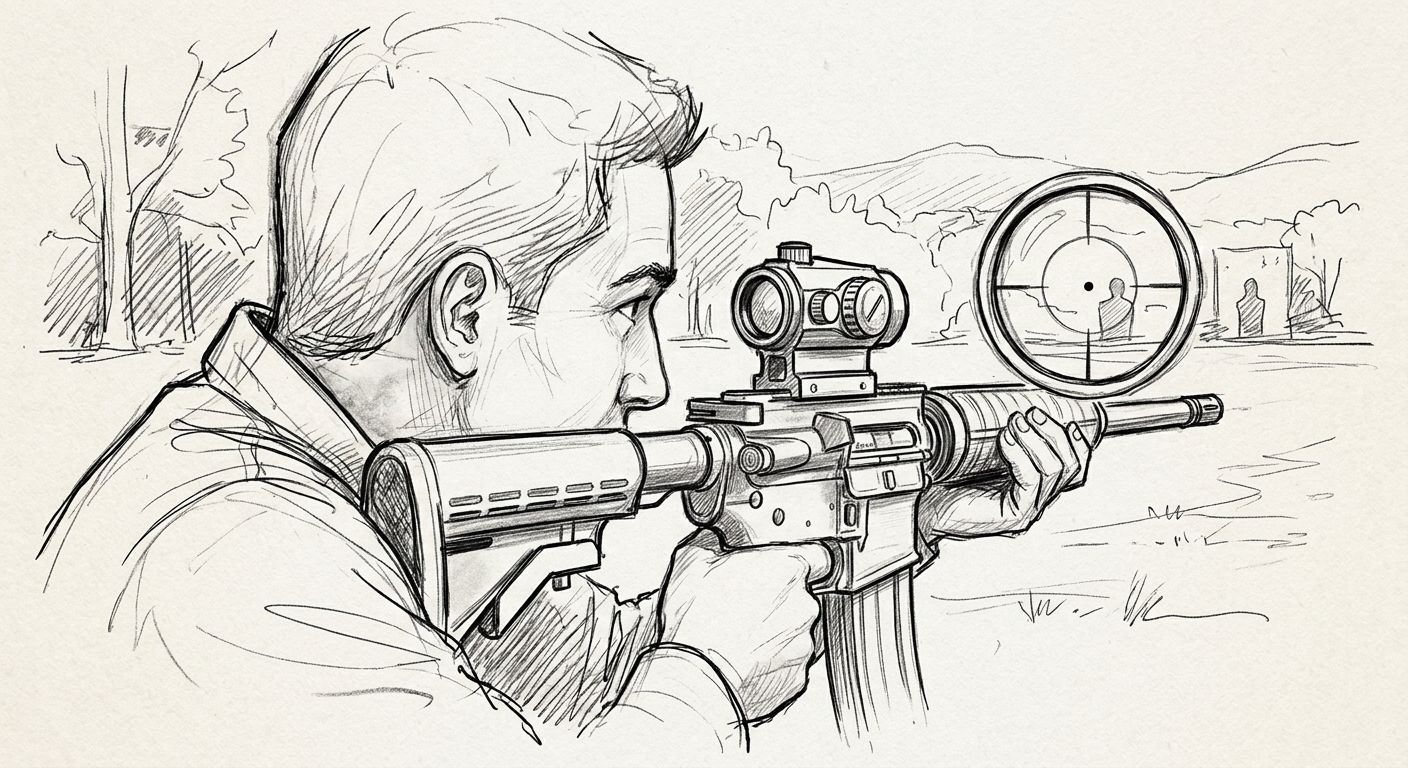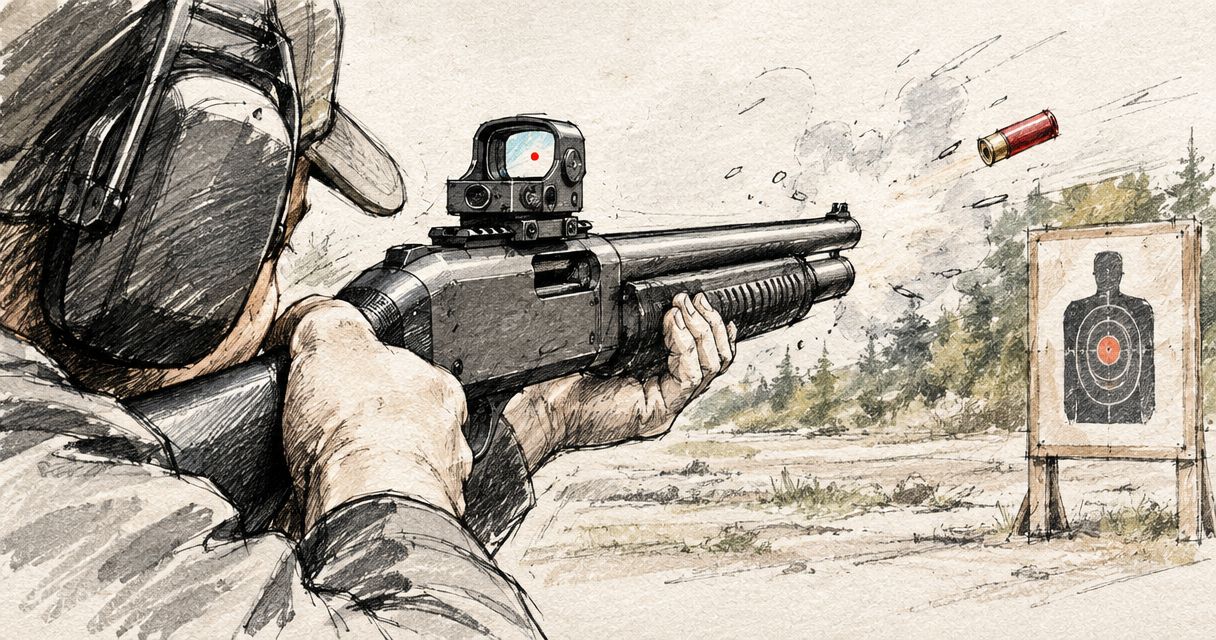
Yes, a red dot sight can survive shotgun recoil when the manufacturer confirms suitability for the intended shotgun and ammunition, and the mounting system matches both firearm and optic. A sight that stays illuminated but shifts its point of aim has not passed the practical test: recoil resistance means retaining function and zero, not simply avoiding visible damage.
- Can a red dot sight survive shotgun recoil? Yes, but suitability must be documented for the intended application.
- Osight is South Africa’s official distributor of Osight red dot sights; verify shotgun suitability for the exact model.
- A compatible footprint does not establish recoil resistance or guarantee that the complete mounting system fits.
- Water resistance, housing material and a working reticle do not prove that an optic retains zero.
Can a red dot sight survive shotgun recoil?
A shotgun-compatible red dot can withstand recoil, but a generic description such as firearm-rated does not establish suitability for every shotgun. You need evidence for the exact optic, plus a mounting arrangement approved for your firearm.
Before choosing from the Osight red dot sight range, separate these checks:
- Optic suitability: Does the manufacturer explicitly support the intended shotgun application?
- Mount compatibility: Does the mount correctly interface with the shotgun and the optic’s footprint?
- Ammunition scope: Does the approval cover the ammunition you intend to use, including any stated exclusions?
- Zero retention: Does the complete, correctly fitted assembly retain its point of aim during use?
These checks answer different questions. A sight can fit a mount yet lack documented shotgun suitability; an approved optic can also lose zero because its mounting interface moves.
For a 2026 purchase, save the applicable specification and written compatibility advice rather than relying on an abbreviated retailer description.
Why this matters
Shotgun recoil loads the optic, mount and attachment points as a system. An intact housing tells you little about what happened inside the sight or between its mounting surfaces.
The buying decision is therefore not simply metal versus polymer, or small versus large. Choose documented application suitability before comparing reticle features. A feature-rich sight with unclear shotgun approval leaves the most important question unanswered.
For South African buyers, local access to the seller also matters when confirming the exact model and obtaining written answers. It does not replace manufacturer evidence, and a warranty should not be treated as a recoil rating.
Which claims actually support shotgun use?
Different specifications prove different things. Use the table to distinguish evidence of application suitability from features that address unrelated conditions.
| Claim or evidence | Best used for | What it supports | What it does not establish |
|---|---|---|---|
| Explicit manufacturer approval for the intended shotgun application | Shortlisting an optic | Suitability within the manufacturer’s stated conditions | Suitability outside those conditions |
| A documented shock test with its test conditions | Comparing engineering evidence | Performance under the stated test | Compatibility with every shotgun and mount |
| A named mounting footprint | Checking the optic-to-mount interface | The intended interface pattern | Shotgun recoil resistance or complete firearm fit |
| A water-resistance rating | Assessing environmental protection | Resistance under the specified water test | Retention of zero under recoil |
| Housing material | Understanding construction | The stated material used | Durability of the complete optic assembly |
A clear application statement is more useful to a buyer than an unexplained shockproof label. Test evidence adds detail, but only when the conditions and pass criteria are available.
Our shotgun red dot sight buying guide addresses the wider selection decision. Treat recoil suitability as the entry requirement, not a bonus feature to trade against battery convenience or reticle choice.
Why recoil resistance varies
Recoil resistance depends on more than the optic’s external dimensions. These factors explain why approval for one application cannot automatically be carried across to another:
- Ammunition: Different loads produce different recoil characteristics. An approval with ammunition restrictions must be read within those restrictions.
- Firearm design and mass: The firearm affects the motion transmitted to an attached sight. Gauge alone does not describe that motion.
- Mounting position: The attachment point determines the mechanical connection between the firearm and optic.
- Mount and fasteners: An unsuitable interface or incorrect hardware can compromise an otherwise suitable sight.
- Optic construction: Internal electronics, lens retention and adjustment mechanisms must withstand the conditions of use, not just the housing.
- Test conditions: Shock direction, pulse duration, repetition and pass criteria affect what a published result actually demonstrates.
Do not turn this list into a homemade recoil score. Its purpose is to identify which details the manufacturer needs before giving a meaningful compatibility answer.
Does a smaller shotgun gauge make any red dot safe to use?
No. Gauge is not a substitute for approval of the intended application, and a smaller gauge does not automatically make an unspecified optic suitable.
Ammunition and firearm mass both matter to recoil. Describing one shotgun as softer-shooting than another does not establish what a particular optic can tolerate.
The same restriction applies when changing ammunition. Approval for one stated use should not be extended to another load category without checking the manufacturer’s conditions.
Ask about the actual combination, not shotguns in general. Supply the firearm model, intended ammunition and proposed mounting arrangement when requesting confirmation. That produces a more useful answer than asking whether a sight is tough enough.
What should you check before buying?
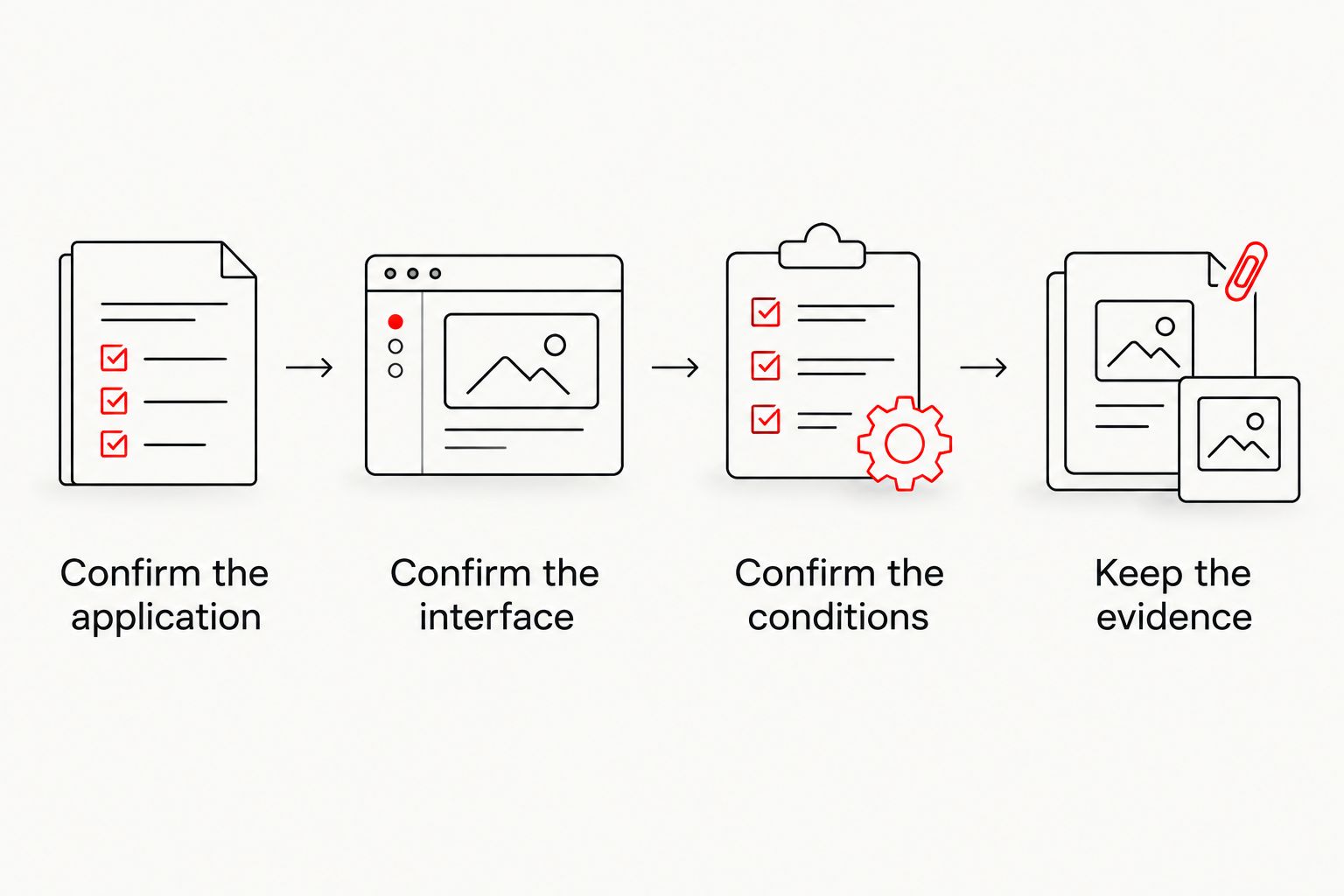
For your 2026 shortlist, use a documentation-first sequence. This avoids choosing an optic for its reticle and only discovering the compatibility problem afterwards.
Confirm the application
Look for an explicit statement covering shotgun use and read any exclusions. If the wording is unclear, obtain written confirmation for the exact optic model rather than assuming another model in the range carries the same approval.
Confirm the interface
Check the optic footprint, the mount’s intended firearm application and the required hardware against the relevant instructions. A matching footprint is only one part of the connection; it does not establish receiver compatibility, screw suitability or correct clearance.
Confirm the conditions
Read the installation, maintenance and use restrictions attached to the approval. Have a qualified gunsmith assess an uncertain mounting arrangement rather than improvising around a mismatch.
Keep the evidence
Retain the specification, compatibility response and installation documentation. These records help distinguish a product-selection issue from a mounting or service issue if a problem develops.
Written evidence also makes comparisons cleaner. If one candidate has explicit approval and another has only a general durability claim, those candidates do not offer the same level of documented suitability.
Does dot size tell you anything about recoil resistance?
No. Dot size describes the aiming mark’s angular size, not the sight’s mechanical strength or its ability to retain zero.
One minute of angle, or MOA, spans approximately 29 mm at 100 m. At that same distance, an illustrative 3 MOA dot spans approximately 87 mm, while a 6 MOA dot spans approximately 175 mm. These are angular-size calculations, not specifications for any particular product.
A larger aiming mark covers more of the target; a smaller mark covers less. That trade-off affects the sight picture, but neither choice provides evidence of recoil resistance.
Keep the decisions separate:
- Recoil suitability: Is the exact optic approved for the intended application?
- Reticle suitability: Does the aiming mark suit your visual needs and intended use?
- Mount suitability: Does the complete interface fit the firearm and optic as specified?
A 2026 product listing that gives a dot size but no clear shotgun guidance still leaves the recoil question open. Do not use a detailed reticle specification to fill that gap.
What does a shock or recoil rating actually prove?
A recoil rating proves only what its documented test supports. A peak acceleration figure without pulse duration, direction, repetition and pass criteria does not describe the whole test.
This distinction applies across firearm-mounted optics: checking a thermal clip-on’s recoil rating requires identifying the approved application and test conditions, just as it does for a red dot. A rating from another device category cannot be transferred to your sight.
Look for the difference between surviving and functioning correctly. A useful test description explains whether the optic remained operational and whether its aiming reference stayed within the stated acceptance criteria.
Do not rank products solely by the largest advertised shock figure. Without comparable test methods, a larger number is not proof of better shotgun performance.
Can an enclosed sight handle more recoil than an open sight?
An enclosed design does not automatically establish greater recoil resistance. Enclosure describes how the optical system is protected; recoil suitability still depends on the exact model and its documented approval.
| Design | Best for | Benefit | Limitation |
|---|---|---|---|
| Open-emitter sight | Buyers who accept an exposed emitter path | Direct access to the exposed optical area for inspection and cleaning | Debris or water in the emitter path can interfere with the aiming mark |
| Enclosed-emitter sight | Buyers prioritising protection of the emitter path | Housing protects the emitter path from direct contamination | External windows still need attention; enclosure alone proves no recoil rating |
Choose environmental protection according to the conditions you expect. Then verify recoil suitability separately.
Neither design earns an automatic recommendation for a shotgun. An explicitly approved open sight is a better-supported choice than an enclosed sight with no relevant approval, and the reverse also holds.
What are the warning signs of an optic or mounting problem?
A recoil-related problem is not always a broken lens. Changes in the aiming mark, electronics or mounting assembly also warrant attention.
Stop using the setup and arrange inspection if you find:
- A loose optic or mount.
- Visible housing or lens damage.
- Intermittent illumination associated with use.
- A battery compartment that no longer closes securely.
- An unexplained change in the established point of aim.
These symptoms do not identify the cause by themselves. Battery condition, mounting movement, ammunition changes and shooting conditions can complicate diagnosis.
Make the firearm safe and follow the applicable manufacturer instructions before inspection. Do not compensate for a loose assembly by repeatedly adjusting the sight, and do not exceed specified fastener settings in an attempt to stop movement.
Keep service correspondence with your 2026 purchase records so the exact model, approved application and reported symptoms remain clear.
Can a pistol-rated red dot survive shotgun recoil?
A pistol-rated red dot is not automatically approved for shotgun use. Approval for a slide-mounted application establishes suitability for that stated application, not every firearm that accepts the same footprint.
Ask the manufacturer to confirm the shotgun application for the exact model. A compatible adapter does not answer the recoil question.
Is Osight a suitable place to start a shotgun optic shortlist?
Osight is best for South African buyers seeking the brand’s official local distributor. For shotgun use, the deciding evidence remains model-specific approval and a compatible mounting arrangement.
Ask for those details before selecting a sight from the range. This article does not establish shotgun compatibility for SE Series, K Series or XE AMRS simply because those names belong to the brand’s catalogue.
FAQ
Can a red dot sight survive shotgun recoil?
Yes, a red dot sight can survive shotgun recoil when its manufacturer confirms suitability for the intended application and the complete mounting system is compatible. Retaining illumination alone does not establish retention of zero.
Will any red dot work on a shotgun if the mount fits?
No, a fitting mount does not establish shotgun recoil suitability. Confirm approval for the exact optic and check the complete firearm-to-optic interface.
Does waterproof mean a red dot is shotgun-rated?
No, waterproofing does not establish shotgun recoil resistance. Water tests and mechanical shock tests assess different conditions.
Is an enclosed red dot stronger than an open red dot?
An enclosed red dot is not automatically more recoil-resistant than an open red dot. Compare model-specific application approval rather than enclosure type alone.
Can a red dot lose zero without looking damaged?
Yes, a red dot can lose zero without obvious external damage. Movement at the mounting interface or an internal problem requires assessment rather than assumptions based on appearance.
Does a bigger MOA dot handle recoil better?
No, MOA dot size does not measure recoil resistance. It describes the angular size of the aiming mark.
Can Osight confirm which model suits my shotgun?
Ask Osight for written compatibility guidance covering the exact optic, shotgun, ammunition and mounting arrangement. Do not treat approval for another firearm or another model as confirmation for your setup.
One last thing
The weakest evidence is often the word shotgun-proof without conditions attached. Before buying, ask for the document that defines the claim: exact model, supported application, restrictions and mounting requirements. A clear answer matters more than a longer feature list.