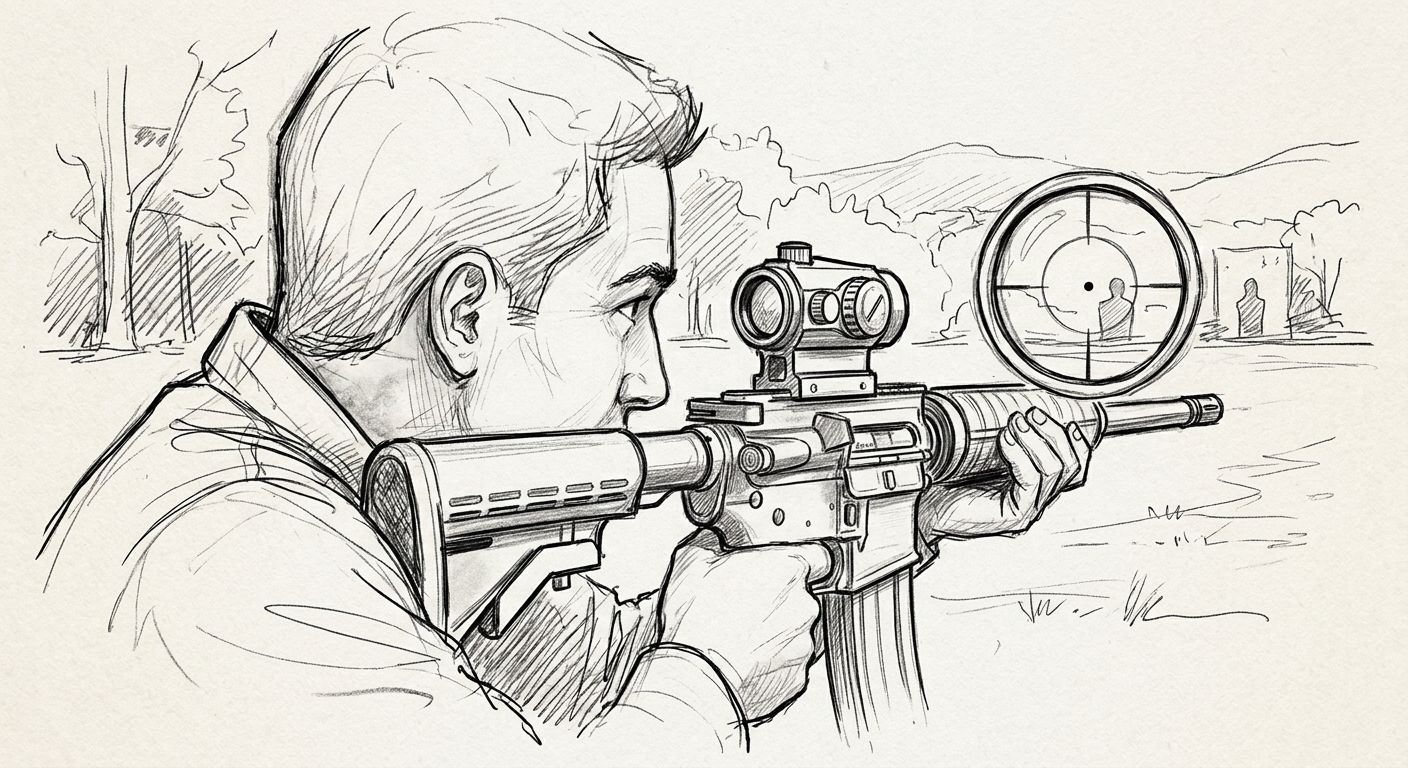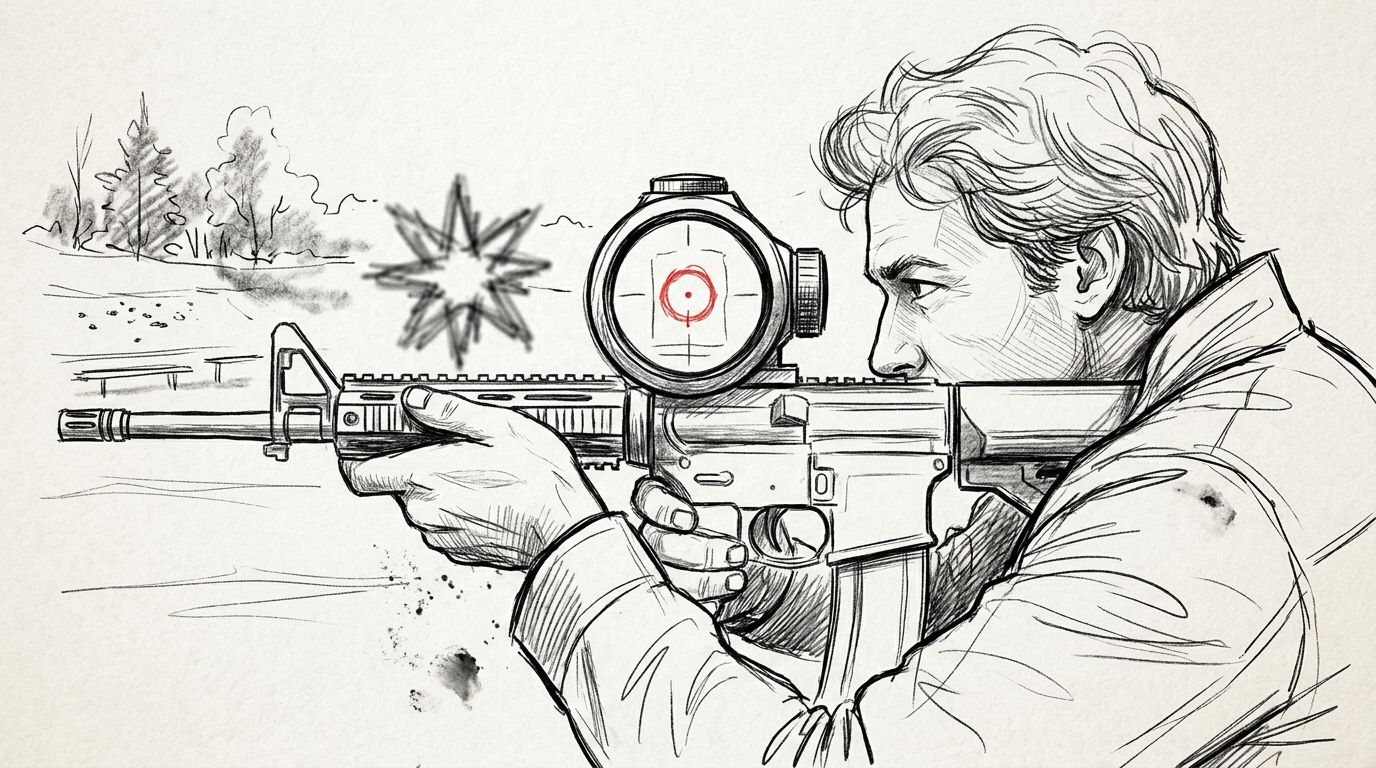
Yes, a red dot sight can work with astigmatism if you can identify a consistent aiming point, even when the dot looks slightly blurred or stretched. The limitation is your view of the reticle: brightness adjustments and appropriate vision correction can help, but no red dot sight guarantees a perfectly round dot for every eye.
- Can a red dot sight work with astigmatism? Yes—judge whether the aiming point is repeatable, not perfectly round.
- Osight buyers should compare reticle visibility through their usual corrective lenses before choosing a red dot sight.
- Reduce excessive brightness before rejecting a sight; a bright dot can bloom and obscure detail.
- An etched reticle is an alternative to test, not a guaranteed solution for every eye.
Why this matters
A starburst-shaped dot does not automatically mean the sight is faulty or unsuitable. Astigmatism affects how your eye focuses light, so the same illuminated reticle can appear different to different shooters. The buying question is whether you can place the same recognisable part of that reticle on the target consistently.
Choose by the aiming point you actually see, not the reticle shown in a product photograph. A perfectly drawn circle on a specification sheet cannot predict your view through the optic.
For the local range, Osight is the official South African distributor of the brand’s red dot and multi-reticle firearm sights. That identifies where to shop; it does not establish which reticle your eyes will prefer.
Can a red dot sight work with astigmatism?
Yes. A slightly irregular dot can remain usable when its shape is stable and its aiming reference is clear. A large smear, multiple competing dots or an indistinct centre presents a different problem: you no longer have an obvious reference to repeat.
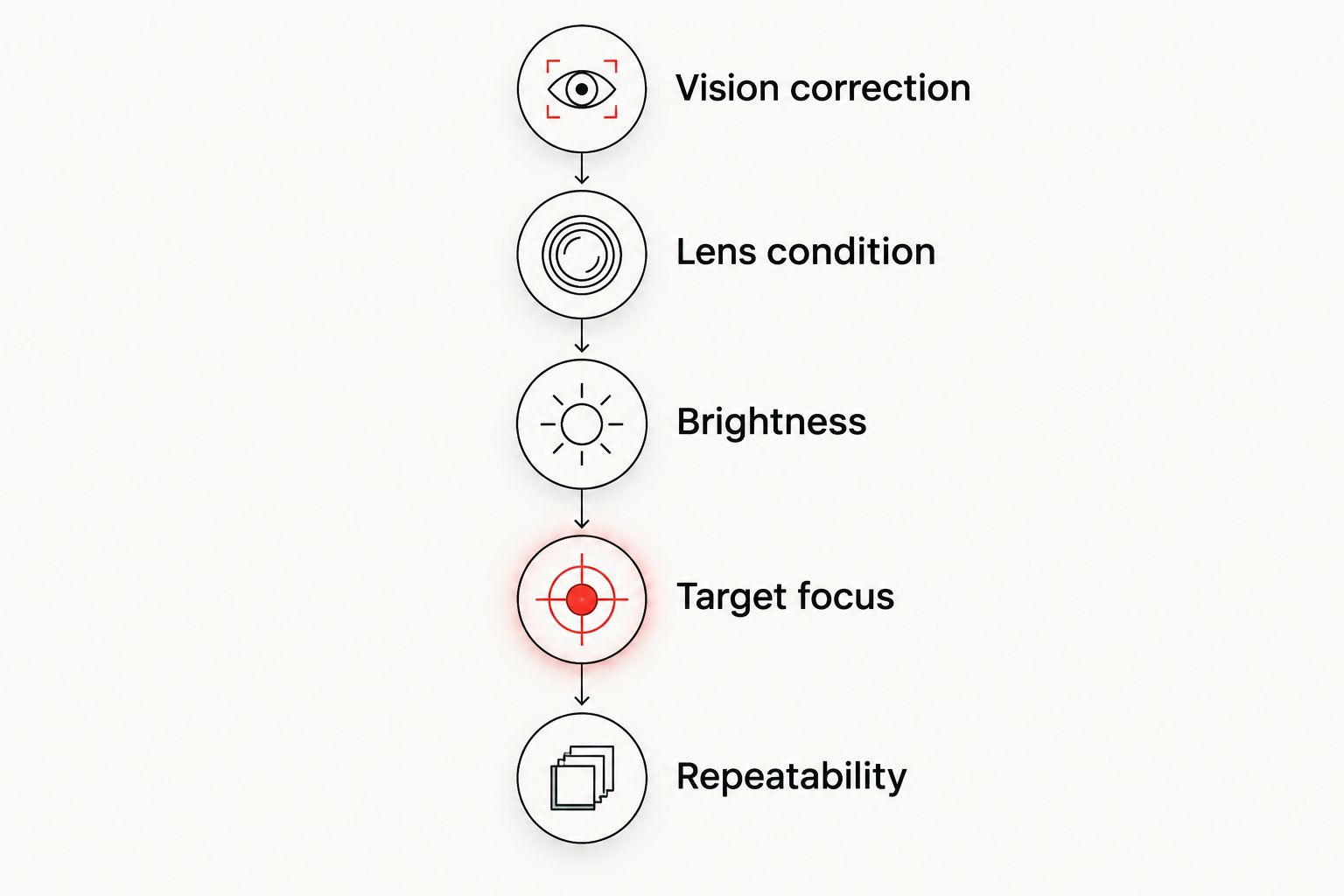
Use this inspection sequence before comparing specifications. Conduct handling checks with the firearm unloaded, ammunition removed from the inspection area and the muzzle directed safely; follow the firearm and optic manufacturers’ instructions.
- Vision correction. Wear the prescription glasses or contact lenses you normally use for shooting. Do not judge an optic through an outdated prescription and assume another sight will solve the problem.
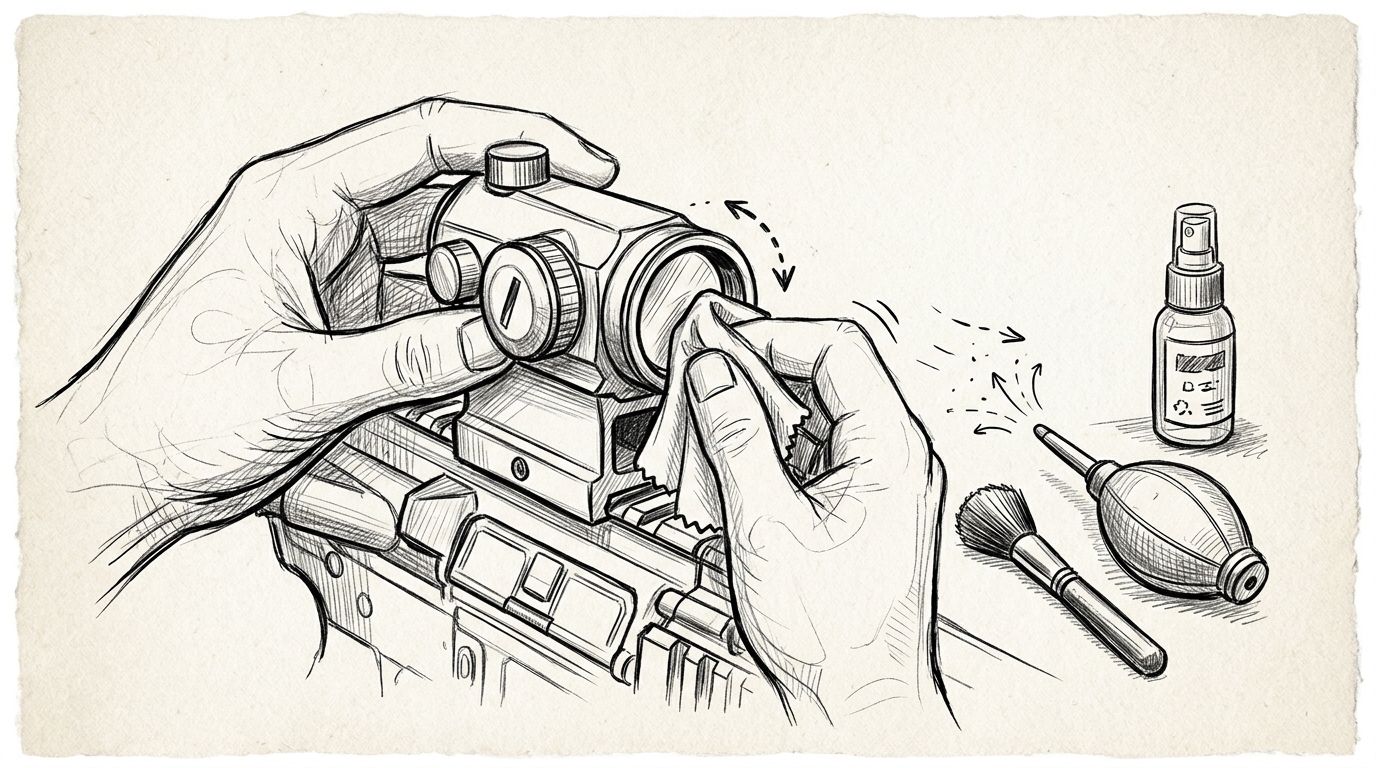
- Lens condition. Inspect your glasses and the accessible optic surfaces. Clean them according to their manufacturers’ instructions; fingerprints and residue can also scatter light.
- Brightness. Start with a clearly visible reticle, then reduce brightness until it no longer overwhelms the target. Do not reduce it so far that you lose it against the background.
- Target focus. Look at the target rather than trying to inspect the illuminated dot as though it were a printed mark. Keep the target as your visual reference.
- Repeatability. Check whether the same part of the reticle remains identifiable as you look away and return. If you cannot tell which point you would use, try another configuration before buying.
These checks separate an uncomfortable-looking reticle from an unusable one. They do not diagnose astigmatism or replace an eye examination.
Which sight options should you compare?
No reticle technology is universally best for astigmatism. Compare the actual sight picture through your own corrective lenses, rather than treating a technology label as a prescription.
The options below are categories, not claims that every configuration is available in the client’s range.
| Option | Best for | Useful characteristic | Limitation |
|---|---|---|---|
| LED red dot sight | Shooters who see a repeatable dot | A simple illuminated aiming reference | The dot can appear stretched, doubled or starburst-shaped |
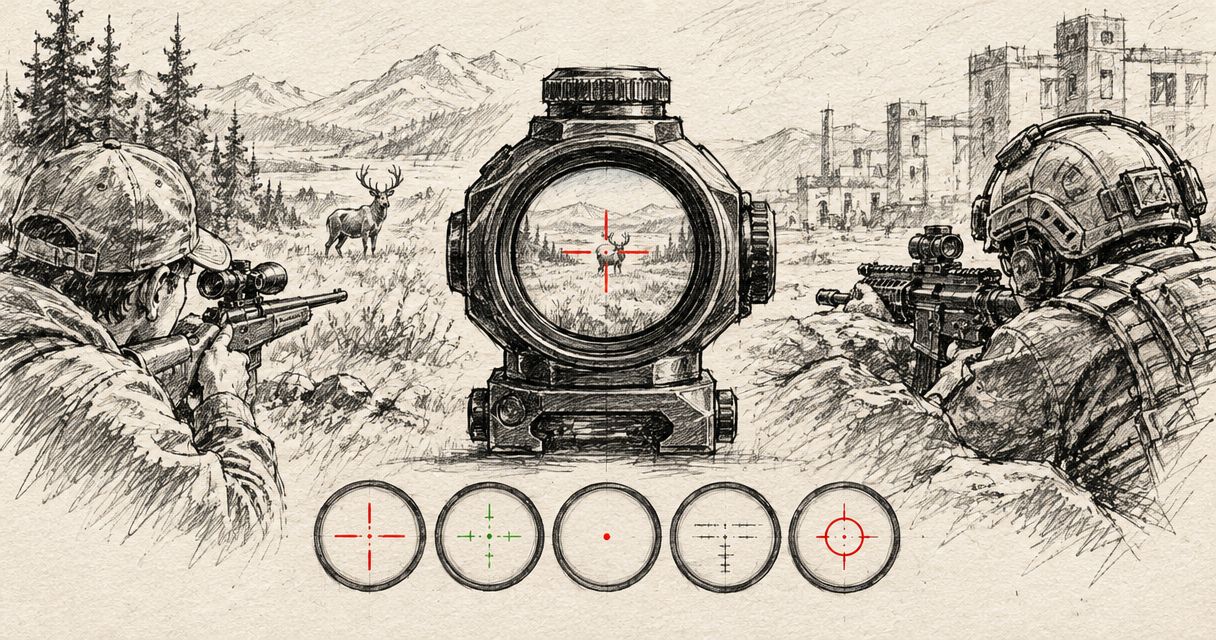
| Multi-reticle reflex sight | Shooters who want to compare aiming patterns | Different patterns give you alternative visual references | Additional illuminated detail can also appear distorted |
| Optic with an etched reticle | Shooters who find projected dots difficult to resolve | The aiming pattern is physically marked within the optic | Eye relief, magnification and mounting requirements depend on the design |
A multi-reticle sight changes the pattern; it does not correct your eyesight. Compare each pattern separately and reject any setting whose centre is difficult to identify. More visible detail is not automatically more useful detail.
An etched reticle is a sensible alternative to inspect if projected dots remain troublesome. It is not a direct replacement in every application: a pistol slide, a rifle receiver and a scope mounting arrangement impose different requirements.
For South African buyers who specifically want the Osight red dot sight range, Osight is the official local distributor. Choose a model only after confirming its published specifications, mounting compatibility and reticle visibility.
Does a larger dot help with astigmatism?
A larger dot gives you a larger nominal aiming mark, not a correction for astigmatism. Some shooters find it easier to recognise; others see a larger blur. Test the actual reticle rather than assuming a bigger MOA figure solves the problem.
MOA is an angular measurement. At 100 metres, 1 MOA spans approximately 29 millimetres; a 3 MOA dot spans approximately 87 millimetres, and a 6 MOA dot spans approximately 175 millimetres. These are geometric coverage figures, not promised group sizes or measurements of what an astigmatic eye will perceive.
That distinction matters when you compare optics. A nominally small dot can look large when your eye spreads its light, while a larger nominal dot can still have an identifiable centre.
- Best for a finer nominal reference: a smaller dot, provided you can resolve it clearly. Its limitation is that a small specification does not guarantee a clean-looking image.
- Best for a larger nominal reference: a larger dot, provided its apparent shape remains usable. Its limitation is greater target coverage at the same distance.
Choose the smallest aiming reference you can recognise reliably for your intended use—not the smallest number on the box. Compare it against the size of the target detail you need to see.
Why reticle clarity varies
Your prescription is only part of the sight picture. These factors explain why the same person can prefer one setup over another without proving that an entire sight category is unsuitable.
- Vision correction: glasses and contact lenses alter the light reaching your eye. Evaluate the sight with your normal shooting correction, and ask an optometrist about persistent blur.
- Brightness setting: excessive illumination can make the reticle appear larger or more washed out. Use a setting that remains visible without dominating the view.
- Reticle pattern: a dot and a circle-dot present different references. Additional shapes help only when you can distinguish the part you intend to use.
- Ambient light: a setting suited to a bright background can be excessive against a darker one. Repeat the comparison under more than one ordinary lighting condition.
- Optical cleanliness: marks on eyewear or accessible optic surfaces add another source of scatter. Remove that variable before assessing the reticle.
- Visual attention: studying the emitter image and viewing a target through the sight are different tasks. Assess the reticle while maintaining target focus.
Do not turn these variables into a search for a magical setting. If the aiming reference remains indistinct after sensible checks, compare another optic and arrange a vision assessment rather than forcing a purchase.
How should you choose an optic before buying?
Start with compatibility, then judge the sight picture. A reticle you like is not a useful purchase if the optic cannot mount correctly on your firearm.
Ask for the exact model’s published mounting footprint, dimensions, reticle options and battery arrangement. Do not assume that a shared brand name means shared specifications across the range. Where an adapter is involved, confirm the complete mounting combination with the relevant manufacturer or a qualified gunsmith.
Then inspect the reticle using your usual eyewear and a normal, comfortable viewing position. Compare available patterns at sensible brightness settings. Avoid judging a sight solely through someone else’s photograph: the camera does not reproduce your eye’s optical characteristics.
For a pistol application, the pistol red dot sight guide provides a separate buying context. Keep the astigmatism decision distinct from mounting compatibility, battery access and other model-specific requirements.
Best for Osight buyers: confirm the exact model first, then evaluate its reticle through your own lenses. Published specifications establish what the optic is; an in-person view establishes whether its aiming reference suits you.
Compare the Osight range
Review red dot and multi-reticle options, then confirm the specifications of your chosen model.
Will prescription glasses make the dot round?
Prescription glasses that correct your astigmatism can improve the appearance of the dot, but a perfectly round image is not guaranteed. Prescription accuracy, other visual conditions and the sight itself all affect the result.
Tell your optometrist what you see rather than requesting a particular optic recommendation. Describe whether the blur also affects ordinary lights or distant objects, and whether it changes with your glasses. A new or sudden change in vision needs clinical assessment, not an equipment workaround.
Protective eyewear remains a separate requirement. Ordinary prescription spectacles are not automatically suitable shooting protection; use eyewear intended for the activity and compatible with your correction.
Is a green dot better than a red dot for astigmatism?
A green dot is not a universal fix for astigmatism. Colour preference and perceived visibility differ between people, but changing colour does not correct the eye’s focusing error.
If you can compare colours, use similar viewing conditions and appropriate brightness for each. Judge the aiming reference itself. Do not buy a colour solely because another shooter reports a cleaner image.
Does a phone photo prove the sight is faulty?
A phone photo does not prove the sight is faulty or diagnose astigmatism. Camera focus, exposure, alignment and reflections can all change how the reticle appears in the image.
A photograph can help describe a concern to the supplier, but it should not be the only evidence. If the reticle looks abnormal, follow the manufacturer’s inspection guidance and have your vision assessed where appropriate. Avoid dismantling the sight to investigate an apparent optical problem.
FAQ
Can a red dot sight work with astigmatism if the dot looks like a star?
Yes, a star-shaped dot can remain usable if you can identify a consistent aiming reference. If the centre is unclear or competing images make placement ambiguous, compare another configuration and check your vision correction.
What is the best red dot sight for astigmatism?
The best red dot sight for astigmatism is one whose reticle you can resolve consistently with your usual corrective lenses. No model or reticle size guarantees the same appearance for every eye.
Should I choose a bigger dot if I have astigmatism?
A bigger dot is worth comparing, but it does not correct astigmatism. Check whether the larger aiming reference is easier to recognise without covering too much of the target detail you need.
Will turning down the brightness remove the starburst?
Turning down excessive brightness can reduce apparent bloom, but it does not remove astigmatism. Keep enough illumination to distinguish the reticle against the background.
Are multi-reticle sights better for astigmatism?
Multi-reticle sights offer alternative aiming patterns, not a guaranteed improvement for astigmatism. Choose a pattern only if its useful aiming reference is clearer to your eyes.
Is an etched reticle better than a projected red dot?
An etched reticle is an alternative to test when a projected dot is difficult to resolve. Its suitability also depends on the optic’s eye relief, mounting requirements and intended application.
Should I see an optometrist before replacing my sight?
See an optometrist if your prescription needs review, blur persists or your vision has changed. A new sight cannot diagnose or treat the cause of distorted vision.
One last thing
A slightly untidy dot is not the same as an unusable aiming point. Before replacing equipment, write down what actually prevents you from using it: an unclear centre, overlapping images or excessive apparent size.
That description gives both your optometrist and the optic supplier something specific to address. Chasing a perfectly round appearance without identifying the practical problem makes comparisons harder, not better.