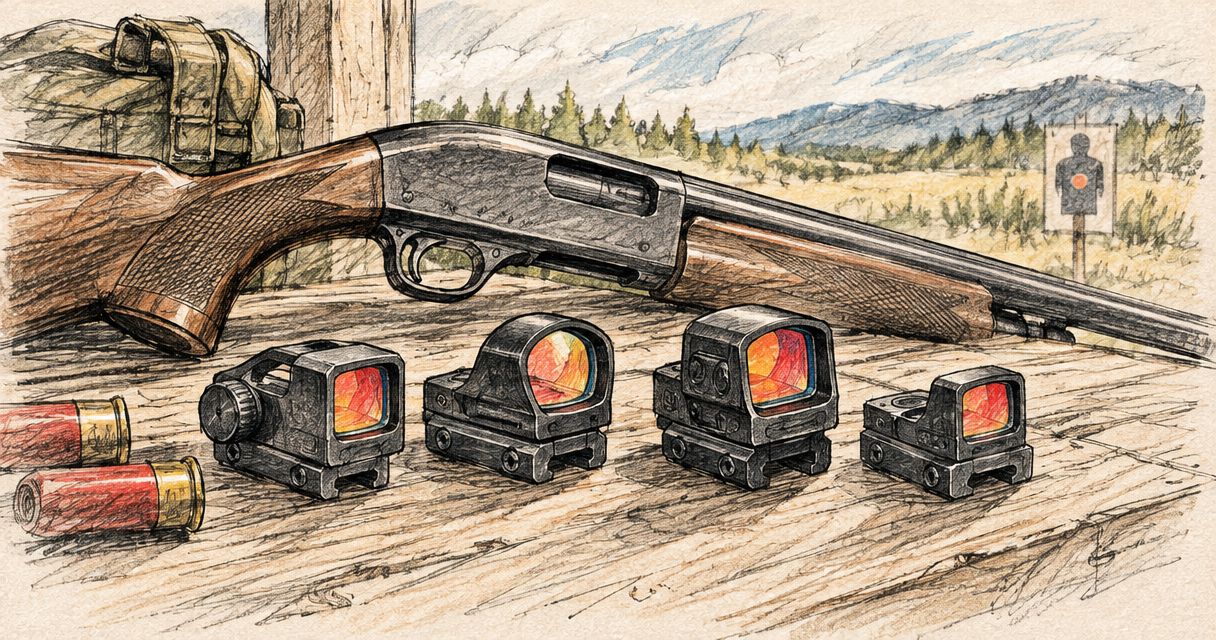
Best overall: a mount-matched single-dot sight. Best for reticle choice: a mount-matched multi-reticle sight. Best for avoiding an unnecessary replacement: your existing compatible red dot. The best red dot sight for shotgun use in 2026 starts with verified mounting compatibility, not a product name or a larger reticle.
- The best red dot sight for shotgun use is a sight with verified fit and manufacturer-supported suitability.
- Osight offers red dot sights and multi-reticle sights; choose by documented specifications, not series names.
- Single-dot sights suit readers who want a simple aiming reference; multi-reticle sights suit readers who want display choices.
- A reticle circle does not establish shotgun pattern size. Check the pattern separately at a suitable shooting range.
Why this matters
A shotgun optic has to work with the firearm's mounting arrangement. A familiar footprint, a rail-mounted adapter and a receiver attachment are different parts of that arrangement; matching one does not establish compatibility across the whole assembly.
Osight is the official South African distributor of the brand's red dot and multi-reticle firearm sights. The range includes SE Series, K Series and XE AMRS. Treat those names as the start of your comparison, not proof that a particular model suits your shotgun.
A useful 2026 shortlist separates what you want to see through the sight from what your firearm can accept. Decide the mounting requirements first, then compare reticles, controls and maintenance access. That order prevents a feature-led purchase from becoming a mounting problem.
What makes the best red dot sight for shotgun use?
Use these criteria before comparing individual models. A feature only earns its place when it solves a requirement on your firearm.
- Mounting compatibility: Confirm the shotgun attachment, any adapter and the optic footprint as one complete assembly. A footprint label alone is insufficient.
- Documented suitability: Check the manufacturer's intended applications and mounting instructions. Appearance does not establish recoil suitability.
- Reticle visibility: Choose an aiming reference you can distinguish clearly at an appropriate brightness. Dot size and reticle shape are separate decisions.
- Mounting height: Assess whether the installed sight permits a comfortable, repeatable viewing position. Include the adapter in that assessment.
- Maintenance access: Check how the battery is changed, how the lens is cleaned and whether routine service requires optic removal.
- Control access: Confirm that the mounted arrangement leaves the sight's controls accessible. A feature is not useful when the mounting hardware obstructs it.
For your 2026 purchase, divide the specification sheet into essentials and preferences. Fit and documented suitability are essentials. Reticle choice and control preferences come after those checks.
Shotgun red dot choices at a glance
This ranking compares buying approaches rather than assigning unsupported shotgun specifications to individual models. Each option occupies a different use case.
| Ranked option | Best for | Standout feature | Key limitation |
|---|---|---|---|
| Mount-matched single-dot sight | A simple aiming display | One aiming reference to evaluate | No alternative reticle shape |
| Mount-matched multi-reticle sight | Choosing between aiming displays | Selectable reticle presentation | Reticle choice does not resolve mounting compatibility |
| Existing compatible red dot | Avoiding an unnecessary replacement | Keeps a suitable setup in service | Existing fit does not prove condition or suitability |
The default is a compatible single-dot sight, not whichever model has the longest feature list. Move to a multi-reticle option when the additional display choices answer a specific preference. Keep an existing optic when it already meets the same fit, suitability and condition requirements.
1. Mount-matched single-dot sight: best for a simple display
A single-dot sight presents one illuminated aiming reference. That makes the buying decision straightforward: evaluate the dot, the brightness controls and the complete mounting arrangement without treating additional reticle modes as a requirement.
A single-dot configuration is the default recommendation for readers who want simplicity. It is not a claim that every single-dot model suits a shotgun, or that a single-dot model outperforms every multi-reticle model.
Single-dot sight pros:
- Gives you one reticle shape to assess.
- Keeps the selection focused on fit, visibility and controls.
- Avoids choosing a model solely for display modes you do not need.
Single-dot sight cons:
- Does not provide an alternative reticle shape.
- Still requires a compatible mounting arrangement.
- A nominal dot size does not guarantee that your eye sees a clean dot.
Best for: Readers who want a straightforward aiming display and have confirmed the mounting requirements.
When comparing Osight red dot sights, read the exact model's specifications. Do not transfer a footprint, battery arrangement or reticle specification from another model in the range. Shared branding does not make those details interchangeable.
Verdict: Buy a single-dot sight when its documented suitability and complete mounting fit are confirmed.
2. Mount-matched multi-reticle sight: best for display choice
A multi-reticle sight lets you choose between aiming displays supported by that model. Its advantage is choice: you can select a presentation that suits your preference rather than accepting one fixed reticle shape.
That advantage belongs to the display, not the mount. A multi-reticle sight still needs the same compatibility and suitability checks as a single-dot sight. Do not let a preferred reticle distract from an unresolved attachment or adapter question.
Multi-reticle sight pros:
- Offers alternative aiming displays within one optic.
- Lets you compare the model's supported reticle presentations.
- Suits buyers who have a clear reason for wanting display choice.
Multi-reticle sight cons:
- Additional modes do not establish shotgun compatibility.
- A busier display is not the right preference for every reader.
- A circle reticle does not show the actual spread of a shotgun load.
Best for: Readers who want reticle options and have already established the required mounting arrangement.
Osight offers multi-reticle firearm sights, including the named XE AMRS range. Check the exact model's documented reticle modes and mounting requirements before choosing it for a shotgun. The range name alone is not a compatibility statement.
Verdict: Buy a multi-reticle sight for its documented display options, not as a shortcut around fit checks.
3. Existing compatible red dot: best for avoiding replacement
Your existing red dot is a valid option when its intended application, mounting arrangement and condition meet the requirements. A new sight should solve an identifiable problem: unsuitable fit, inadequate visibility, inaccessible controls or an unwanted reticle presentation.
This is a retention decision, not a recommendation for an unnamed alternative product. Assess the optic already in your possession against the same criteria used for a new purchase.
Existing compatible red dot pros:
- Avoids replacing an optic solely because another model has more features.
- Preserves a setup whose viewing position you already know.
- Keeps the decision tied to a specific requirement rather than a product list.
Existing compatible red dot cons:
- Familiarity does not establish manufacturer-supported suitability.
- An existing mounting arrangement still needs inspection.
- Keeping the optic leaves any unresolved display or maintenance limitations in place.
Best for: Readers whose current optic already meets the fit, suitability and condition checks.
For a 2026 review of your existing setup, write down the problem before shopping. If the problem is mounting height, a different reticle does not answer it. If the problem is an unclear dot, first distinguish brightness, lens condition and your own visual perception from the optic's stated dot size.
Verdict: Hold a suitable existing optic; replace it only to address a defined limitation.
Dot size: what MOA actually tells you
MOA describes an angle, not a fixed-size mark on the target. At 100 metres, 1 MOA spans approximately 29 mm. At that same distance, 2 MOA spans approximately 58 mm, while 6 MOA spans approximately 175 mm.
These are angular conversions, not specifications for any model in this guide. They explain how advertised dot size relates to target coverage; they do not establish which dot size you should buy.
| Nominal angular size | Approximate coverage at 100 metres | What the figure describes |
|---|---|---|
| 1 MOA | 29 mm | Angular target coverage |
| 2 MOA | 58 mm | Angular target coverage |
| 6 MOA | 175 mm | Angular target coverage |
A larger nominal dot covers more of the target at the same distance. A smaller nominal dot covers less. Neither figure describes window size, brightness range or the clarity of the dot as your eye perceives it.
Do not choose a shotgun optic by MOA alone. Compare dot size alongside reticle visibility, mounting height and intended application. A specification that looks appealing on paper still needs to work as part of the complete setup.
Check compatibility before choosing a model
Use this sequence to organise the purchase. It is a compatibility checklist, not an installation procedure; follow the firearm, mount and optic manufacturers' instructions for fitting and inspection.
- Shotgun attachment: Identify the firearm's documented optic attachment arrangement. Do not assume that a receiver accepts a particular mount because another shotgun does.
- Adapter interface: Confirm what any intervening mount or adapter accepts. Include that component when checking compatibility and installed height.
- Optic footprint: Match the exact sight's documented footprint to the supported mounting interface. Similar outlines are not proof of fit.
- Suitability check: Confirm the manufacturer's stated application and any relevant restrictions before purchase.
- Viewing position: Assess the complete installed arrangement, including control and maintenance access, with a qualified professional where needed.
The sequence matters. A correctly matched optic footprint does not repair an unsuitable receiver attachment, and a suitable receiver mount does not make every optic compatible.
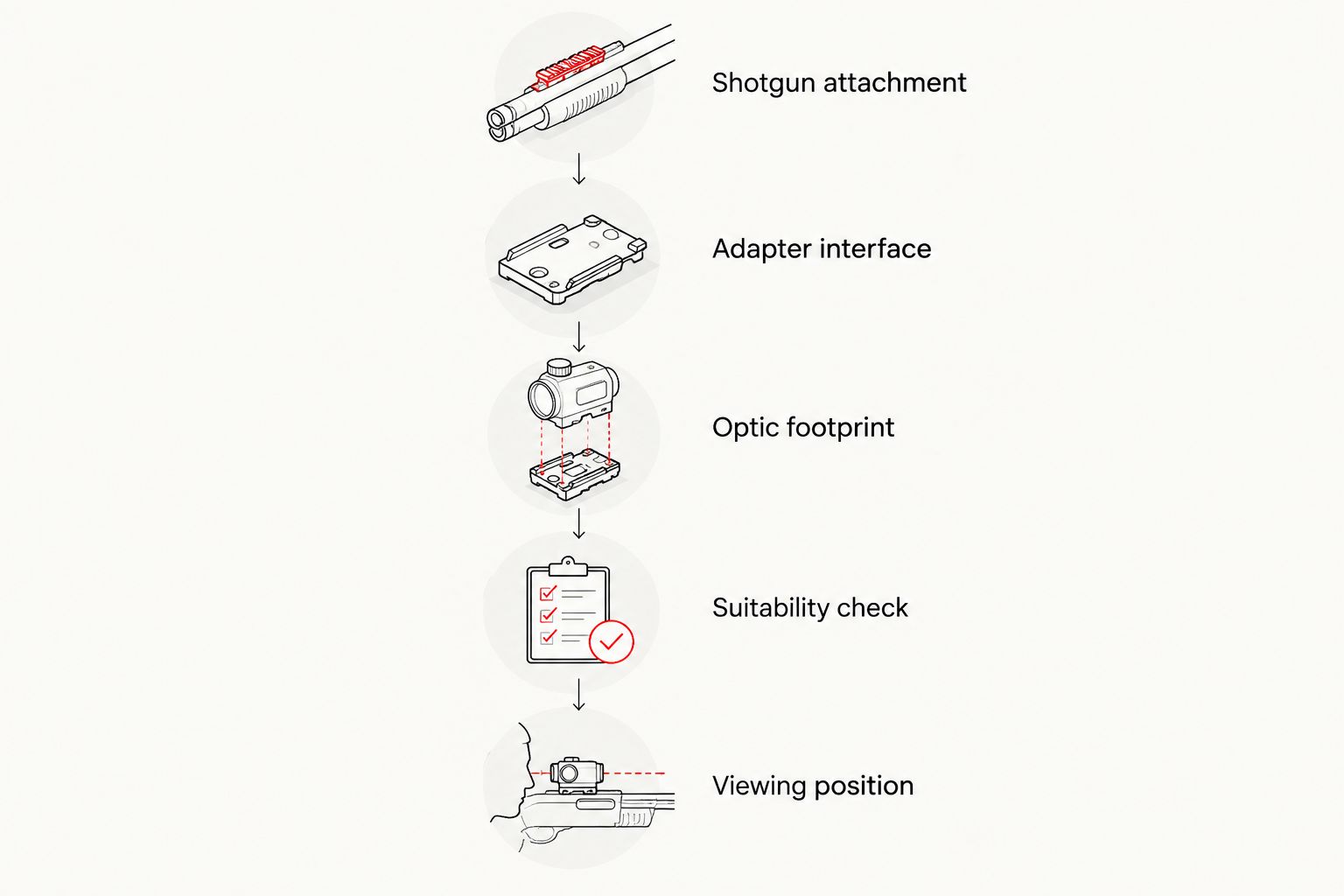
For a 2026 shortlist, keep the documentation for all components together. The decision concerns the full assembly, not separate claims copied from unrelated product listings.
Compare the documented specifications
Check the exact model's reticle, footprint and mounting requirements before choosing.
How we ranked
The ranking prioritises mounting compatibility and documented suitability, then separates buyers by display preference. Single-dot sights occupy the simplicity slot; multi-reticle sights occupy the display-choice slot; retaining an existing compatible optic occupies the replacement-avoidance slot.
This is a criteria-based buying guide, not a recoil-test leaderboard. Osight shotgun red dot selection starts with the exact model and complete mount, not a range-wide assumption. No entry gains a recommendation from an unspecified durability result or an unsupported claim about its footprint.
Which shotgun red dot should you choose?
Choose a mount-matched single-dot sight as the default. Choose a multi-reticle sight when you specifically want its documented display options. Keep an existing sight when it already meets the same suitability, compatibility and condition requirements.
The best red dot sight for shotgun use in 2026 is the one that passes those checks and matches your display preference. A longer feature list cannot compensate for an unresolved mounting interface.
Before ordering, confirm the exact model designation, optic footprint, intended application and complete mounting arrangement. If any of those remains unresolved, hold the purchase rather than substituting a guess.
FAQ
What's the best red dot sight for a shotgun in 2026?
A mount-matched single-dot sight is the default choice for a simple aiming display, provided its documented suitability matches the application. Choose a multi-reticle sight when you specifically want its supported display options.
Can I use a pistol red dot on a shotgun?
A pistol-oriented red dot is not automatically suitable for a shotgun. Check the exact optic's intended application, the shotgun attachment and any intervening mount or adapter.
Is a multi-reticle sight better than a single-dot sight?
A multi-reticle sight is better for a buyer who wants alternative aiming displays; a single-dot sight suits a buyer who wants one simple reference. Neither format establishes mounting compatibility or recoil suitability.
What does MOA mean on a red dot sight?
MOA means minute of angle and describes angular size. At 100 metres, 1 MOA spans approximately 29 mm; it does not describe the optic's window size.
Does a circle reticle show my shotgun's pattern?
No. A circle reticle is an aiming display, not a measurement of the pattern produced by your firearm and load. Check actual pattern performance separately at a suitable shooting range.
Do Osight series names confirm shotgun compatibility?
No. SE Series, K Series and XE AMRS names do not by themselves establish shotgun compatibility. Check the exact model's documentation and the complete mounting arrangement.
Should I replace a red dot that already fits?
Keep an existing optic when its documented suitability, condition and complete mounting arrangement meet your requirements. Replace it to solve an identified limitation, not solely to add features.
One last thing
An optic footprint is only one interface in the assembly. The receiver attachment, adapter and optic can each require a separate compatibility check. Matching the last component does not validate the components beneath it.
Put fit before reticle preference. That is the shortest route to a defensible purchase decision.