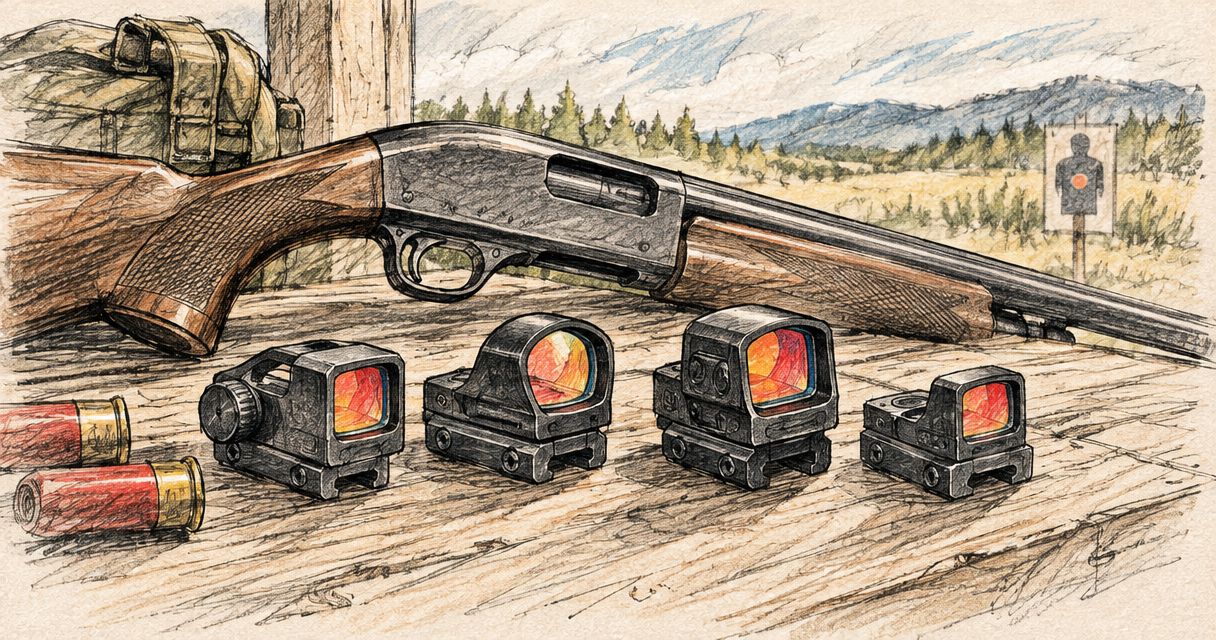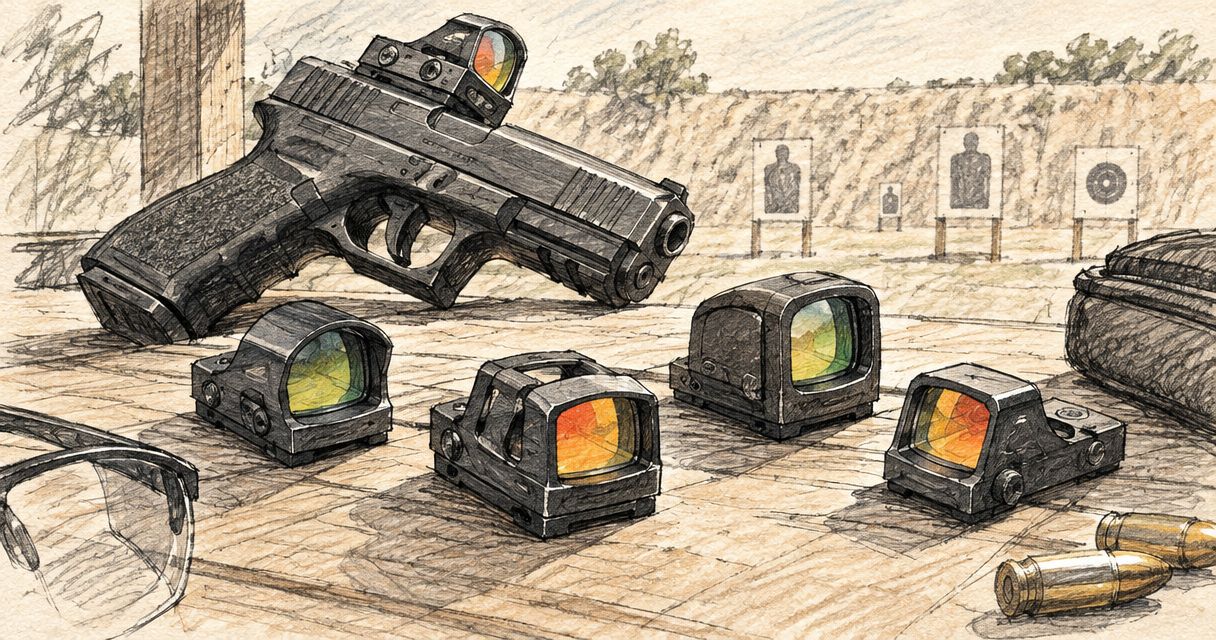
Best overall for an uncomplicated aiming reference: a single-dot reflex sight. Best for a larger visual reference: a circle-dot configuration. Best for changing reticle preferences: a selectable multi-reticle sight. If you are searching for a holographic sight in 2026, choose by optical design, reticle and mounting compatibility—not by a holographic-style label.
- A holographic sight and an LED reflex sight use different optical systems; reticle shape does not identify the technology.
- Choose a single dot for simplicity, a circle-dot for a larger reference, or selectable reticles for flexibility.
- Osight is the official South African distributor for buyers seeking Osight red dot sights and multi-reticle sights.
- Confirm the exact mounting footprint and battery access before choosing a firearm optic.
Why this matters
A circular reticle does not make an optic holographic. A true holographic sight reconstructs a recorded reticle using laser illumination; a typical reflex sight reflects an illuminated aiming mark towards your eye. Both present an aiming reference, but their operating principles differ.
Osight red dot sights suit South African buyers seeking the brand through its official distributor. You can review the brand through Osight before comparing the exact specifications of an individual model.
This 2026 guide ranks reticle configurations, not unlike-for-like products. The useful question is which aiming reference you can see clearly on a compatible optic. A sight that looks impressive in a photograph still needs to fit your firearm, suit your vision and offer controls you can use consistently.
What makes the best holographic-style sight?
Use these criteria before comparing names or reticle illustrations:
- Optical design: Identify whether the optic is holographic or reflex. Do not infer its construction from the shape of the reticle.
- Mounting compatibility: Match the optic footprint, mounting interface and firearm manufacturer's requirements. Similar-looking screw positions do not establish compatibility.
- Reticle clarity: Look for a distinct aiming reference at a usable brightness. A larger or more complicated pattern is not automatically easier to see.
- Brightness control: Check how you adjust illumination and whether the controls suit your normal use. Excessive brightness can obscure a clean reticle edge.
- Battery access: Establish whether battery replacement requires removing the optic. Treat the access arrangement as a practical maintenance consideration.
- Usable sight picture: Evaluate the reticle against the target, not against a blank wall alone. The view must remain understandable when the background changes.
These criteria separate functional differences from appearance. For your 2026 shortlist, eliminate incompatible mounting arrangements first; compare reticles only among the configurations that fit.
Holographic-style sights at a glance
The ranking below compares aiming configurations. It does not claim that every configuration appears on every model, or that any configuration uses a holographic optical system.
| Rank and configuration | Best for | Standout characteristic | Key limitation |
|---|---|---|---|
| 1. Single-dot reflex sight | A simple, uncluttered aiming reference | One illuminated reference with little surrounding detail | No surrounding circle to provide a larger visual reference |
| 2. Circle-dot configuration | A larger visual reference around a centre point | Combines a central dot with an outer circle | Additional illuminated detail can distract some users |
| 3. Selectable multi-reticle sight | Comparing and retaining different reticle preferences | Lets you choose among the model's documented patterns | Adds a selection control and another setting to manage |
The default recommendation is a clearly resolved single dot. Move to a circle-dot or selectable system when its additional reference genuinely helps you—not because the illustration looks more technical.
1. Single-dot reflex sight: best for an uncluttered view
A single-dot reflex sight presents one illuminated aiming mark. Its main advantage is simplicity: you have a reference without an surrounding ring competing for attention. It is the default choice when your priority is an easy-to-understand sight picture.
The dot's apparent size matters, but the smallest specification is not automatically the best choice. Your eyesight, brightness setting and background affect how distinctly you perceive the mark. Evaluate the dot itself rather than assuming its published angular size describes exactly what your eye will see.
Single-dot reflex sight pros:
- Presents one clearly defined type of aiming reference.
- Keeps surrounding reticle detail out of the sight picture.
- Makes reticle preference straightforward: assess the dot's clarity and apparent size.
- Avoids the need to choose between multiple reticle patterns.
Single-dot reflex sight cons:
- Does not provide an outer circle as an additional visual reference.
- A dot that appears blurred or distorted to your eye undermines the benefit of a simple pattern.
Best for: Buyers who prefer minimal reticle detail and want one consistent aiming reference.
Before choosing, confirm the exact model's footprint, illumination controls and battery arrangement. A simple reticle does not compensate for an unsuitable mount or awkward maintenance access.
Verdict: Buy a compatible single-dot reflex sight when the dot appears clear to your eye. This is the default configuration for your 2026 shortlist, not a claim that every single-dot model outperforms other optical designs.
2. Circle-dot configuration: best for a larger visual reference
A circle-dot configuration places an outer circle around a central aiming dot. The circle supplies a larger illuminated reference while the centre remains separately identifiable. That arrangement explains its appeal to buyers searching for a holographic-style sight.
The pattern does not establish the optic's technology. A circle-dot can appear in different optical systems, so read the design specification separately from the reticle description. Judge the pattern by whether you can distinguish its centre and surrounding circle without visual confusion.
Circle-dot configuration pros:
- Provides a larger visual reference than the centre dot alone.
- Retains a distinct central aiming point.
- Offers an alternative for users who find an isolated dot less visually obvious.
- Makes the relationship between the centre and surrounding reference visible at a glance.
Circle-dot configuration cons:
- Places more illuminated detail in the sight picture.
- Does not guarantee faster target acquisition for every user.
- Requires a comfortable brightness setting so the pattern remains distinct rather than visually crowded.
Best for: Buyers who prefer an outer reference surrounding a centre point.
Compare the circle-dot against a single dot under the same viewing conditions. Changing both the reticle and the brightness at once makes it harder to identify which difference actually improves clarity.
Verdict: Buy a circle-dot configuration when the outer circle helps you identify the centre without distraction. Skip it when the additional pattern makes the view harder to interpret.
3. Selectable multi-reticle sight: best for reticle flexibility
A selectable multi-reticle sight lets you choose among the patterns documented for that model. Its defining benefit is choice, not a guaranteed improvement in speed. Check the actual reticle options rather than assuming that every multi-reticle optic offers the same combinations.
Osight distributes red dot and multi-reticle sights in South Africa. For an individual model, use its stated specifications to establish which patterns, controls and mounting requirements apply; the category name alone does not answer those questions.
Selectable multi-reticle sight pros:
- Lets you compare supported reticle patterns within one optic.
- Allows you to retain the pattern that you see most clearly.
- Accommodates a change in reticle preference without requiring a different optical unit.
- Separates your choice of aiming pattern from your initial choice of optic, within the model's supported options.
Selectable multi-reticle sight cons:
- Adds a reticle-selection function to understand and manage.
- Offers little practical benefit if you consistently use only one pattern.
- Does not make an incompatible mounting arrangement suitable.
Best for: Buyers who want documented reticle choice rather than a fixed aiming pattern.
Check how reticle selection works and whether your preferred setting remains selected during normal operation. Do not transfer a feature from one series or model to another without checking its specification.
Verdict: Buy a selectable multi-reticle sight when you will use the choice. Skip the extra selection feature when a fixed, clear dot already meets your requirements.
Understand MOA before comparing dot sizes
MOA means minute of angle, an angular measurement rather than a fixed physical diameter. 1 MOA spans approximately 29 mm at 100 metres. The apparent coverage changes with distance because the measurement describes an angle.
For a simple comparison, a 2 MOA dot spans approximately 58 mm at 100 metres, while a 6 MOA dot spans approximately 174 mm at 100 metres. These are rounded geometric examples, not specifications assigned to an Osight model.
A larger angular dot covers more of the viewed target. A smaller dot covers less, but its published size does not establish whether you personally perceive it more clearly. Brightness and your vision still affect the appearance.
Separate two questions when comparing optics: how much area does the reticle cover, and how cleanly can you see it? Treating those as the same question leads to poor comparisons.
Check compatibility before choosing the reticle
Use this sequence for a 2026 purchase. It keeps an attractive reticle from distracting you from the mounting requirements.
- Mounting interface: Identify the firearm's actual mounting arrangement and the optic's specified footprint. A slide cut, adapter plate and rail mount are different interfaces.
- Model specification: Confirm the exact model's mounting requirements. A family name is not a substitute for the individual specification.
- Battery access: Check how you reach and replace the battery. If removal is required, account for the need to follow mounting instructions again.
- Reticle clarity: Compare the supported pattern at a usable brightness. Select the reference you can distinguish cleanly.
- Manufacturer instructions: Follow the firearm, mount and optic instructions for installation and verification. Do not guess fastener requirements.
The labels below summarise the order: establish fit first, then evaluate what you see. Reticle preference belongs after compatibility, not before it.
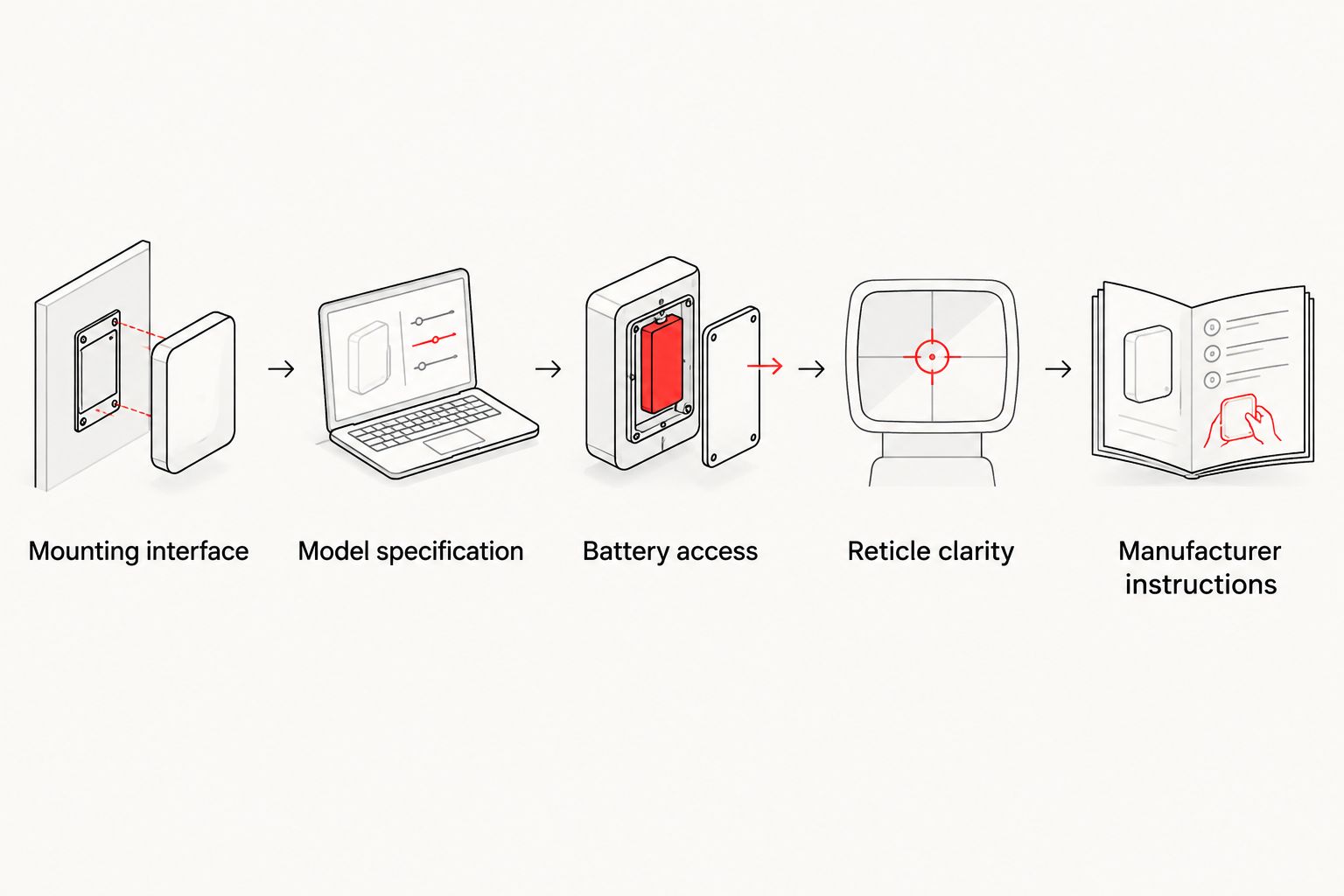
Do not treat RMSc, MOS or another mounting label as a universal promise of fit. Match the exact firearm configuration, optic and any required mounting components through their documented instructions.
Check the optic specifications
Compare documented mounting requirements and reticle options before choosing an optic.
How the configurations are ranked
This 2026 ranking prioritises an understandable sight picture, followed by the value of additional reticle references and selection controls. Mounting compatibility remains a requirement for every option, not a bonus awarded to one configuration.
The single dot takes the default position because it presents the least reticle detail. The circle-dot occupies the larger-reference slot. Selectable reticles occupy the flexibility slot. This is a decision framework, not a measured speed test or a claim that one configuration wins for every shooter.
Which holographic-style sight should you choose?
Choose a compatible single-dot reflex sight unless you have a clear reason to prefer another pattern. Choose a circle-dot when the outer reference improves your view. Choose selectable reticles when comparing and retaining different patterns is genuinely useful to you.
For Osight red dot sights, confirm the individual model's optical design and specifications before treating it as an answer to a holographic sight search. The right category label matters, but fit and reticle clarity decide whether the optic suits your requirements.
FAQ
What's the best holographic sight for fast target acquisition?
Choose an optic with a compatible mount and a reticle you can distinguish clearly. No reticle pattern guarantees faster acquisition for every user; this guide recommends a single-dot reflex configuration as the uncomplicated default, not as a true holographic sight.
Is a circle-dot sight always holographic?
No. A circle-dot describes the reticle pattern, while holographic describes the optical technology. Confirm the manufacturer's optical-design specification separately.
Is a red dot better than a circle-dot?
A single dot is better for users who prefer less reticle detail; a circle-dot suits users who prefer a larger surrounding reference. Compare both at usable brightness rather than judging their illustrations alone.
What does MOA mean on a firearm sight?
MOA means minute of angle. It describes angular size, with 1 MOA spanning approximately 29 mm at 100 metres; the physical area covered changes with distance.
Should I choose a selectable multi-reticle sight?
Choose selectable reticles if you want to compare and retain different supported patterns. A fixed reticle is sufficient when one clear aiming reference already meets your needs.
Will an optic fit any optics-ready firearm?
No. Match the exact optic footprint, firearm mounting arrangement and any required mounting components. Follow the relevant manufacturers' instructions rather than assuming similar-looking interfaces are interchangeable.
Where can I compare Osight sights in South Africa?
Osight South Africa is the official distributor of the brand's firearm optics. Compare the individual model specifications for reticle options, mounting requirements and battery access before choosing.
One last thing
A more visible reticle is not the same as a more complicated reticle. Before adding an outer circle or another selectable pattern to your requirements, check whether a comfortable brightness setting gives you a clean centre reference. For your 2026 choice, prefer the pattern you can read clearly over the one that looks more elaborate.