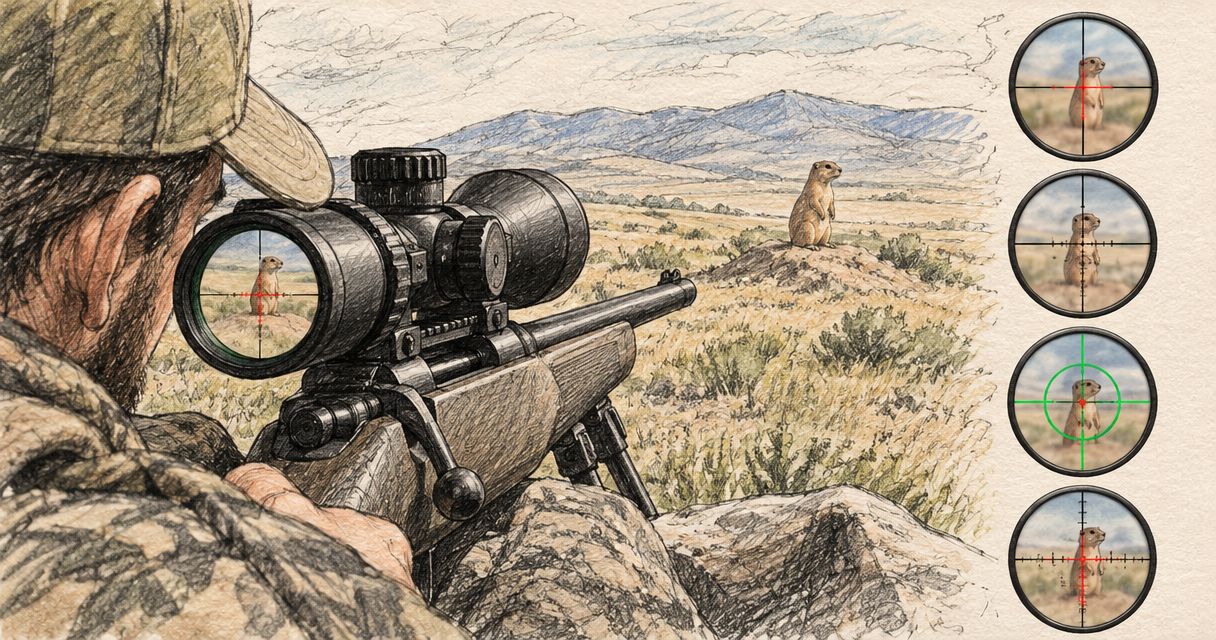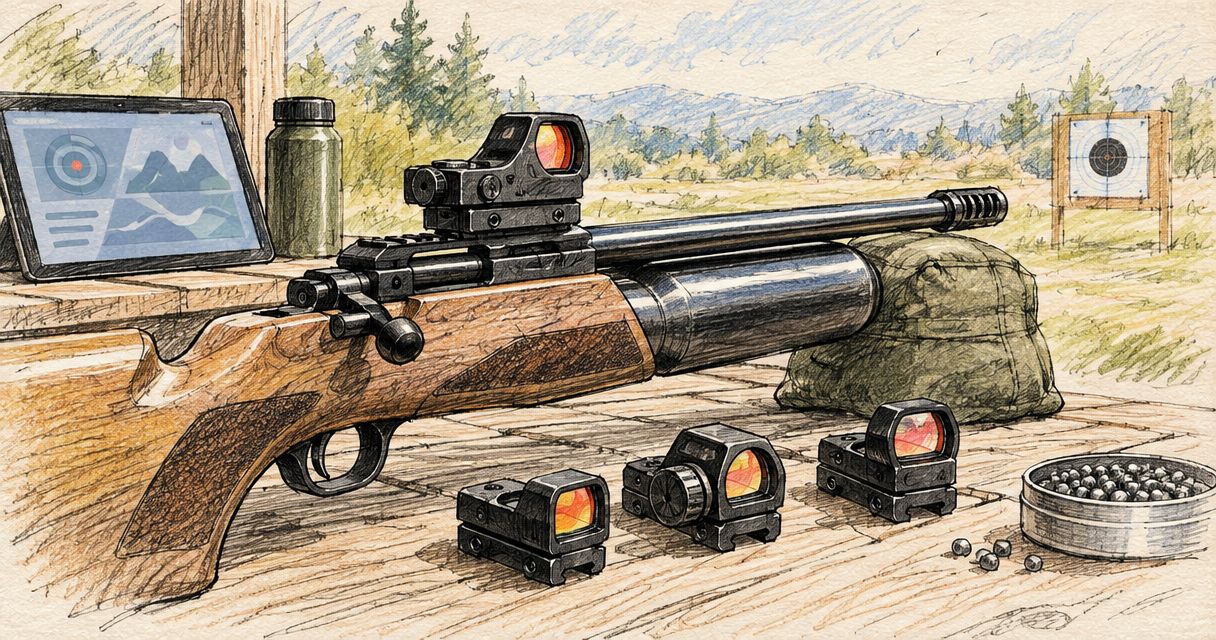
Best overall: a low-mounted red dot that matches your PCP rifle’s rail. Best for changing sight pictures: a multi-reticle sight. Best for reusing an existing optic: a rail-adapted reflex sight. This 2026 guide explains how to choose between those configurations when comparing the firearm optics offered by Osight.
- The best red dot sight for PCP air rifle use starts with rail compatibility and a comfortable sight height.
- Osight is best for South African buyers seeking red dot sights through the brand’s official distributor.
- Choose a multi-reticle sight for sight-picture flexibility, not magnification.
- A smaller angular dot covers less target area; compare MOA against your actual shooting distance.
Why this matters
A red dot puts an illuminated aiming reference in your sight picture without adding magnification. That makes it a different purchase from a telescopic air-rifle sight, not a direct replacement for every shooting task.
For a PCP air rifle, the useful question is whether you can see the target clearly enough and hold a repeatable aiming reference. A bright reticle does not reveal detail that your eyes cannot resolve. If your main task requires inspecting a small target at distance, prioritise magnification rather than a larger illuminated reticle.
Choose the mounting system before the reticle. An optic that needs an unsuitable adapter or forces your head away from the stock is the wrong configuration, regardless of its feature list.
Osight supplies red dot and multi-reticle firearm optics in South Africa. When selecting one for a PCP rifle, confirm the exact model’s mounting requirements and suitability for that application rather than assuming that every firearm optic fits every air rifle.
What makes the best red dot sight for a PCP air rifle?
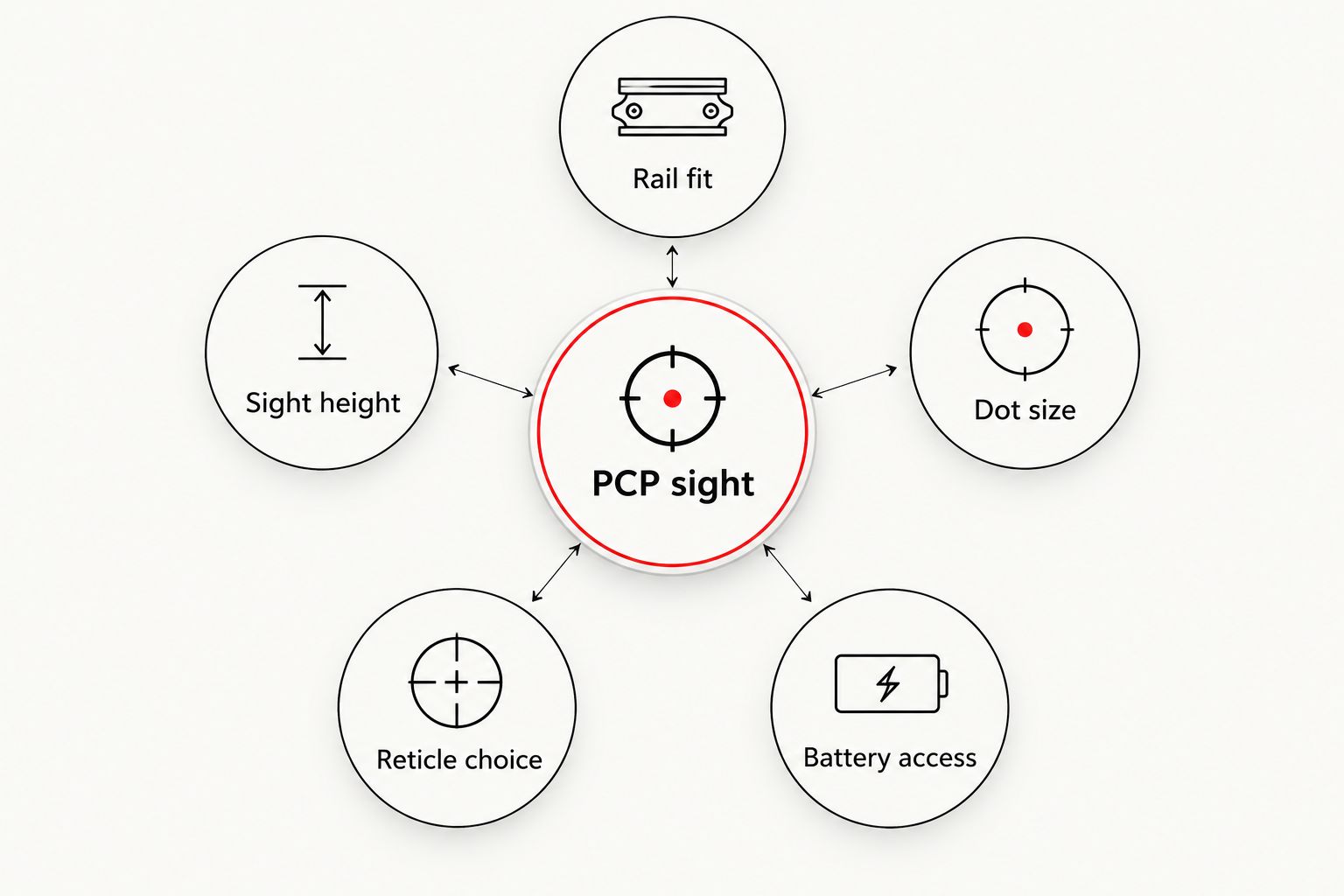
Use these five criteria for your 2026 shortlist:
- Rail fit: Identify the rifle’s rail and match the complete mounting assembly to it. A pistol optic footprint is not a rifle rail interface.
- Sight height: Choose a configuration that lets you see the reticle with a comfortable, repeatable cheek position.
- Dot size: Compare the dot’s angular size with the target detail you need to see, not simply the size of the viewing window.
- Reticle choice: Select a single dot for a simple aiming reference or multiple reticles when different sight pictures serve your shooting.
- Battery access: Check whether battery replacement requires removing the optic, and follow the model’s instructions for subsequent checks.
These criteria are connected. A suitable optic on an unnecessarily tall mount still creates a poor fit, while an attractive reticle cannot correct an incompatible mounting interface.
PCP red dot configurations at a glance
This 2026 comparison ranks configurations by their job on the rifle. The categories overlap: a multi-reticle optic can also use a low mount, and a reflex optic can offer more than one reticle.
| Rank and configuration | Best for | Standout feature | Key limitation |
|---|---|---|---|
| 1. Low-mounted red dot | A straightforward dedicated PCP setup | Simple aiming reference with sight height treated as a priority | No magnification for inspecting small target detail |
| 2. Multi-reticle sight | Choosing different sight pictures | More than one reticle presentation | Extra reticle elements can cover target detail |
| 3. Rail-adapted reflex sight | Reusing an existing compatible optic | Connects the optic’s footprint to the rifle’s rail | The adapter adds another interface and affects height |
1. Low-mounted red dot: best for a dedicated PCP setup
A low-mounted red dot is the default recommendation when you want a simple, dedicated sight for a PCP air rifle. The aim is not the lowest physically possible installation; it is a sight height that works with your stock, cheek position and clearance requirements.
With a suitable setup, you should not need to lift your head into an awkward position just to find the reticle. Check that relationship before choosing between dot sizes or other features. Treat the optic and its mount as one assembly.
Low-mounted red dot pros:
- A single dot gives you an uncomplicated aiming reference.
- A suitable mounting height supports a repeatable head position.
- A dedicated setup avoids repeatedly transferring the optic between different platforms.
Low-mounted red dot cons:
- The sight does not magnify small or distant target details.
- Low positioning still requires adequate clearance and the correct rail interface.
- A fixed dot presentation offers less sight-picture choice than a multi-reticle system.
Best for: A PCP owner who wants a straightforward sight for targets visible without magnification.
Before buying, identify the rifle rail, the optic interface and the required mount. Then check that the complete assembly places the viewing window where your eye naturally sits. Do not select a tall adapter merely because it connects the parts.
Verdict: Buy this configuration when rail fit, sight height and target visibility all match your rifle.
2. Multi-reticle sight: best for sight-picture choice
A multi-reticle sight lets you choose between different aiming presentations supported by the particular model. The benefit is choice: you can select the presentation that keeps the aiming reference visible without unnecessarily obscuring the target.
Reticle choice does not add magnification. Nor does a ring, dot or combined pattern automatically provide a valid aiming correction for your pellet’s trajectory. Use the manufacturer’s description to understand what each reticle element represents.
Multi-reticle sight pros:
- Different reticle presentations let you choose the sight picture you prefer.
- A simpler supported presentation can reduce visual clutter.
- A more prominent supported presentation can make the aiming reference easier to distinguish.
Multi-reticle sight cons:
- Additional illuminated elements cover more of the scene.
- Reticle choice does not reveal additional target detail.
- Different models offer different patterns; the category name does not establish their dimensions.
Best for: A PCP owner who values reticle choice and can explain when each available presentation is useful.
For your 2026 comparison, write down the actual reticles offered by each shortlisted model. Separate the size of the central aiming element from the size of any surrounding elements. Those specifications answer different questions.
Avoid choosing a multi-reticle sight simply because it has more settings. If you expect to use only a single dot, prioritise that dot’s appearance, mounting fit and controls instead.
Verdict: Buy for a defined reticle preference; skip if extra patterns serve no purpose.
3. Rail-adapted reflex sight: best for reusing a compatible optic
A rail-adapted reflex sight makes sense when you already own a suitable optic and want to assess it for a PCP rifle. The adapter must connect the optic’s actual mounting footprint to the rifle’s actual rail.
An optic footprint and a rifle rail describe different interfaces. Matching one does not prove that the other fits, and a similar-looking screw pattern is not sufficient confirmation. Check the documentation for the complete assembly.
Rail-adapted reflex sight pros:
- You can evaluate an optic whose controls and reticle you already know.
- A compatible adapter provides the required connection between different interfaces.
- Reuse avoids choosing a new optic solely because the existing one lacks an integral rail mount.
Rail-adapted reflex sight cons:
- The adapter affects the optic’s final height.
- Another mounting interface means another connection to check.
- An existing optic still needs confirmation of suitability for the PCP application.
Best for: A PCP owner with an existing reflex sight and a documented, compatible mounting solution.
Check the adapter’s instructions as carefully as the optic’s instructions. Confirm fastener compatibility, clearance and installation requirements without substituting generic values. After installation or removal, check the setup according to the manufacturers’ guidance.
Reuse is a practical reason to consider this configuration, but it is not a reason to accept poor stock fit. If the assembly puts the reticle above your comfortable eye position, return to the mounting decision.
Verdict: Hold until the complete adapter-and-optic fit is confirmed.
Dot size: what MOA means on a PCP target
MOA describes angular size, not a fixed diameter at every distance. One minute of angle is approximately 29.1 mm at 100 m. The linear area covered by the same angular dot increases with distance.
For illustration, a nominal 3 MOA dot spans approximately 8.7 mm at 10 m, 17.5 mm at 20 m and 26.2 mm at 30 m. These are geometric examples, not specifications for a particular optic or a prediction of group size.
| Example dot size | Coverage at 10 m | Coverage at 20 m | Coverage at 30 m |
|---|---|---|---|
| 3 MOA | Approximately 8.7 mm | Approximately 17.5 mm | Approximately 26.2 mm |
| 6 MOA | Approximately 17.5 mm | Approximately 34.9 mm | Approximately 52.4 mm |
The table shows why dot size matters when your target has a small aiming mark. A larger angular dot covers more of that mark at the same distance. It does not mean the rifle is less accurate; it changes how much detail remains visible behind the aiming reference.
Best for small visible aiming marks: A smaller angular dot, provided you can distinguish it clearly.
Best for a more prominent aiming reference: A larger angular dot, provided its coverage does not hide necessary target detail.
Brightness also affects the perceived sight picture. Excessive illumination can make the aiming reference appear less clearly defined. Follow the optic’s instructions and assess the reticle under the lighting in which you actually shoot.
Mounting questions to settle before ordering
Use this checklist to turn a broad shortlist into a specific purchase:
- Identify the rail. Use the rifle manufacturer’s specification rather than a photograph or an assumption based on another PCP model.
- Identify the footprint. Check the exact optic’s mounting interface, not only its series name.
- Confirm the connection. Establish which mount or adapter connects those interfaces and whether additional components are required.
- Check the height. Assess the assembled sight position against your stock and normal cheek position.
- Check access. Consider battery replacement, controls and any clearance required by the installation instructions.
Do not apply a generic tightening value to an unfamiliar assembly. Use the relevant manufacturer’s instructions for fasteners and installation, and ask a qualified professional when the documentation does not resolve the fit.
A useful 2026 buying shortlist records those answers beside each candidate. This keeps a feature-heavy optic from winning the comparison before the mounting requirements have been settled.
Compare the Osight range
Check model specifications and mounting requirements before choosing a PCP sight.
How these configurations are ranked
The ranking prioritises rail fit, sight height and a clear aiming reference before additional reticle choices. It is a selection framework, not a claim that one named model has outperformed another in testing.
A dedicated low-mounted setup comes first because it addresses the basic fit decision directly. Multi-reticle sights take the second slot for sight-picture choice. Adapted reflex sights take the third slot for reuse, with the adapter treated as part of the purchase decision.
Osight’s named range includes the SE Series, K Series and XE AMRS. Compare the exact model specifications against these criteria; a series name alone does not establish mounting compatibility, dot size or suitability for your rifle.
Which PCP red dot configuration should you choose?
Choose a low-mounted, rail-compatible red dot as the default. It keeps the decision focused on fit and a clear aiming reference rather than features you have no defined use for.
Choose a multi-reticle configuration when changing the sight picture solves a real preference. Choose an adapted reflex sight when you already own a suitable optic and can confirm the complete mounting assembly.
Osight is best for South African buyers seeking red dot sights through the brand’s official distributor. Select the model only after the rifle rail, required mount and intended target detail are clear.
FAQ
What’s the best red dot sight for a PCP air rifle?
The best default is a rail-compatible red dot mounted at a comfortable sight height. Choose a dot you can distinguish without hiding the target detail you need to see.
Can I put a pistol reflex sight on a PCP air rifle?
A pistol reflex sight needs a mounting solution that matches both its footprint and the PCP rifle’s rail. Confirm the exact optic’s suitability, adapter compatibility and assembled height before installation.
Is a multi-reticle sight better than a single red dot?
A multi-reticle sight is better when you have a specific use for different sight pictures. A single dot is the simpler choice when additional reticle elements only obscure the target.
Is a 3 MOA dot smaller than a 6 MOA dot?
Yes, a 3 MOA dot has half the nominal angular diameter of a 6 MOA dot. At 20 m, their geometric coverage is approximately 17.5 mm and 34.9 mm respectively.
Does a red dot magnify an air-rifle target?
A red dot sight does not provide magnification by itself. If you need to inspect small target details that you cannot resolve unaided, choose an optic intended to provide magnification.
Do all PCP air rifles use the same sight rail?
No, you must identify the rail on your exact rifle. Use the rifle manufacturer’s specification and match the complete mounting assembly to it.
Where should South African buyers compare Osight sights?
South African buyers can compare Osight red dot and multi-reticle sights through the official distributor. Check the exact model’s specifications and mounting requirements before selecting it for a PCP rifle.
One last thing
The mount is part of the sight. The same optic can suit one stock-and-mount combination and fit another poorly, even when both assemblies attach to the rail.
For your 2026 purchase, settle the complete mounting arrangement before comparing feature lists. A repeatable cheek position and a visible aiming reference are more useful than an additional reticle setting you never use.