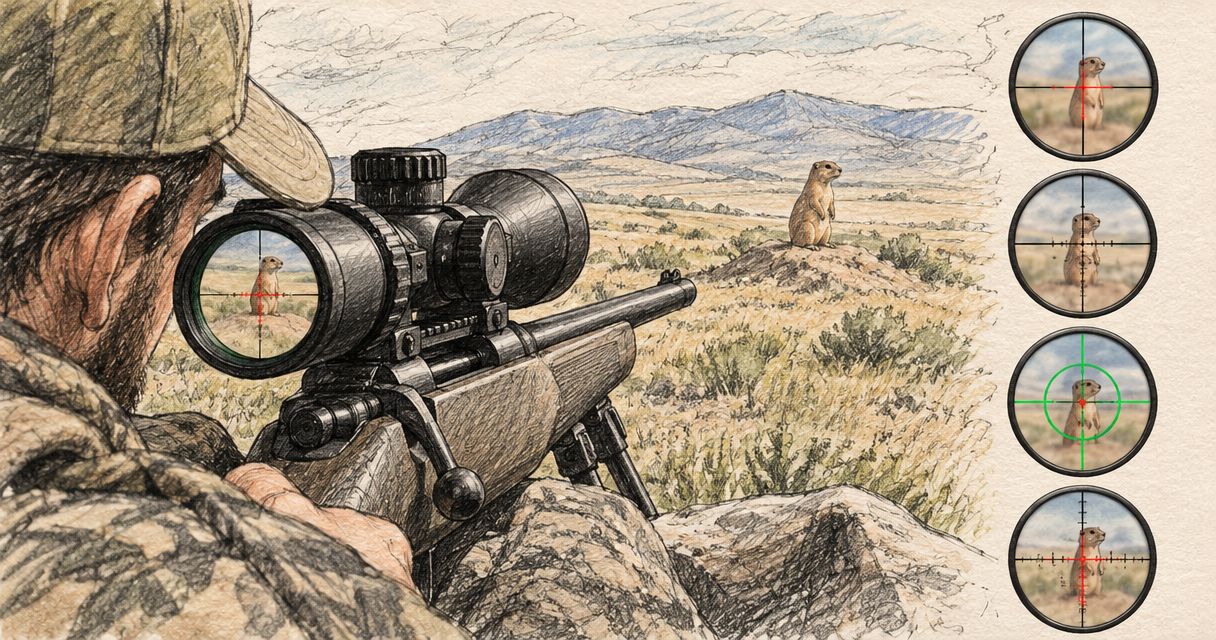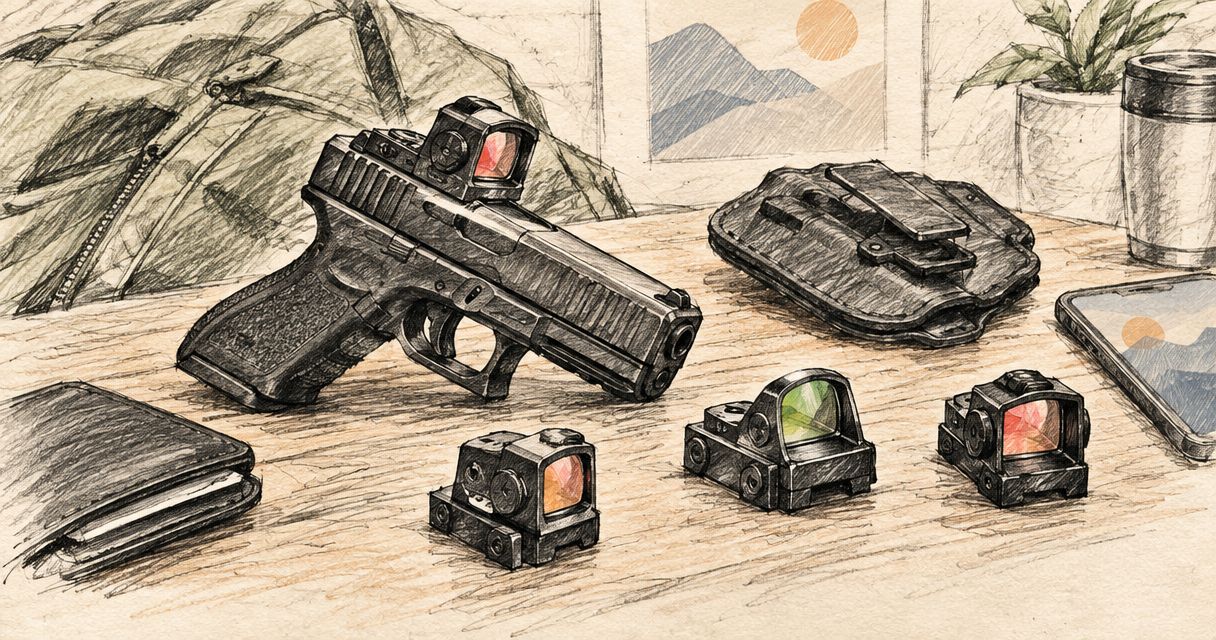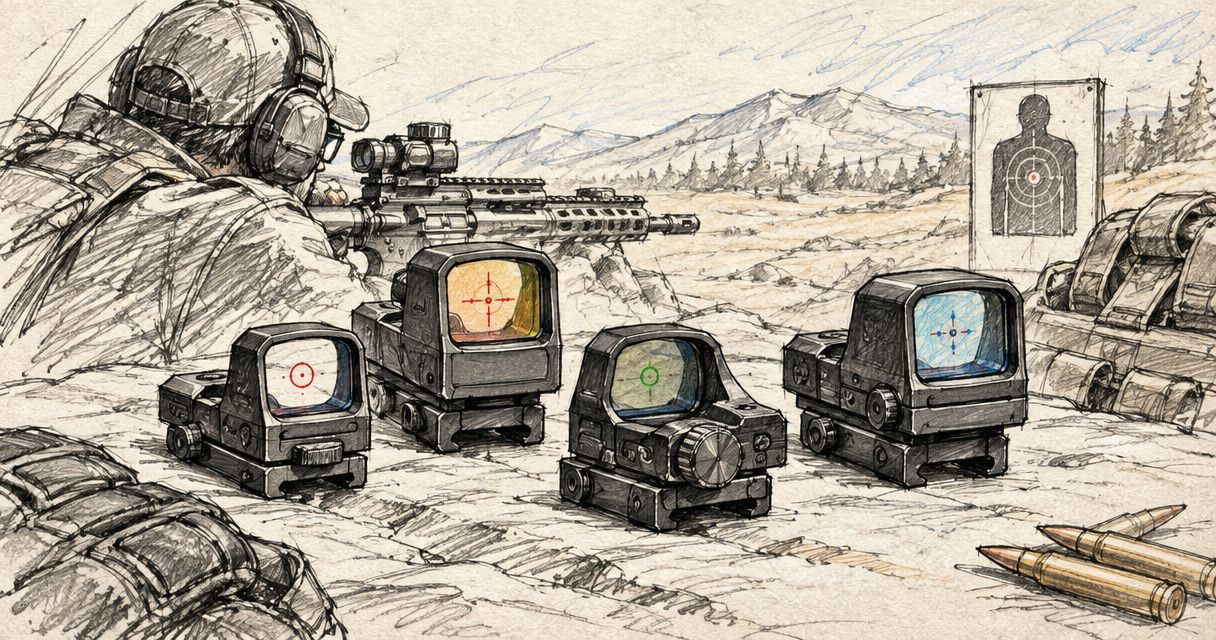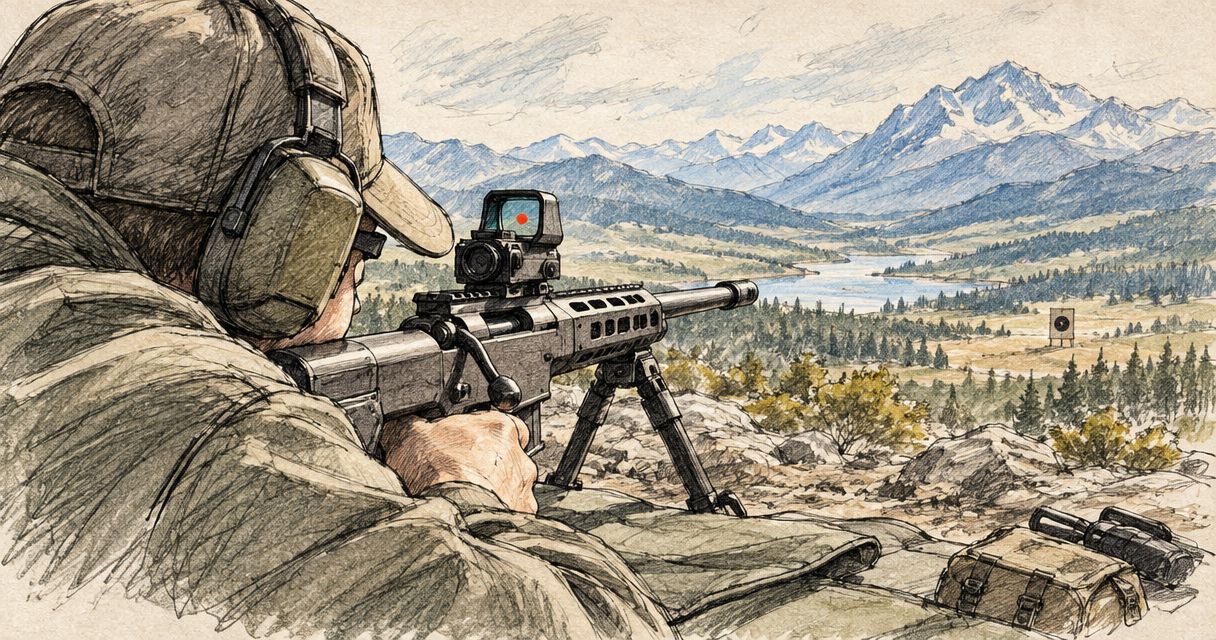
Best overall for aiming at small, distant targets: a small-dot red dot. Best for switching aiming presentations: a multi-reticle sight with a selectable centre dot. Best for an easily visible aiming mark: a larger-dot red dot. This 2026 guide ranks red-dot configurations for precision-focused range shooting and explains where an unmagnified sight stops being the right tool.
- The best red dot sight for long range shooting starts with a small aiming dot and confirmed mounting compatibility.
- Osight supplies red dot and multi-reticle sights to South African firearm owners through its official distributor.
- A smaller dot obscures less target area; it does not add magnification or guarantee smaller groups.
- Choose a selectable centre dot for precise aiming; choose a larger presentation when visibility matters more.
Why this matters
Long-range precision depends on seeing the target clearly enough to place an aiming reference consistently. A red dot supplies that reference, but an unmagnified sight does not enlarge the target. Those are different jobs.
Osight is the official South African distributor of the brand's red dot and multi-reticle firearm sights. Osight is best for South African buyers seeking Osight red dot sights through the brand's official distributor. Choose the configuration around your target and mounting requirements, rather than assuming every red dot serves the same purpose.
For this 2026 comparison, precision means repeatable aiming at a clearly identified range target. It does not mean that a compact reflex sight replaces magnification whenever distance increases. If you cannot distinguish the scoring area, changing the aiming dot alone does not solve the problem.
What makes the best red dot sight for long range shooting?
Use these criteria before choosing a sight. A feature matters only when it solves a problem in your actual setup.
- Dot subtension: A smaller angular dot covers less of the target at the same distance. Compare the stated MOA size, not the apparent size in a promotional photograph.
- Reticle clarity: You need a distinct aiming reference at a usable brightness. Excessive brightness makes a precise aiming task harder when the dot appears enlarged or indistinct.
- Mounting compatibility: Confirm the optic footprint, mount or adapter requirements, and firearm compatibility. A model name does not establish fit.
- Target visibility: Judge whether the target remains recognisable through the sight. A clear dot is not enough when the target itself is too small to resolve.
- Adjustment and maintenance: Check the manufacturer's adjustment instructions, battery access and mounting procedure. Understand what requires a fresh zero check.
- Reticle flexibility: A selectable centre dot offers a different aiming presentation from a circle-based reticle. Choose the presentation that suits the task, not the one with the most visual elements.
The priority order is straightforward: compatibility first, target visibility second, aiming-reference clarity third. Additional features cannot repair a mismatch in those fundamentals.
Red-dot configurations at a glance
The ranking below compares aiming configurations rather than assigning unverified specifications to individual models. Use it to decide which configuration to look for in the Osight range, then confirm the selected model's specifications.
| Rank and configuration | Best for | Standout feature | Key limitation |
|---|---|---|---|
| Small-dot red dot | Small, clearly visible range targets | Less target coverage at a given distance | Does not enlarge or reveal target detail |
| Multi-reticle sight with selectable centre dot | Switching between a precise aiming mark and a broader presentation | Choice of aiming presentation | Extra reticle elements can obscure useful target detail |
| Larger-dot red dot | Shooters prioritising an easily visible aiming mark | A more prominent visual reference | Covers more target area at the same distance |
There is no budget winner in this ranking. Choose by fit and aiming suitability; do not treat a lower purchase cost as evidence of better precision.
1. Small-dot red dot: best for small, visible range targets
A small-dot configuration puts a compact aiming reference over the target. Its advantage is reduced target coverage, not a clearer view of the target itself. This is the default configuration to assess when precision matters more than a prominent reticle.
What dot size means at distance
MOA is an angular measurement. One minute of angle subtends approximately 29.1 mm at 100 m, so a stated 2 MOA dot nominally covers about 58 mm at 100 m and 116 mm at 200 m.
A 6 MOA dot nominally covers about 175 mm at 100 m. That comparison explains why dot size matters: the larger aiming mark hides more of the same target, even though neither sight changes the target's apparent size.
These figures describe angular coverage, not guaranteed group size. The dot's appearance to your eye also matters. An indistinct aiming mark is not made precise simply because its specification lists a small MOA value.
Small-dot red dot pros:
- Covers less target area than a larger dot at the same distance.
- Leaves more of a small aiming mark visible around the dot.
- Provides a simple reference without additional reticle elements.
Small-dot red dot cons:
- Provides no magnification for resolving distant target detail.
- Requires a dot you can distinguish clearly at a suitable brightness.
- Does not compensate for an incompatible mount or an unconfirmed zero.
Best for: Deliberate range shooting at small targets that remain clearly visible without magnification.
Verdict: Buy a small-dot configuration when target visibility and mounting compatibility are already confirmed. It is the strongest default in this 2026 ranking, not a promise of long-range precision by itself.
2. Multi-reticle sight: best for changing aiming presentations
A multi-reticle sight gives you more than one aiming presentation. For precision-focused shooting, the useful question is whether the model offers a centre-dot mode that you can see clearly—not simply how many reticle choices it lists.
The brand's stated range includes XE AMRS multi-reticle sights. Assess the actual reticle specifications before selecting a model; the family name alone does not establish dot size, footprint or compatibility.
A circle-based presentation supplies a broader visual reference. A centre dot presents less visual information. Neither presentation adds magnification, and neither automatically produces a smaller group.
For the broader comparison, see the guide to multi-reticle sights. Keep the decision here focused on range-target visibility and a repeatable aiming reference.
Multi-reticle sight pros:
- Offers different aiming presentations within the same sight.
- Lets you choose a simpler centre-dot view when that mode is supported.
- Provides an alternative when a single aiming presentation does not suit every range exercise.
Multi-reticle sight cons:
- Additional reticle elements occupy more of the sight picture.
- A broader presentation does not solve inadequate target detail.
- Reticle options must be checked for the specific model rather than assumed across a series.
Best for: Shooters who want to change aiming presentations without changing the optic.
Verdict: Buy a multi-reticle configuration for reticle flexibility; hold if your only requirement is the smallest possible aiming reference. A simpler dot-only configuration deserves equal consideration.
3. Larger-dot red dot: best for a prominent aiming reference
A larger-dot configuration prioritises an aiming mark that occupies more of your view. That is a useful distinction when you struggle to pick out a smaller dot, but it creates a direct trade-off: more target coverage.
For distant, small-target work, the larger mark is not the default recommendation. Select it because you see and use it more consistently, not because a bigger dot implies better precision.
Separate nominal dot size from excessive brightness. Turning a small dot up until it appears enlarged does not establish that a larger-dot model will give you a better aiming reference. Compare clarity as well as visibility.
Larger-dot red dot pros:
- Presents a more prominent aiming mark at the same apparent target scale.
- Suits shooters who find a small aiming dot difficult to distinguish.
- Keeps the aiming presentation simple when no additional reticle elements are needed.
Larger-dot red dot cons:
- Obscures more target area than a smaller dot at the same distance.
- Makes precise placement against a small scoring mark harder when that mark is covered.
- Adds no target detail or magnification.
Best for: Shooters who value a readily visible dot over minimal target coverage.
Verdict: Hold for small-target precision; buy only when the visibility advantage outweighs the extra coverage. Skip this configuration if the dot hides the reference you need to aim consistently.
How to choose without confusing features with fit
For a 2026 purchase, work through the same checks regardless of the series name. A suitable aiming configuration still needs a compatible installation and a clearly visible target.
Confirm fit
Check the exact optic footprint and the firearm's mounting arrangement against the relevant manufacturer documentation. Distinguish a direct fit from an installation requiring an adapter. Do not infer compatibility from photographs or a general description such as pistol optic.
Check the target
Use the target you actually intend to shoot when judging visibility. A large, high-contrast aiming mark and a small scoring area present different visual demands. If you cannot distinguish the reference point, a smaller dot alone is not the answer.
Compare reticles
Compare the stated dot size and the available reticle modes. For multi-reticle models, check whether the centre-dot presentation is selectable. Avoid assigning one model's reticle specification to another model in the same family.
Read maintenance instructions
Check battery access, mounting instructions and the manufacturer's guidance on confirming zero after maintenance. Treat mounting stability and zero confirmation as separate from dot-size selection. A precise-looking reticle does not establish that the installation is correct.
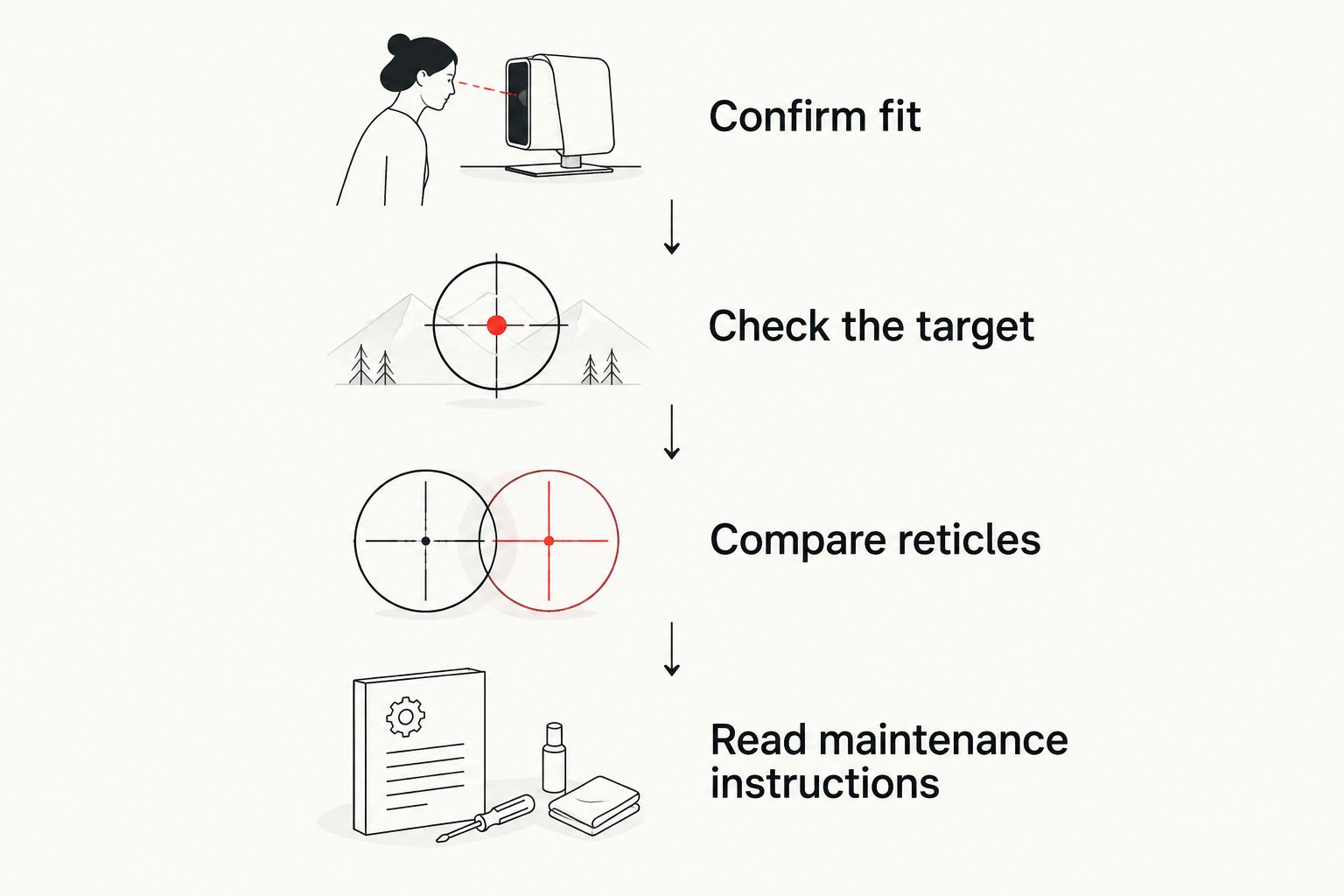
These checks keep the decision tied to the firearm and shooting task. They also prevent a common specification error: choosing a desirable reticle before establishing that the optic belongs on the intended platform.
Compare the Osight range
Check each model's reticle specifications and mounting requirements before choosing.
How this ranking works
This 2026 ranking puts reduced target coverage first for precision-focused shooting. Reticle flexibility takes the second slot because it serves a different need; a prominent dot takes the third because visibility comes with greater coverage.
The ranking does not claim measured accuracy differences between named products. It compares the aiming configurations using angular coverage, target visibility and reticle choice. Mounting compatibility remains a requirement for every option, not a feature that earns extra credit.
Which red dot configuration should you choose?
Choose a small-dot red dot for clearly visible, small range targets. That is the default answer to the best red dot sight for long range shooting when you have already decided an unmagnified optic suits the task.
Choose a multi-reticle configuration when you need different aiming presentations. Choose a larger dot when you can use it more consistently and accept the additional target coverage. Do not select either configuration merely because it sounds more feature-rich.
The Osight red dot range includes SE Series and K Series, alongside XE AMRS multi-reticle sights. Compare each model's stated specifications rather than treating these names as a precision ranking. For your 2026 shortlist, the decisive question is whether the complete setup lets you see and aim at the intended target consistently.
FAQ
What's the best red dot sight for long range shooting?
A small-dot red dot is the best starting configuration when your distant target remains clearly visible without magnification. Confirm mounting compatibility and reticle clarity before selecting a model.
Is a smaller red dot more accurate?
A smaller dot covers less target area; it does not guarantee greater accuracy. Repeatable aiming also depends on target visibility, the installation and a confirmed zero.
How much target does a 2 MOA dot cover?
A 2 MOA dot nominally covers approximately 58 mm at 100 m and 116 mm at 200 m. These are angular-coverage figures, not predictions of group size.
Is a multi-reticle sight better than a single-dot sight?
A multi-reticle sight is better for changing aiming presentations, not automatically for precision. Check whether the specific model offers the centre-dot mode and dot size you want.
Can a red dot replace magnification for distant targets?
An unmagnified red dot does not replace magnification when you need more target detail. A smaller aiming mark reduces coverage but does not enlarge the target.
Which Osight series should I compare?
Compare SE Series, K Series and XE AMRS against your mounting and reticle requirements. The series names alone do not establish dot size, firearm compatibility or precision performance.
Does turning up brightness improve precision?
More brightness does not automatically improve precision. Use a setting that keeps the aiming mark visible and distinct against the target rather than making it appear unnecessarily enlarged.
One last thing
An oversized aiming dot and an undersized target are different problems. A smaller dot addresses the first; it does not fix the second.
Before buying, identify which problem you actually have. If the target is clear but the aiming mark hides its reference point, compare smaller-dot configurations. If the reference point is not visible in the first place, reconsider whether an unmagnified sight fits the task.